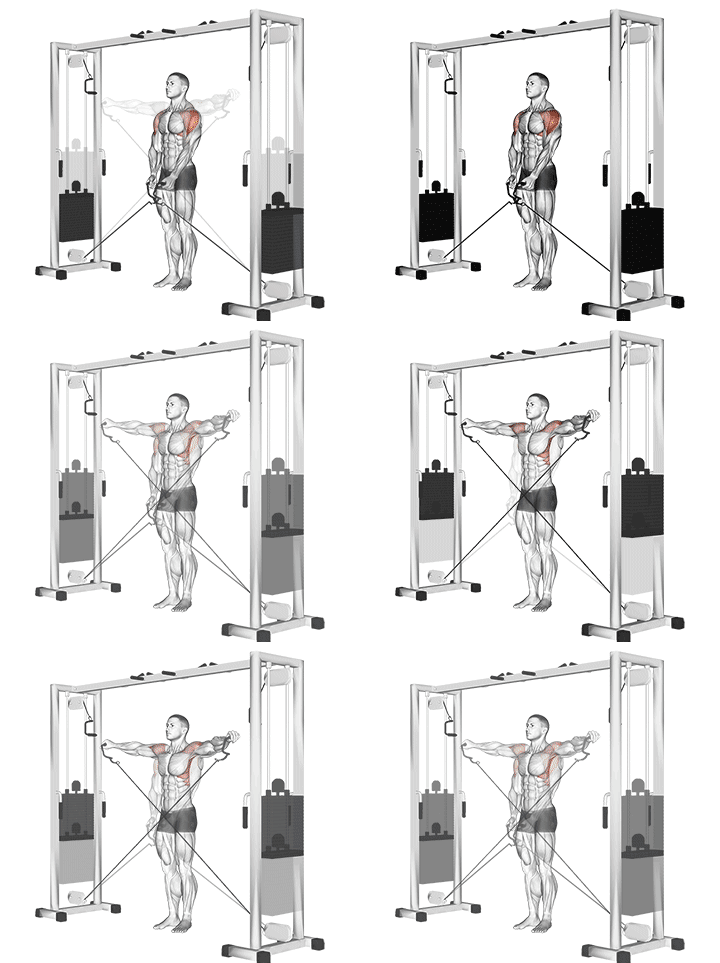
Target Muscle Group:
Lateral Deltoids (shoulder)
Equipment Required
Cable Machine
Experience Level:
Beginner
Secondary Muscles
Traps, Triceps, Rotator Cuff Muscles
Ideal sets & reps:
3 sets of 8 reps
Benefits
- 1. Well-developed shoulders not only improve your physique but also improve posture and overall upper body aesthetics.
- 2. This exercise hones in on the lateral deltoids, enhancing shoulder width and creating a well-rounded shoulder appearance.
- 3. The 2 Arm Cable Lateral Raise minimizes the involvement of other muscle groups, ensuring focused development of the lateral deltoids.
- 4. It's easily adjustable for various fitness levels, making it suitable for beginners and advanced trainers looking to sculpt their shoulder muscles.
- 5. As the movement requires balance and control, it enhances shoulder stability, reducing the risk of injuries and promoting overall shoulder health.
Instructions
- 1. Begin by setting the cable machine to an appropriate weight and attaching a D-handle to the low pulley. Stand with your side to the machine, ensuring the pulley is on your side.
- 2. Position your feet shoulder-width apart for stability, and maintain a slight bend in your knees. Keep your core engaged to support your lower back.
- 3. Grab the D-handle with your far hand, the one furthest from the machine. Your near hand can be placed on your hip or used to stabilize your body, depending on your preference.
- 4. Start with your arm at your side, and with a slight bend in your elbow, raise the handle upward and slightly forward. Keep your arm extended as you lift, leading with your elbow.
- 5. Focus on contracting the lateral deltoid muscle. Ensure that your body remains still throughout the movement, with no twisting or swaying.
- 6. When your arm is at shoulder level, pause for a moment to fully contract the lateral deltoid. Slowly lower the handle back to the starting position. Maintain control during the descent.
- 7. Complete the desired number of repetitions for one side typically 3-4 sets of 8-12 repetitions, then switch to the other side for a balanced workout.
Points to remember
- 1. Concentrate on feeling the lateral deltoid muscles working during the exercise. Visualize them contracting with each repetition.
- 2. Don't use jerky or swinging motions to lift the weight. This can strain your shoulder joints and compromise the exercise's effectiveness.
- 3. Begin with a manageable weight to focus on form. Once you have mastered the movement, gradually increase the resistance to challenge your muscles.
- 4. Retract your shoulder blades by pulling them back and down. This ensures your shoulder joints are stable and that you're targeting the lateral deltoids effectively.
- 5. Raise the weight until your arms are at shoulder level or slightly above, and then lower it back down to the starting position. Utilizing a full range of motion optimizes muscle engagement.
Popular Questions
- Q1. What are the benefits of doing 2 arm cable lateral raise ?
- A1. The 2 Arm Cable Lateral Raise primarily targets the lateral deltoids for broader shoulders. Secondary muscles like the trapezius stabilize the shoulders, while the triceps and upper back muscles assist in joint stability. This exercise enhances shoulder strength, aesthetics, and upper body functional fitness.
- Q2. What are the muscles worked by 2 arm cable lateral raise ?
- A2. The 2 Arm Cable Lateral Raise primarily emphasizes the lateral deltoids, enhancing shoulder width and definition. It also engages the trapezius, stabilizing the shoulders and scapula. Supporting the shoulder girdle are the rotator cuff muscles. Furthermore, the triceps and upper back muscles assist in arm and shoulder joint stability.
- Q3. What are the best 2 arm cable lateral raise alternative's ?
- A3. To complement the 2 Arm Cable Lateral Raise, several alternatives offer versatile options. Dumbbell Lateral Raises isolate the lateral deltoids and grant control over weight selection. Machine Lateral Raises provide stability to maintain proper form and focus on the lateral deltoids. Resistance Band Lateral Raises offer on-the-go lateral deltoid targeting with their portability and adaptable resistance.