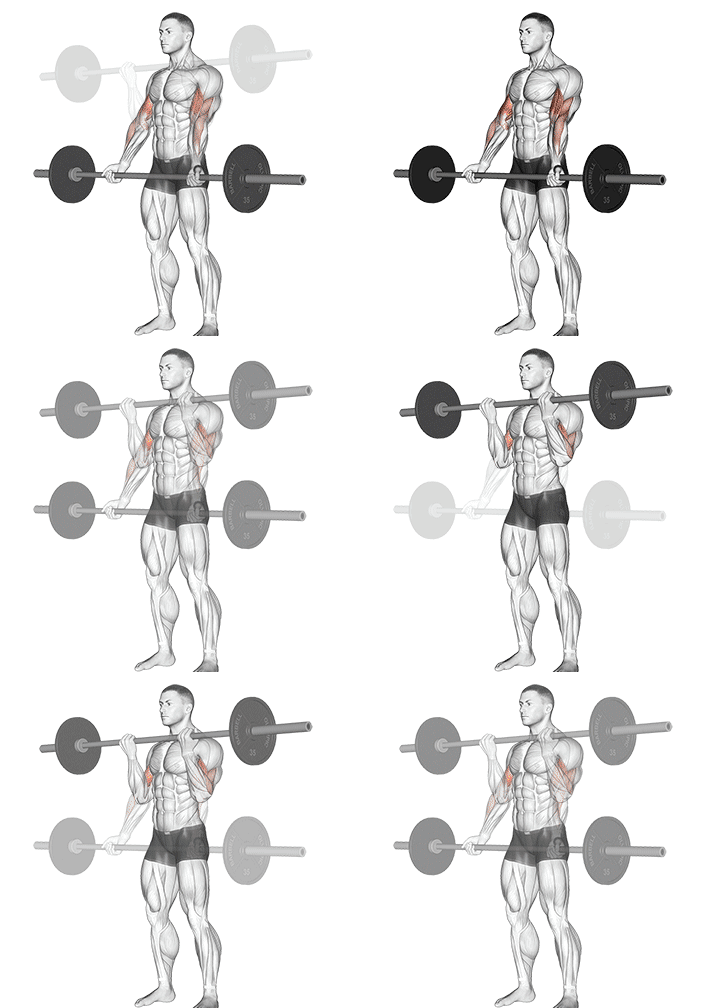
Target Muscle Group:
Biceps
Equipment Required
Barbell
Experience Level:
Beginner
Secondary Muscles
Forearms
Ideal sets & reps:
3 sets of 8 reps
Benefits
- 1. Barbell curls specifically target and strengthen the biceps muscles, resulting in more defined and stronger arms.
- 2. Regularly performing barbell curls improves the strength of the biceps, making everyday tasks like lifting and carrying objects easier.
- 1. Barbell curls engage the core muscles to maintain proper posture during the exercise, leading to improved core strength and stability.
- 5. Barbell curls help maintain a balanced upper body by working the biceps, which can counterbalance the strength and development of the triceps.
- 4. Holding onto the barbell during curls strengthens the grip, which can be beneficial for sports, weightlifting, and daily activities that involve grasping objects.
Instructions
- 1. Stand upright with your feet shoulder-width apart and grab a barbell with an underhand grip (palms facing up). Keep your hands slightly wider than shoulder-width apart.
- 2. Let the barbell hang in front of you at arm's length, with your arms fully extended and elbows close to your sides. This is your starting position.
- 3. Keeping your upper arms stationary, exhale and curl the barbell upward by contracting your biceps. Focus on squeezing your biceps at the top of the movement.
- 4. Continue lifting until your biceps are fully contracted and the barbell is at shoulder level. Hold this position for a brief pause and squeeze your biceps.
- 5. Inhale and slowly lower the barbell back to the starting position while maintaining control. Avoid swinging or using momentum to lift the weight. Repeat for the desired number of repetitions.
Points to remember
- 1. Keep your back straight, chest up, and avoid excessive swinging or using your back to lift the weight. Focus on isolating the biceps throughout the movement.
- 2. Concentrate on contracting and squeezing your biceps throughout the movement. Visualize the muscle working to enhance the mind-muscle connection, which can lead to better results.
- 3. Exhale as you lift the barbell (during the concentric phase) and inhale as you lower it (during the eccentric phase). Proper breathing helps stabilize your core and supports your overall performance.
- 4. Avoid using momentum to lift the weight. Lift the barbell in a slow and controlled manner, focusing on the contraction of the biceps. This ensures proper muscle engagement and reduces the risk of injury.
- 5. Start with a weight that allows you to maintain proper form and technique. Gradually increase the weight as you become more comfortable and stronger, but always prioritize maintaining good form over lifting heavy weights.