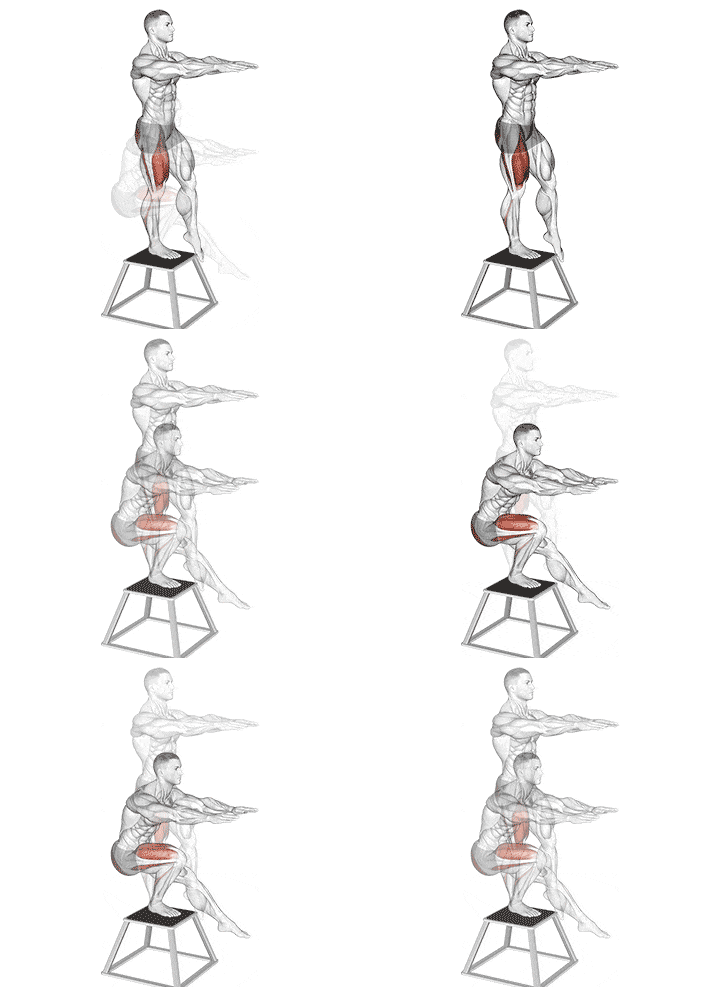
Target Muscle Group:
Quadriceps, Gluteus Maximus
Equipment Required
Box / bench
Experience Level:
Advanced
Secondary Muscles
Calves, Hamstrings
Ideal sets & reps:
3 sets of 8 reps
Benefits
- 1. As a unilateral exercise, they help identify and correct strength imbalances between the legs.
- 2. Box Pistol Squats add variety to your leg routine, preventing plateaus and keeping workouts engaging.
- 3. Controlled movement can improve hip and knee joint flexibility while minimizing stress on the lower back.
- 4. Box Pistol Squats mimic natural movement patterns, making them beneficial for real-world activities and sports.
- 5. Box Pistol Squats target the quadriceps, hamstrings, glutes, and calves, providing a comprehensive lower body workout.
Instructions
- 1. Place a stable box or bench behind you at a comfortable height. Ensure it's secure to support your weight during the exercise.
- 2. Stand in front of the box with feet shoulder-width apart. Maintain an upright posture with engaged core and shoulders back.
- 3. Lift one leg slightly off the ground, extending it forward. Your weight should be on the heel of your supporting leg.
- 4. Slowly lower your body by bending the knee of the supporting leg. Simultaneously, extend your non-balancing leg forward without touching the ground.
- 5. Push through the heel of your supporting leg to return to the starting position. Alternate legs and continue for the desired number of reps and sets.
Points to remember
- 1. Start with a manageable box height and gradually increase the challenge as your strength and balance improve.
- 2. Focus on balance and stability throughout the movement, engaging your core and keeping your upper body steady.
- 3. Ensure your knee on the supporting leg tracks in line with your toes and doesn't collapse inward or flare outward during the squat.
- 4. Experiment with the angle and position of your non-balancing foot to find the most comfortable and effective placement for your body.
- 5. Ensure the box or bench is at an appropriate height that allows you to maintain proper form and comfortably touch it with your buttocks during the squat.
Popular Questions
- Q1. What are the muscles worked by box pistol squat ?
- A1. Box Pistol Squats primarily work the quadriceps and gluteus maximus, engaging the front thighs and buttocks for knee extension and hip extension, respectively. Additionally, secondary muscles like the hamstrings, calves, core, and adductors play supportive roles in stabilizing the lower body and maintaining balance during this challenging exercise.
- Q2. What are the benefits of doing box pistol squat ?
- A2. Performing Box Pistol Squats offers benefits such as enhanced leg strength, particularly in the quadriceps and glutes, improved balance and stability due to the single-leg nature of the exercise, and greater joint flexibility, especially in the hips and knees. These advantages make Box Pistol Squats a valuable addition to lower body training routines.
- Q3. What are the best box pistol squat alternative ?
- A3. Certainly. Alternatives to Box Pistol Squats include Assisted Pistol Squats, which use support for balance, Bulgarian Split Squats that work similar muscles with one foot elevated, Step-Ups using a bench or platform for leg strength, and Goblet Squats, performed with a weight close to the chest for added challenge and leg development. These exercises offer variety and can be adapted to different fitness levels and preferences.