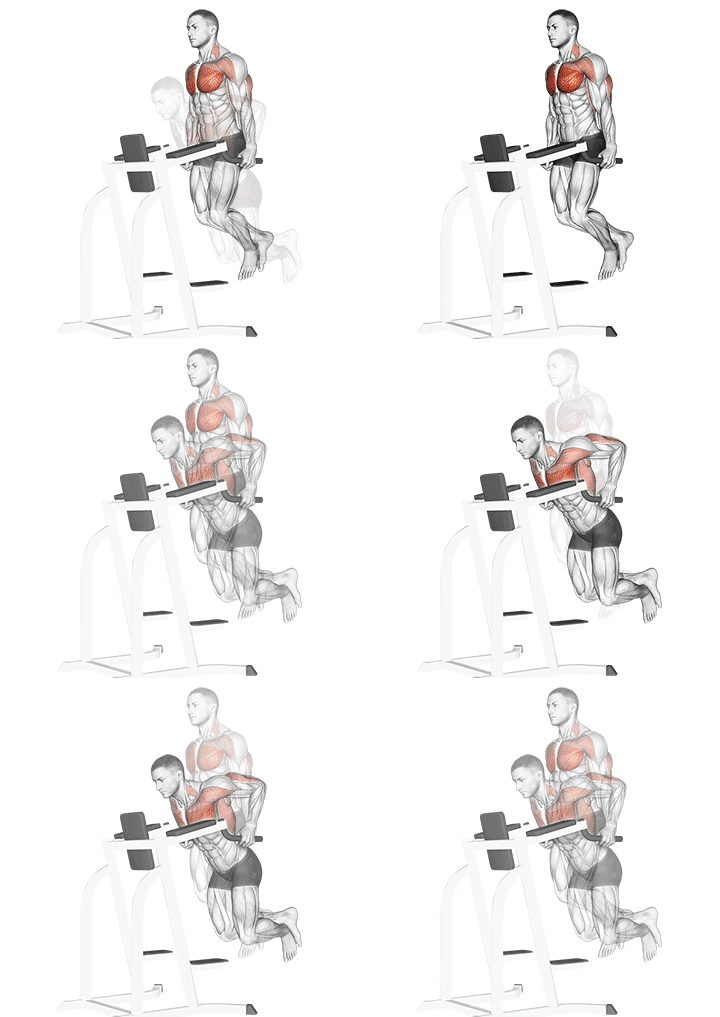
Target Muscle Group:
Chest
Equipment Required
Dip Station
Experience Level:
Advanced
Secondary Muscles
Abs, Shoulders, Triceps
Ideal sets & reps:
4 sets of 10 reps
Benefits
- 1. By engaging multiple muscle groups, chest dips can help you increase muscle mass in your chest, shoulders, and triceps.
- 2. Chest dips can also help improve your muscular endurance, allowing you to perform more reps of other upper body exercises.
- 3. Chest dips primarily target the chest, triceps, and shoulders, making them an effective exercise for building upper body strength.
- 4.Chest dips are a challenging exercise that require you to lift your entire bodyweight, making them a great way to test and improve your bodyweight strength.
Instructions
- 1. Locate a dip station or parallel bars at your gym or use a sturdy piece of furniture at home, such as two chairs placed parallel to each other.
- 2. Grab onto the bars with a firm grip and lift your legs off the ground: Place your hands on the bars with a firm grip, lift your legs off the ground and cross your ankles.
- 3. Lean forward and lower your body by bending your arms, keeping your elbows close to your body and your shoulders back.
- 4. Push your body back up by straightening your arms, keeping your chest out and shoulders back.
- 5. Repeat the movement for your desired number of reps, focusing on slow and controlled movements to avoid injury and maximize the effectiveness of the exercise.
Points to remember
- 1. Take a deep breath before lowering your body, and exhale as you push up. This helps stabilize your core and maximize your strength.
- 2. Before starting your chest dip workout, make sure to warm up your upper body with some light cardio and stretching to help prevent injury.
- 3. To avoid hitting a plateau in your progress, try incorporating variations of chest dips, such as weighted dips or bench dips, to challenge your muscles in new ways.
- 4. Chest dips are a demanding exercise that can put a lot of strain on your upper body. Make sure to give your muscles time to rest and recover between workouts to avoid overtraining.
- 5. Proper form is essential to avoid injury and maximize the effectiveness of the exercise. Keep your elbows tucked in, your shoulders back, and your chest out. Focus on lowering your body slowly and pushing up with control.
Popular Questions
- Q1. How to do Chest dips at home ?
- A1. To do chest dips at home, use two sturdy chairs or parallel bars, place them parallel to each other, grip the edge of each chair or bar, and slowly lower and push your body back up, focusing on slow and controlled movements.
- Q2. How many chest dips should I do ?
- A2. The number of chest dips you should do depends on your fitness level and exercise goals. If you're a beginner, start with a manageable number of reps, such as 4-5, and gradually increase the number of reps as you become more comfortable with the exercise. As you progress, you can aim for 3-4 sets of 10-12 reps.
- Q3. Why are Chest dips so hard to perform ?
- A3. Chest dips are considered challenging because they require a combination of upper body strength, stability, and control. They engage several muscle groups and involve a larger range of motion than other bodyweight exercises. Proper form and technique are essential to avoid injury and get the most out of the exercise.
- Q4. Are chest dips a compound exercise ?
- A4. Yes, chest dips are a compound exercise as they engage multiple muscle groups at once, including the chest, triceps, shoulders, and core. Compound exercises like chest dips are beneficial for overall strength and muscle development, allowing for efficient use of time and engaging various muscle groups in a single exercise.
- Q5. How important are Chest dips for chest ?
- A5. Dips are an important exercise for building chest muscles, as they target the pectoralis major and minor, triceps and shoulders. The exercise offers a larger range of motion and greater stretch in the chest muscles compared to other exercises like push-ups, making them effective for increasing chest muscle size and strength. Proper form and technique are crucial to prevent injury and get the most out of the exercise.