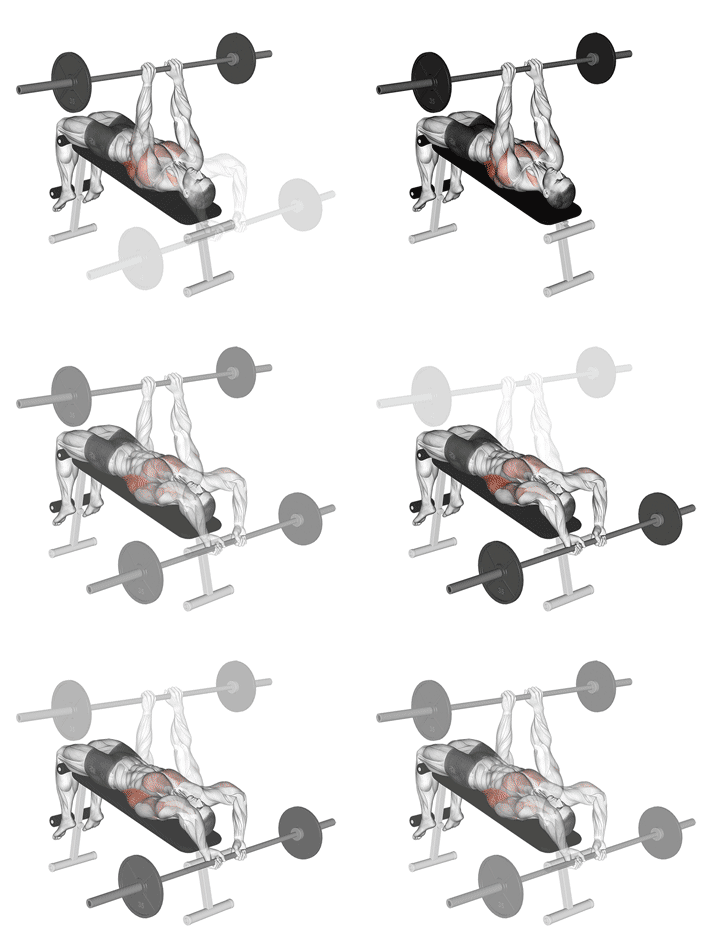
Target Muscle Group:
Latissimus Dorsi (Lats)
Equipment Required
Ez bar & a bench
Experience Level:
Beginner
Secondary Muscles
Chest, Triceps, Shoulders
Ideal sets & reps:
3 sets of 8 reps
Benefits
- 1. Proper execution involves deep breathing, which can help expand the ribcage and improve lung capacity.
- 2. To stabilize the body on the decline bench, the core muscles are engaged, contributing to core strength and stability.
- 3. Strengthening the muscles involved can assist in maintaining better posture and reducing the risk of shoulder and back injuries.
- 4. The movement engages the latissimus dorsi, promoting back and lat muscle development while enhancing overall upper body strength.
- 5. The decline barbell pullover provides an excellent stretch for the chest and lats, contributing to enhanced muscle flexibility and reduced muscle tightness.
Instructions
- 1. Lie on the bench with your upper back and shoulders positioned securely on the bench, and your feet flat on the floor for balance. Reach behind you to grip the barbell with an overhand grip, slightly wider than shoulder-width apart.
- 2. With the barbell in hand, extend your arms over your chest, keeping a slight bend in your elbows. Your palms should be facing up towards the ceiling.
- 3. In a controlled manner, lower the barbell backward in an arc-like motion while keeping your arms slightly bent. Maintain your core engagement and ensure your lower back stays in contact with the bench.
- 4. As the barbell descends, focus on stretching your chest and lats by taking a deep breath to expand your ribcage. This stretch is a key aspect of the exercise.
- 5. With your chest and lats fully stretched, exhale and pull the barbell back up in the same arc-like path until it's directly above your chest. Contract your chest and lats during this phase.
- 6. Perform the desired number of repetitions with a controlled and deliberate motion typically 3-4 sets of 8-12 repetitions for muscle hypertrophy (muscle growth) ensuring you maintain proper form throughout the set.
Points to remember
- 1. Start with a manageable weight to perfect your form and gradually increase the resistance as you become more experienced
- 2. Focus on a slow and controlled movement when lowering and lifting the barbell. Avoid rapid or jerky motions to minimize the risk of injury.
- 3. Pay attention to the stretching sensation in your chest and lats as you lower the barbell. This stretch is a fundamental aspect of the exercise, so be mindful of it.
- 4. Perform a thorough warm-up to prepare your shoulder and chest muscles for the exercise. Incorporate dynamic stretches and mobility exercises to prevent strain.
- 5. Opt for a grip that is slightly wider than shoulder-width apart on the barbell. This grip allows for a comfortable range of motion and proper activation of the chest and lats.
Popular Questions
- Q1. What are the muscles worked by decline barbell pullover ?
- A1. The decline barbell pullover primarily targets the latissimus dorsi (lats) while also engaging the chest muscles to a lesser extent alongside the triceps and deltoids (shoulders). This exercise is effective for building and strengthening the lats, contributing to a wider and more developed upper back.
- Q2. What are the best decline barbell pullover alternative's ?
- A2. The most effective alternatives to the decline barbell pullover include the lat pulldown, straight arm lat pulldown and ez bar pullover. These exercises offer a diverse range of movements while maintaining the focus on strengthening the lats and upper body, providing a well-rounded back workout.
- Q3. What are the benefits of doing decline barbell pullover ?
- A3. Decline Barbell Pullovers provide several benefits, such as enhanced lat muscle development and improved ribcage expansion. This exercise targets the lats, contributing to a wider and more sculpted back, while also promoting better respiratory capacity through ribcage expansion. It's a valuable addition to upper body strength training.