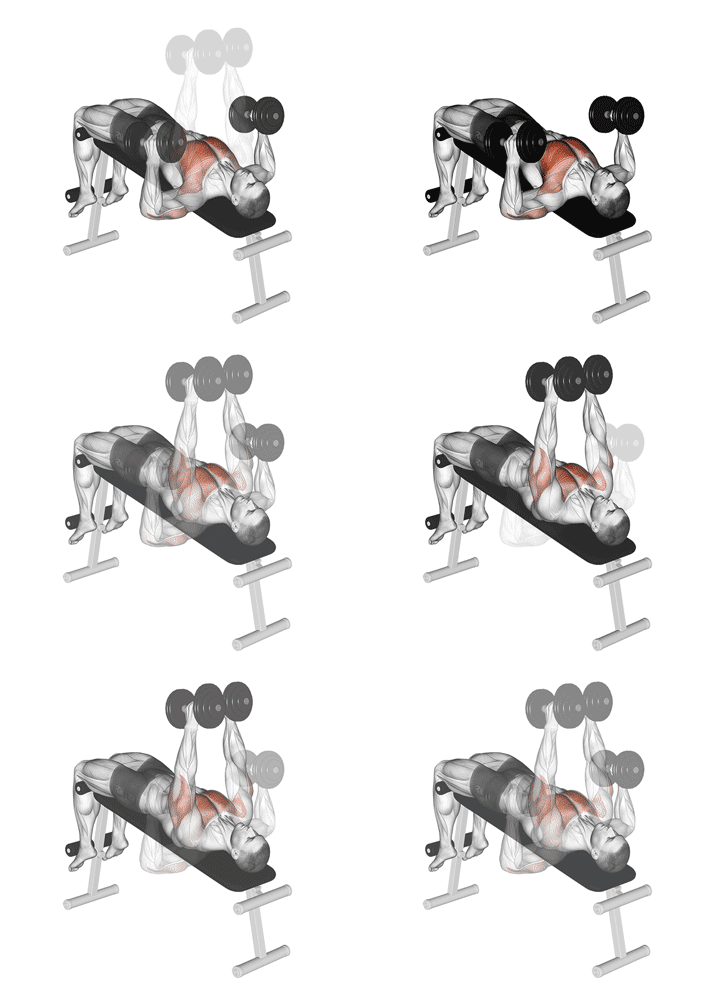
Target Muscle Group:
Pectoralis Major (Chest)
Equipment Required
Dumbbell
Experience Level:
Beginnner
Secondary Muscles
Triceps, Anterior Deltoids
Ideal sets & reps:
3 sets of 8 reps
Benefits
- 1. Working on a decline bench challenges your core and stabilizing muscles, promoting overall strength and stability.
- 2. The hammer grip (neutral grip) minimizes shoulder strain, making it a safer and more comfortable option for individuals with shoulder issues.
- 3. This exercise allows for a greater stretch in the chest muscles compared to flat bench presses, which can contribute to enhanced muscle growth.
- 4. The Decline Hammer Press places a primary emphasis on the lower chest muscles (pectoralis major), helping to create a balanced and well-defined chest.
- 5. Incorporating the Decline Hammer Press into your routine adds variety to your chest workouts, preventing plateaus and promoting continuous muscle development.
Instructions
- 1. Adjust the decline bench to your desired angle. Typically, it's set at a decline of around 30 to 45 degrees. Sit on the bench with your feet securely placed under the leg anchors.
- 2. Ensure your back is flat against the bench. Hold a dumbbell in each hand with a hammer grip (palms facing each other) and arms extended straight above your chest.
- 3. Your elbows should have a slight bend, and the dumbbells should be positioned slightly wider than shoulder-width apart.
- 4. Inhale and lower the dumbbells slowly and under control, allowing your elbows to come down until they reach or slightly go below chest level.
- 5. Keep your wrists in line with your elbows. Exhale and push the dumbbells back to the starting position, fully extending your arms without locking your elbows.
- 6. Perform the desired number of repetitions, typically 8-12 per set, depending on your fitness goals and capabilities.
Points to remember
- 1. Keep your back and head securely against the bench throughout the exercise to maintain stability and prevent arching.
- 2. Execute the exercise with a slow and controlled motion, both during the descent and ascent of the dumbbells. Avoid rapid or jerky movements.
- 3. Maintain a hammer grip (palms facing each other) on the dumbbells. Position your hands slightly wider than shoulder-width apart for optimal chest engagement.
- 4. Choose a weight that challenges your chest muscles while allowing you to maintain proper form. Avoid using excessive weight that could compromise your technique.
- 5. Adjust the decline bench to an angle that is comfortable and aligns with your fitness level. Start with a moderate decline (around 30 to 45 degrees) and progress as needed.
Popular Questions
- Q1. What are the muscles worked by decline hammer press ?
- A1. The Decline Hammer Press primarily targets the lower chest muscles, with secondary engagement of the shoulders and triceps. This makes it an effective exercise for building a well-rounded chest and upper body strength.
- Q2. What are the benefits of doing decline hammer press ?
- A2. The Decline Hammer Press offers benefits such as targeted lower chest development, reduced shoulder strain due to the hammer grip, enhanced range of motion for muscle growth, functional upper body strength, and the introduction of variety in chest workouts to stimulate continuous progress.
- Q3. What are the best decline hammer press alternative ?
- A3. Effective alternatives to the Decline Hammer Press include the Decline Dumbbell Press, Decline Barbell Press, Chest Flye (Machine or Dumbbell), Push-Ups with feet elevated, Cable Crossover (Low to High), and the Dip Machine (with a forward-leaning posture). These exercises target the lower chest and contribute to a well-rounded chest development.