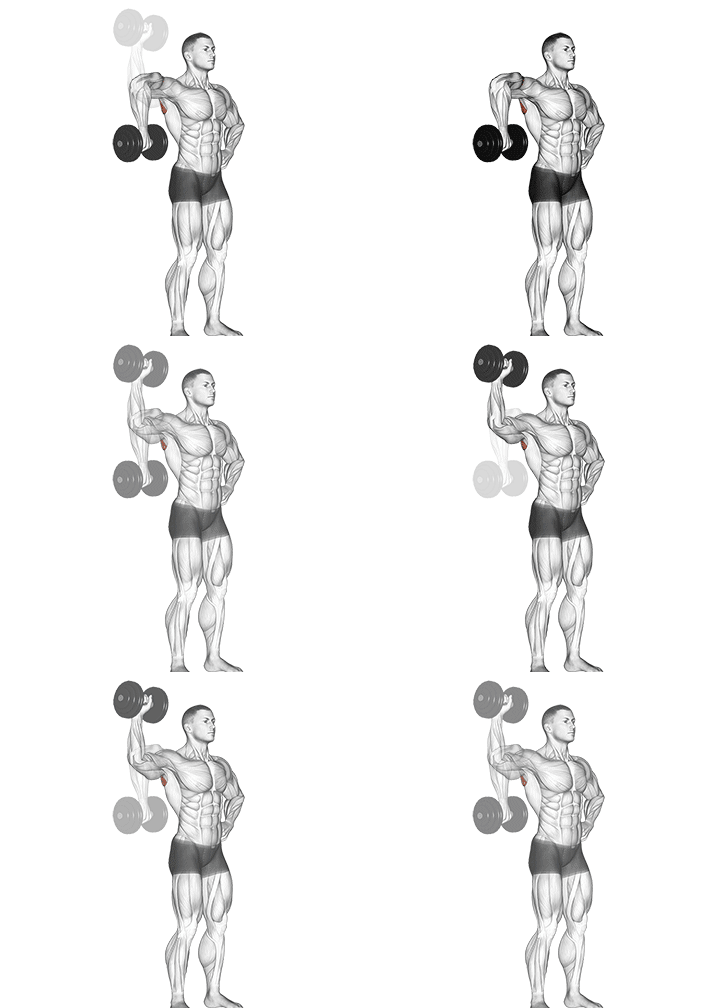
Target Muscle Group:
deltoids (Shoulders)
Equipment Required
A Dumbbell
Experience Level:
Beginner
Secondary Muscles
rotator cuff muscles
Ideal sets & reps:
4 sets of 8 reps
Benefits
- 1. This exercise helps improve shoulder mobility and flexibility, reducing the risk of injuries and enhancing overall shoulder joint health.
- 2. The exercise targets multiple shoulder and upper back muscles, promoting balanced muscle development for a well-rounded physique.
- 3. Cuban Rotations target the rotator cuff muscles, aiding in their strength and stability. Strong rotator cuffs are essential for various upper body movements.
- 4. Strong and flexible shoulders are crucial for many athletic activities, and Cuban Rotations can contribute to enhanced performance in sports and weightlifting.
- 5. By strengthening the muscles that support the upper back and shoulders, this exercise can assist in correcting poor posture, leading to a more upright and balanced stance.
Instructions
- 1. Stand up straight with your feet shoulder-width apart. Hold a dumbbell in each hand with a neutral grip (palms facing your thighs) and let them hang at arm's length by your sides.
- 2. Begin by slightly bending your knees for stability. Keeping your core engaged and maintaining a straight back, lift the dumbbells in front of you until they reach shoulder level.
- 3. Your elbows should be slightly bent throughout this phase. Once the dumbbells are at shoulder level, rotate your arms outward until your palms are facing up, and the dumbbells are perpendicular to the ground.
- 4. Keep your elbows high during this rotation, and your upper arms should remain parallel to the ground.
- 5. Slowly reverse the movement by rotating your arms back to the starting position, with palms facing your thighs. Lower the dumbbells back to the sides of your thighs.
- 6. Perform the desired number of repetitions with controlled, smooth motions. The ideal sets and reps for this exercise are 4 sets of 8 reps.
Points to remember
- 1. Coordinate your breath with the movement. Inhale as you raise the dumbbells, and exhale as you rotate and lower them.
- 2. Keep your elbows slightly bent and at shoulder level during the rotation phase. Don't let them drop as you raise the dumbbells.
- 3. Focus on controlled, deliberate movements during both the raising and lowering phases. Avoid using momentum to lift the weights.
- 4. Focus on achieving a full range of motion during the rotation phase. Ensure your palms are facing up and the dumbbells are perpendicular to the ground.
- 5. Ensure proper form and start with a light weight to master the technique before progressing to heavier dumbbells. This exercise can help improve shoulder health and mobility when performed correctly.
Popular Questions
- Q1. What are the muscles worked by dumbbell cuban rotation ?
- A1. The primary muscles worked during Dumbbell Cuban Rotations are the shoulder muscles, particularly the deltoids, and the rotator cuff muscles. Secondary muscles engaged include the trapezius, rhomboids, and upper back muscles, which assist in the movement and stabilization of the shoulders.
- Q2. What are the best dumbbell cuban rotation alternative's ?
- A2. A solid alternative to Dumbbell Cuban Rotations is the Face Pull exercise, which also targets the shoulder muscles, specifically the rear deltoids and the rotator cuff. Another effective alternative is the Bent-Over Lateral Raise, which engages the posterior deltoids and upper back muscles.
- Q3. What are the benefits of doing dumbbell cuban rotation ?
- A3. Dumbbell Cuban Rotations are beneficial for overall shoulder health, enhancing posture, and increasing shoulder mobility. These controlled movements help strengthen the rotator cuff and other supporting muscles, reducing the risk of injuries and promoting balanced shoulder development.