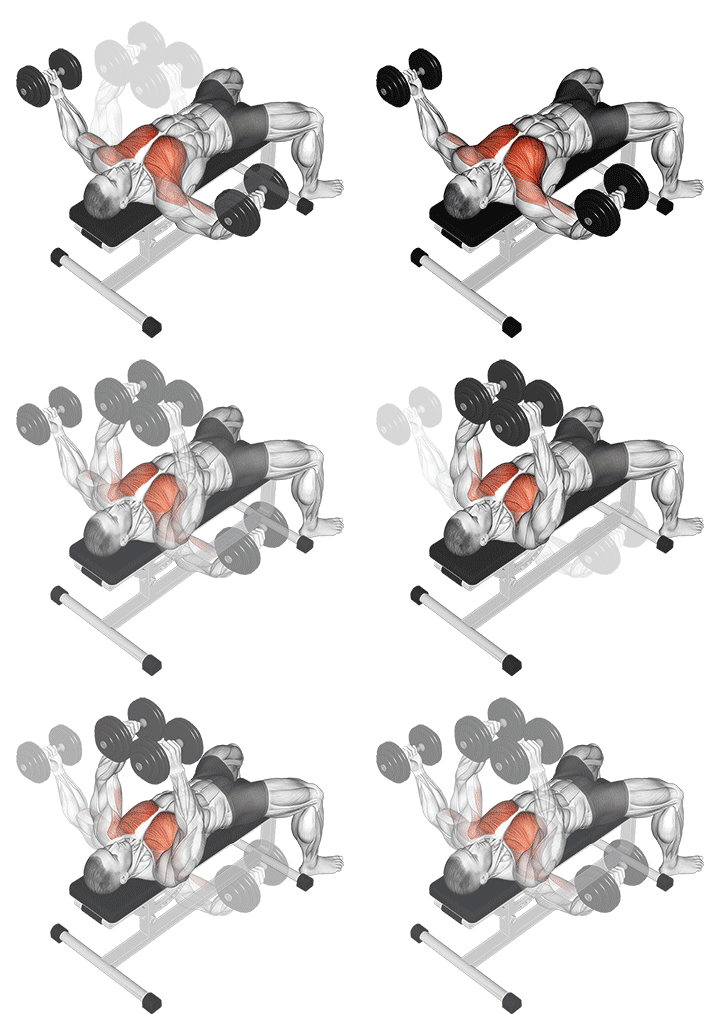
Target Muscle Group:
Chest
Equipment Required
Dumbbells & A bench
Experience Level:
Beginner
Secondary Muscles
Triceps, Shoulders
Ideal sets & reps:
3 sets of 8 reps
Benefits
- 1. Dumbbell flyes allow you to stretch and activate your chest muscles more than other chest exercises like the bench press.
- 2. By placing tension on the chest muscles in a different way than traditional pressing movements, dumbbell flyes can help to improve overall chest muscle development.
- 3. Dumbbell flyes require more control and focus than other chest exercises, which can help to improve your mind-muscle connection and overall training technique.
- 4. With dumbbell flyes, you can perform a wider range of motion than you would with a barbell or machine chest press, which can help to increase flexibility and mobility in the chest muscles.
- 5. Dumbbell flyes can be a great alternative to exercises like the bench press, which can place a lot of stress on the shoulders. By using lighter weights and focusing on proper form, you can reduce the risk of shoulder injuries.
Instructions
- 1. Begin by lying flat on a bench with your feet flat on the ground and your head, upper back, and butt in contact with the bench. Hold a dumbbell in each hand with your palms facing each other, and extend your arms straight up over your chest.
- 2. Slowly lower the dumbbells out to the sides of your body in a wide arc, keeping your elbows slightly bent. Keep lowering the dumbbells until your hands are level with your chest, or until you feel a stretch in your chest muscles.
- 3. Pause briefly at the bottom of the movement, and then slowly return the dumbbells to the starting position, keeping your elbows slightly bent and your palms facing each other.
- 4. Repeat the movement for the desired number of repetitions, focusing on maintaining control and proper form throughout the exercise.
Points to remember
- 1. Breathe in as you lower the weights, and exhale as you lift them back up.
- 2. Keep your elbows slightly bent throughout the exercise to avoid locking out your joints.
- 3. Keep your head, upper back, and butt in contact with the bench throughout the movement.
- 4. Use a weight that allows you to perform the exercise with proper form and without compromising your range of motion.
- 5. Focus on keeping your chest muscles engaged throughout the exercise, and avoid using your shoulders or arms to lift the weights.
Popular Questions
- Q1. Are dumbbell flyes push or pull ?
- A1. Dumbbell flyes are considered a pushing exercise, as they involve pushing the weights away from the body using the chest muscles. In contrast, pulling exercises involve pulling the weights towards the body, such as with a row or pull-up.
- Q2. Are dumbbell flyes a compound exercise ?
- A2. Dumbbell flyes are typically considered an isolation exercise, rather than a compound exercise. Compound exercises involve multiple joints and muscle groups working together, such as the bench press or pull-up. In contrast, isolation exercises typically target a specific muscle group, such as the bicep curl or tricep extension.
- Q3. How many dumbbell flyes should i do ?
- A3. The number of dumbbell flyes you should do depends on various factors such as your fitness goals, training experience, and overall workout routine. In general, it's recommended to perform 3-4 sets of 8-12 repetitions per set, with 1-2 minutes of rest in between sets. However, this can vary based on your individual needs and goals.
- Q4. Why are dumbbell flyes considered bad ?
- A4. Dumbbell flyes are not inherently bad, but improper form or using weights that are too heavy can increase the risk of shoulder strain or injury. Additionally, individuals with pre-existing shoulder or chest injuries may want to avoid or modify the exercise to avoid exacerbating the injury. With proper form and appropriate weight, dumbbell flyes can be a valuable addition to a chest workout routine.
- Q5. Can you perform dumbbell flyes on the floor effectively?
- A5. To perform dumbbell flyes on the floor, lie on your back with your knees bent and feet flat on the floor. Hold a dumbbell in each hand with your arms extended directly above your chest. Slowly lower the dumbbells out to the sides, keeping your elbows slightly bent, until your arms are parallel to the floor. Return to the starting position by squeezing your chest muscles and bringing the dumbbells back to the starting position above your chest. Repeat for the desired number of reps.