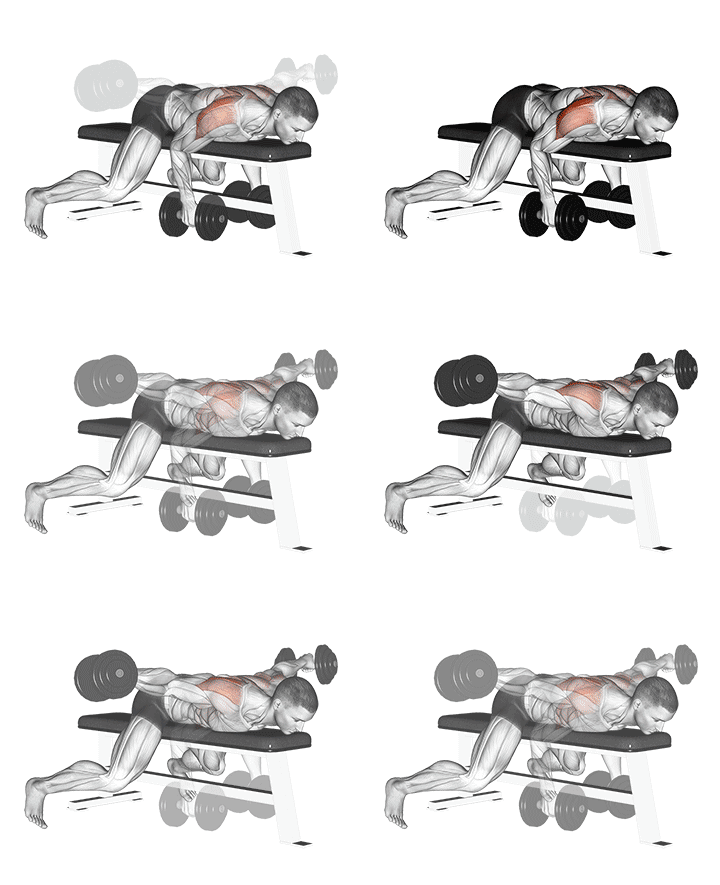
Target Muscle Group:
posterior deltoids (shoulders)
Equipment Required
Dumbbbell & A bench
Experience Level:
Beginner
Secondary Muscles
trapezius, rhomboids
Ideal sets & reps:
3 sets of 10 reps
Benefits
- 1. This exercise hones in on the rear deltoid muscles, facilitating targeted development.
- 2. It helps create a well-rounded shoulder appearance by strengthening the often underdeveloped rear deltoids.
- 3. By addressing muscle imbalances and improving shoulder function, it reduces the risk of injuries related to the shoulder region.
- 4. This exercise contributes to increased shoulder stability and flexibility, which can be beneficial in various daily and sports activities.
- 5. Strengthening the rear delts aids in correcting rounded shoulder posture, promoting an upright and healthier upper body alignment.
Instructions
- 1. Begin by lying face-down on an incline bench set at a low angle, ensuring your chest and forehead are resting against the bench.
- 2. Hold a dumbbell in each hand, palms facing each other, and let your arms hang straight down toward the floor.
- 3. Start the movement by lifting the dumbbells out to the sides, leading with your elbows. Keep a slight bend in your elbows as you raise the weights.
- 4. Concentrate on contracting your rear deltoid muscles throughout the lift. Avoid using your traps or swinging the weights up.
- 5. Raise the dumbbells until they are in line with your body. Hold this top position for a brief moment, squeezing your rear delts.
- 6. Slowly lower the dumbbells back to the starting position, maintaining control and resisting gravity.
- 7. Perform the desired number of repetitions, usually in the range of 10-12, to effectively target and engage your rear deltoids.
Points to remember
- 1. Gradually increase the weight or repetitions as your strength improves, but prioritize proper form and control.
- 2. Maintain a neutral spine position throughout the exercise to protect your lower back. Engage your core muscles to stabilize your body.
- 3. Lift the dumbbells with control, avoiding any jerky or sudden movements. Focus on the contraction of your rear deltoids as you raise the weights.
- 4. Raise the dumbbells until they are in line with your body, parallel to the floor. Ensure a complete range of motion without hyperextending the shoulder joint.
- 5. Select a weight that challenges your rear deltoids without compromising your form. As a guideline, aim for higher repetitions (10-12) rather than lifting extremely heavy weights.
Popular Questions
- Q1. What are the muscles worked by dumbbell lying rear lateral raise ?
- A1. Dumbbell Lying Rear Lateral Raises primarily target the posterior deltoids (rear shoulder muscles). Secondary muscles involved include the trapezius, rhomboids, and various stabilizer muscles in the shoulder girdle.
- Q2. What are the benefits of doing dumbbell lying rear lateral raise ?
- A2. Dumbbell Lying Rear Lateral Raises effectively strengthen and shape the rear deltoids, enhancing shoulder aesthetics. This exercise aids in improving posture, reducing the risk of shoulder injuries, and promoting overall upper body strength.
- Q3. What are the best dumbbell lying rear lateral raise alternative's ?
- A3. A solid alternative to Dumbbell Lying Rear Lateral Raises is the Standing Bent-Over Rear Delt Raise. It engages the same rear deltoid muscles while promoting balance and stability. Cross cable face pulls with a rope attachment on a cable machine can also effectively target the rear deltoids and upper back muscles.