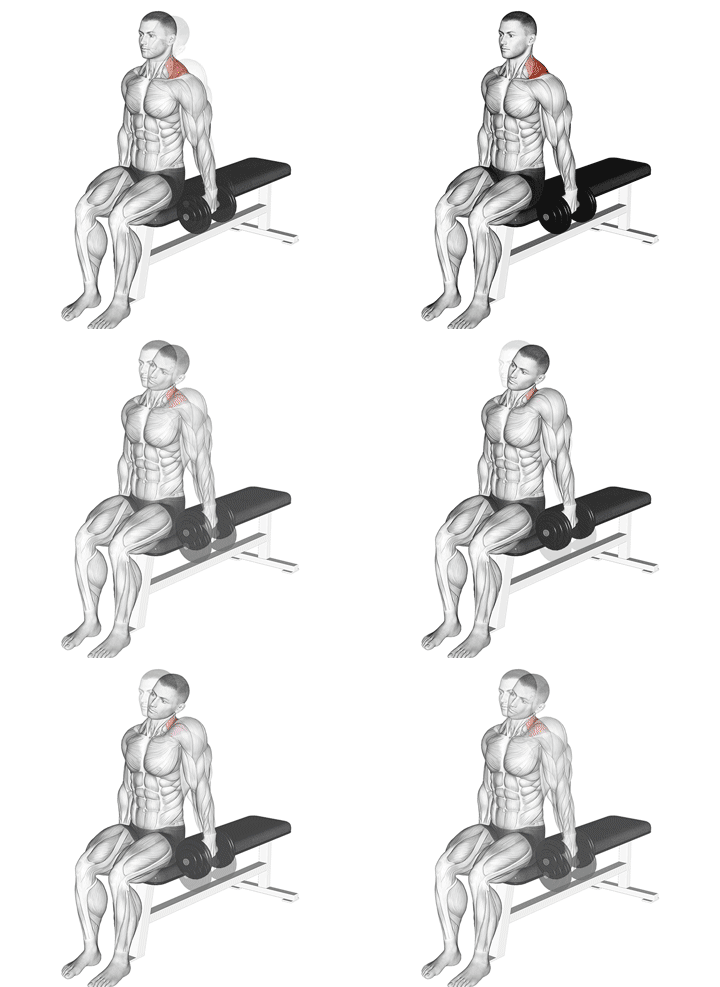
Target Muscle Group:
Upper Traps (Trapezius)
Equipment Required
Dumbbell
Experience Level:
Beginner
Secondary Muscles
Levator Scapulae, rhomboid
Ideal sets & reps:
3 sets of 10 reps
Benefits
- 1. This exercise reinforces shoulder stability by strengthening the muscles that support and control shoulder movement.
- 2. Gittleson Shrugs specifically target the trapezius muscles, leading to improved upper back and neck strength and definition.
- 3. Gittleson Shrugs help build upper body strength, making it easier to perform various daily activities and other weightlifting exercises.
- 4. Strengthening the upper back muscles, including the trapezius, contributes to better posture, reducing the risk of slouching or rounded shoulders.
- 5. A stronger upper back and shoulder girdle can help prevent common shoulder injuries and discomfort, especially for those engaged in resistance training.
Instructions
- 1. Sit up straight with your feet shoulder-width apart. Hold a dumbbell in one hand, allowing it to hang by your side with your palm facing your body.
- 2. Before starting the movement, engage your core muscles to stabilize your spine and maintain proper posture.
- 3. Begin the shrug by lifting your shoulder toward your ear, focusing on your target side (the side holding the dumbbell).
- 4. Elevate your shoulder as high as you can while keeping your arm straight. Imagine trying to touch your ear to your shoulder.
- 5. At the top of the movement, pause briefly and squeeze your trapezius muscles to maximize the contraction. Lower the dumbbell back to the starting position in a slow and controlled manner.
- 6. Breathe naturally throughout the exercise, exhaling as you push up and inhaling as you lower yourself down. Perform the desired number of repetitions, typically 3 sets of 8-12 reps.
Points to remember
- 1. Maintain a straight back and upright posture throughout the exercise. Avoid excessive leaning or arching of the spine.
- 2. Prior to starting Gittleson Shrugs, warm up your neck, shoulders, and upper back to prepare these muscles for the exercise.
- 3. Inhale before lifting the weight and exhale as you perform the shrug. Controlled breathing helps maintain stability and form.
- 4. Perform a complete shoulder shrug by lifting your shoulders as high as possible while keeping your arms straight. Avoid short, shallow movements.
- 5. Use a weight that allows you to perform the exercise with proper form and control. Avoid lifting excessively heavy weights that compromise your technique
Popular Questions
- Q1. What are the benefits of doing gittleson shrug ?
- A1. Gittleson Shrugs primarily strengthen the upper trapezius muscles, improving upper back and neck strength while enhancing shoulder stability and posture. These benefits contribute to a stronger upper body and reduced risk of shoulder discomfort or injury.
- Q2. What are the best gittleson shrug alternative ?
- A2. An effective alternative to Gittleson Shrugs is the Barbell Shrug. It allows for a greater range of motion and can be loaded with heavier weights. Additionally, the Face Pull exercise is excellent for overall shoulder health, targeting the upper traps while also engaging the rear deltoids and improving posture.
- Q3. What are the muscles worked by gittleson shrug ?
- A3. The primary muscles worked by Gittleson Shrugs are the Trapezius Muscles, specifically the upper trapezius. These muscles are responsible for elevating the shoulders. There are no significant secondary muscles targeted in Gittleson Shrugs, as the exercise is highly isolated to the upper trapezius. However, the levator scapulae and rhomboid muscles may provide some support during the movement.