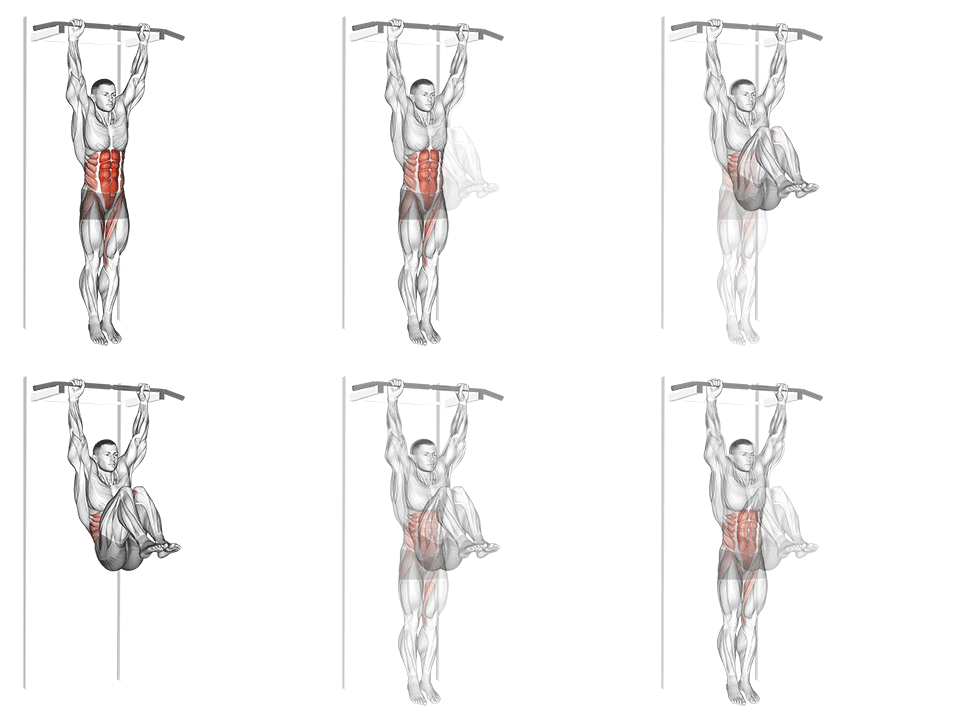
Target Muscle Group:
Abdomen
Equipment Required
Pull-up Bar
Experience Level:
Beginner
Secondary Muscles
Spine, Obliques
Ideal sets & reps:
3 sets of 8 reps
Benefits
- 1. Hanging knee raises target the core muscles, leading to increased strength, stability, and endurance in your abdominal muscles.
- 2. The exercise requires a strong grip on the bar or handles, which can lead to improved grip strength beneficial for various activities.
- 3. Engaging stabilizer muscles in the shoulders, upper back, and hips during hanging knee raises improves overall stability and body control.
- 4. Lifting the knees toward the chest in hanging knee raises stretches and strengthens the hip flexor muscles, improving flexibility and range of motion.
- 5. Regularly performing hanging knee raises can help develop better posture and reduce the risk of lower back pain by strengthening the core muscles responsible for maintaining proper alignment.
Instructions
- 1. Stand underneath a sturdy pull-up bar and reach up to grip it with an overhand grip (palms facing away from you) or an underhand grip (palms facing toward you).
- 2. Your hands should be slightly wider than shoulder-width apart. Hang from the bar with your arms fully extended and your feet off the ground. Engage your core muscles to maintain stability.
- 3. Begin the exercise by bending your knees and raising them toward your chest. Focus on using your abdominal muscles to initiate the movement.
- 4. Keep your legs together and avoid swinging or using momentum to lift your knees. Continue lifting your knees until they reach a 90-degree angle or as close to your chest as possible.
- 4. Pause for a moment at the top of the movement, then slowly lower your legs back down to the starting position while maintaining control. Repeat the exercise for the desired number of repetitions.
Points to remember
- 1. Focus on activating your abdominal muscles throughout the exercise to maximize the benefits and maintain stability.
- 2. Remember to breathe throughout the exercise. Exhale as you lift your knees toward your chest and inhale as you lower them back down.
- 3. Keep your body still and avoid swinging or using momentum to lift your knees. This ensures that you're targeting the intended muscles and reduces the risk of injury.
- 4. Perform the exercise in a slow and controlled manner, both when lifting your knees and when lowering them back down. This helps to maintain proper form and increases the effectiveness of the exercise.
- 5. Minimize any swinging motion in your body, as it can reduce the engagement of your core muscles. If you find it challenging to control swinging, you may need to reduce the range of motion or modify the exercise by bending your knees.
Popular Questions
- Q1. Are Hanging knee raises effective ?
- A1. Yes, hanging knee raises can be an effective exercise for targeting and strengthening the core muscles, particularly the lower abs. When performed with proper form and control, hanging knee raises can help improve core strength, stability, and endurance.
- Q2. Will Hanging leg raises give you six pack ?
- A2. Hanging leg raises can strengthen and tone your abdominal muscles, including the rectus abdominis. However, visible abs and a six-pack appearance require a combination of factors, including reducing body fat through exercise, proper nutrition, and overall body fat reduction strategies.
- Q3. Can Hanging leg raises hurt your back ?
- A3. Hanging leg raises have the potential to strain or hurt your back if not performed with proper form or if you have an underlying back condition. It's important to engage your core, maintain stability, and avoid excessive arching or swinging motions to minimize the risk of back discomfort or injury.
- Q4. What are best alternative for hanging knee raises ?
- A4. Alternatives to hanging knee raises include floor leg raises (raising legs off the ground), reverse crunches (lifting hips off the ground), seated knee tucks (lifting knees towards chest), and abdominal crunches (curling upper body towards knees). These exercises target the core muscles and can be done without the need for hanging or suspension.