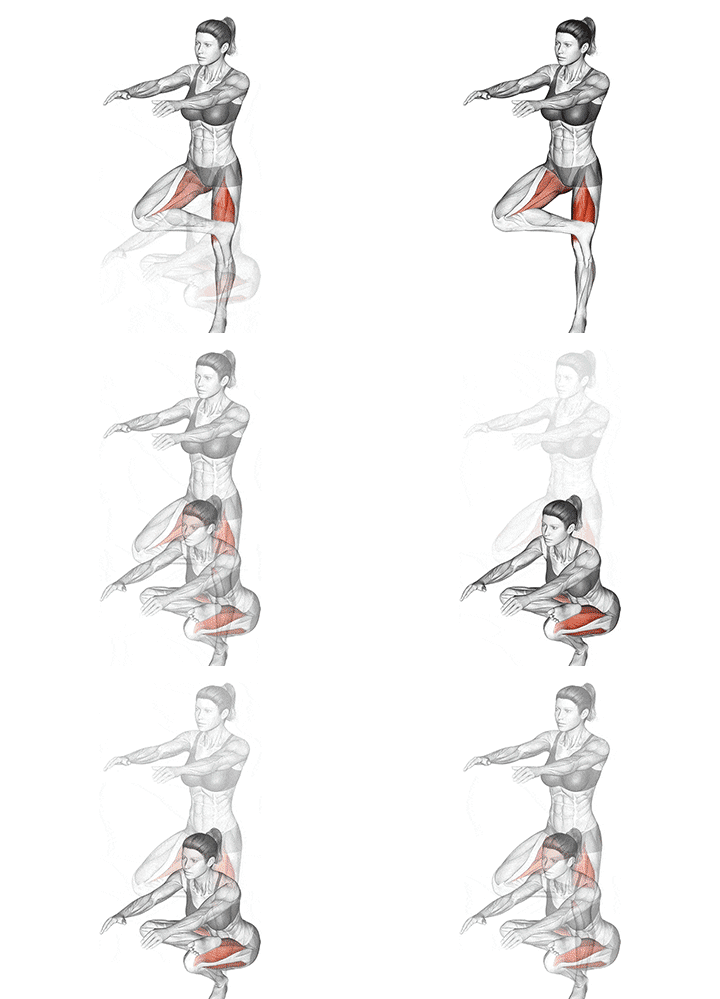
Target Muscle Group:
Quadriceps
Equipment Required
None
Experience Level:
Advanced
Secondary Muscles
Glutes, Hamstings
Ideal sets & reps:
3 sets of 8 reps
Benefits
- 1. This not only strengthens your core but also promotes better posture, reducing the risk of lower back pain and other postural issues.
- 2.Hawaiian Squats demand your full attention as you balance on one leg, enhancing your mind-body connection and promoting improved coordination during the exercise.
- 3. By strengthening and mobilizing key muscle groups, Hawaiian Squats prepare your body for everyday movements, like bending and lifting, reducing the likelihood of strains and injuries
- 4. The deep squat position in Hawaiian Squats encourages greater flexibility in your hip flexors and ankle joints. Improved flexibility can reduce the risk of injury and enhance your range of motion.
- 5. Hawaiian Squats require a high degree of balance and stability, as they are performed on one leg. Over time, you'll notice improved balance and stability in both your gym exercises and daily life.
Instructions
- 1. Shift your body weight onto one leg. Let's start with the right leg as an example. Keep your chest up and maintain good posture throughout the exercise.
- 2. Lift your left foot off the ground and bring it behind you, similar to a reverse lunge. Your left knee should be pointing toward the floor, and your left toes should be lightly touching the ground for balance.
- 3. Begin to lower your body by bending your right knee and hips. Your goal is to achieve a 90-degree bend in your right knee, while keeping your left leg extended behind you.
- 4. Go as low as your flexibility and balance allow. It's essential to maintain proper form rather than aiming for excessive depth.
- 5. Push through your right heel and extend your right knee and hip to return to the starting position. Keep your core engaged for stability.
- 6. Perform the desired number of repetitions on one leg typically 3-4 sets of 8-12 reps, then switch to the other leg to maintain balance.
Points to remember
- 1. Focus on balance, as you'll be standing on one leg. Pick a spot to gaze at to help with balance and stability.
- 2. Perform the squat in a slow and controlled manner. This helps engage the muscles effectively and reduces the risk of injury.
- 3. Maintain an upright and straight posture throughout the exercise. Keep your chest up, shoulders back, and engage your core to support your spine.
- 4. If you're new to Hawaiian Squats, start without weights to master the form before adding resistance. Gradually increase the intensity as your strength and balance improve.
- 5. When lifting one foot behind you, ensure it's done smoothly and with control. Your toes should lightly touch the ground for balance, and your knee should point downward.
Popular Questions
- Q1. What are the muscles worked by hawaiian squats ?
- A1. Hawaiian Squats primarily target the quadriceps, with the hamstrings and glutes playing a secondary role. This exercise is particularly effective for strengthening and toning the front thigh and gluteal muscles.
- Q2. What are the best hawaiian squats alternative's ?
- A2. Alternatives to Hawaiian Squats include Bulgarian Split Squats, which work the same muscle groups and offer balance challenges. box pistol squats and lunges are also excellent options for leg strength, stability, and variety in your routine.
- Q3. What are the benefits of doing hawaiian squats ?
- A3. Hawaiian Squats offer several benefits, including increased quadriceps and gluteal strength, enhanced balance and stability, and improved hip flexibility. They contribute to better posture, reduced risk of lower body injuries, and functional fitness, making daily activities more manageable and promoting an overall well-rounded lower body workout.