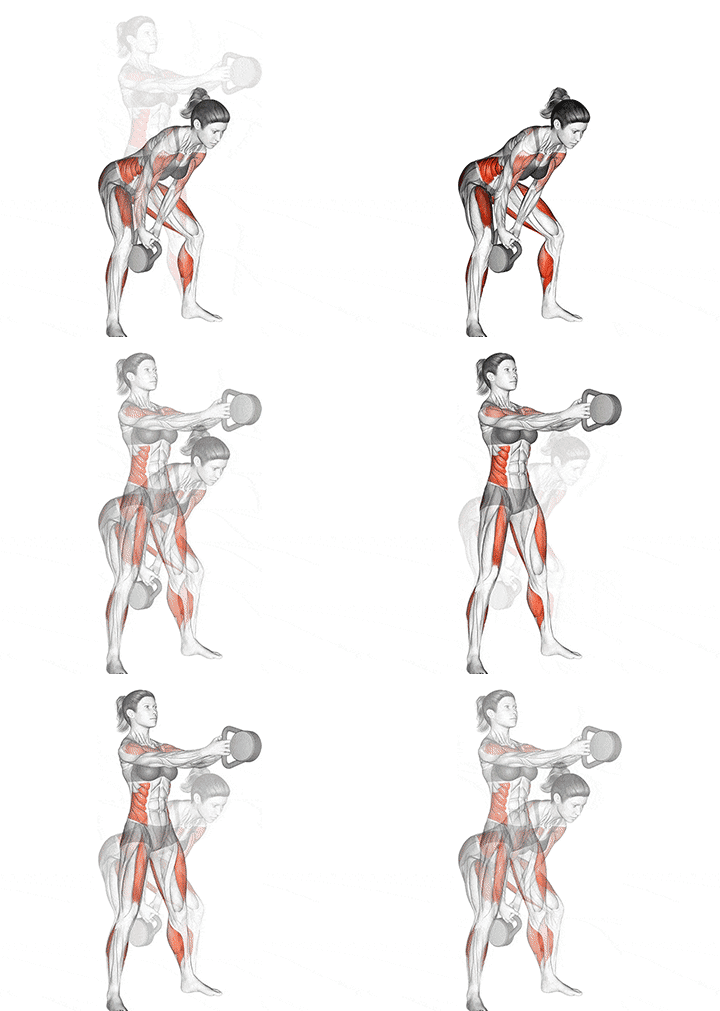
Target Muscle Group:
Quadriceps, Hamstrings
Equipment Required
Kettlebell
Experience Level:
Beginner
Secondary Muscles
Glutes, Calves, Shoulders
Ideal sets & reps:
3 sets of 10 reps
Benefits
- 1. By strengthening the posterior chain (muscles along the back of the body), kettlebell swings can reduce the risk of injuries and imbalances, particularly in the lower back and hips.
- 2. Kettlebell swings engage multiple muscle groups, including the glutes, hamstrings, lower back, shoulders, and core. This compound movement works your entire body in a single exercise.
- 3. Kettlebell swings emphasize the hip hinge motion, which enhances your explosive power. This translates well to sports performance and daily activities requiring quick, forceful movements.
- 4. The swinging motion forces your core muscles to stabilize and support your spine throughout the movement. This can help improve your posture, reduce the risk of lower back pain, and build a strong, resilient core.
- 5. The explosive, repetitive nature of kettlebell swings raises your heart rate and provides an excellent cardiovascular workout. It's a great way to improve your endurance and burn a substantial amount of calories in a short period.
Instructions
- 1. Start with your feet about shoulder-width apart. This gives you a stable base and helps with balance.
- 2. Bend at your hips to reach down and grab the kettlebell. Your back should stay flat like a tabletop. Imagine sticking your butt out while keeping your chest up.
- 3. The swing is like a hip thrust. Imagine you're snapping your hips forward as if you're trying to push something heavy with your hips. As your hips move forward, the kettlebell swings backward between your legs.
- 4. Breathe out forcefully when you stand up straight and the kettlebell reaches chest height. Inhale as you let the kettlebell swing back down between your legs. This breathing pattern helps with power and control.
- 5. Your core is like your body's natural weightlifting belt. Engage it by tightening your stomach muscles. It protects your lower back and helps you swing with more strength.
Points to remember
- 1. Keep your head in a neutral position with your gaze looking forward or slightly down. This helps maintain proper spinal alignment.
- 2. Maintaining correct form is crucial for safety and effectiveness. Keep your back flat, chest up, and a neutral spine to avoid straining your lower back.
- 3. As the kettlebell swings back between your legs, don't let it pull you down. Control the movement with your hips and core to maintain balance and safety.
- 4. Keep your shoulders down and back to prevent strain on your upper body. Your arms should stay relatively straight, with the power coming from your hips.
- 5. Initiate the movement by hinging at your hips, not by squatting down. Your hips should move back and then powerfully thrust forward to create momentum.
Popular Questions
- Q1. What are the muscles worked by kettlebell swings ?
- A1. Kettlebell swings primarily engage the posterior chain, working the glutes, hamstrings, and lower back. They also activate the shoulders, quadriceps, and core, contributing to improved posture, grip strength, and overall body stability.
- Q2. What are the benefits of doing kettlebell swings ?
- A2. Kettlebell swings offer numerous benefits, such as a full-body workout that targets the glutes, hamstrings, and core. They improve cardiovascular endurance, enhance posture, and increase power and explosiveness. Kettlebell swings are also time-efficient, making them a versatile addition to fitness routines for strength, fat loss, and overall conditioning.
- Q3. Do kettlebell swings reduce belly fat ?
- A3. Kettlebell swings, as part of a comprehensive fitness program, can contribute to reducing overall body fat, including belly fat. They are a high-intensity, calorie-burning exercise that helps create a caloric deficit, which is essential for fat loss. However, spot reduction is not possible, so a balanced diet and full-body workouts are also crucial for achieving a leaner midsection.
- Q4. What are the best kettlebell swings alternative's ?
- A4. Alternatives to kettlebell swings include dumbbell swings, seated leg curls, and pin squats. Dumbbell swings replicate the dynamic full-body motion of kettlebell swings, engaging the posterior chain and core. Seated leg curls isolate the hamstrings and adductors, while pin squats, performed with a barbell in a squat rack, target the quadriceps, hamstrings, and glutes, simultaneously enhancing squat strength and form