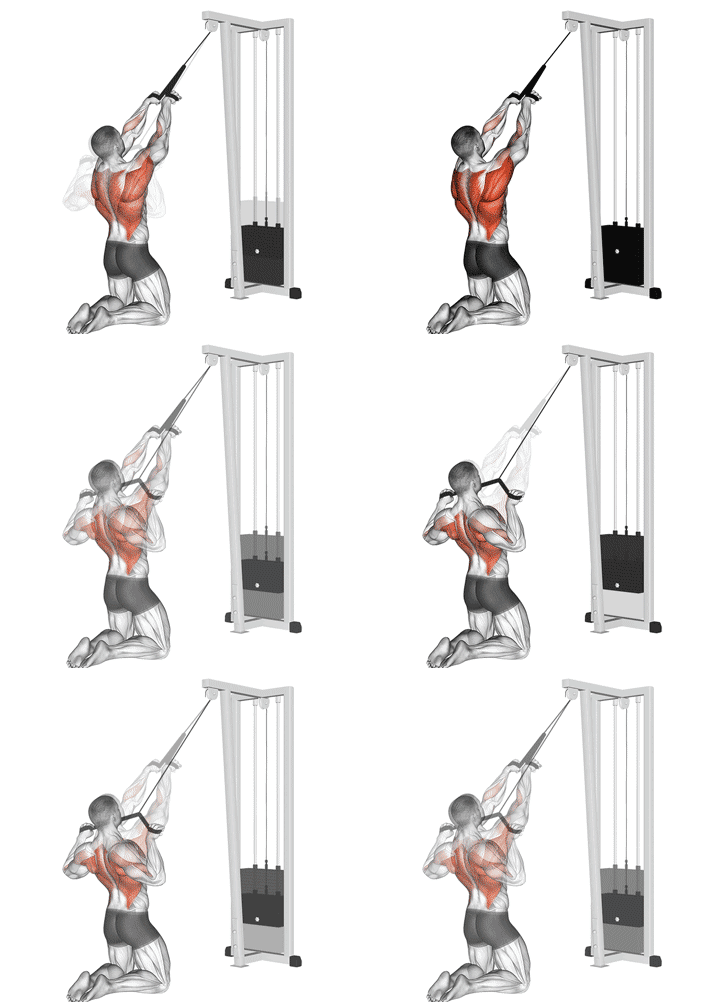
Target Muscle Group:
Rhomboids, Latissimus Dorsi (Lats)
Equipment Required
Cable Machine
Experience Level:
Beginner
Secondary Muscles
Traps, Biceps, Posterior Deltoids
Ideal sets & reps:
3 sets of 8 reps
Benefits
- 1. This exercise simulates real-life pulling movements, making it valuable for functional strength and daily activities that involve lifting and pulling.
- 2. High pulley rows offer various grip options, allowing you to target different parts of the upper back, providing a comprehensive upper body workout.
- 3. This exercise targets the upper back muscles, specifically the latissimus dorsi and rhomboids, contributing to improved strength and muscle definition.
- 4. The kneeling position engages the core muscles, enhancing stability and balance during the exercise, which is vital for overall strength and injury prevention.
- 5. Strengthening the upper back can help correct posture issues by pulling the shoulders back and down, reducing the risk of discomfort and injury in the neck and shoulders.
Instructions
- 1. Start by adjusting the pulley machine to the appropriate height, typically around chest or shoulder level. Attach a v-bar or rowing handle to the cable.
- 2. Kneel on a mat or pad a few feet away from the pulley machine. Your knees should be positioned under your hips, and your back should be straight.
- 3. Grab the v-bar or rowing handle with both hands in an overhand grip (palms facing down), about shoulder-width apart.
- 4. Sit back on your heels slightly and maintain a neutral spine. Your arms should be fully extended, and your back should be straight.
- 5. Exhale and pull the handle towards your lower ribcage. Focus on squeezing your shoulder blades together as you pull, engaging the upper back muscles.
- 6. Keep your elbows close to your body during the movement. At the fully contracted position, squeeze your back muscles for a brief moment to maximize the engagement.
- 7. Inhale and slowly extend your arms to return to the starting position while maintaining control. Avoid using momentum.
Points to remember
- 1. Use a v-bar or rowing handle, and grip it with your palms facing down. Maintain a grip width that is comfortable for your shoulder joint health.
- 2. A Initiate the rowing motion by pulling the handle toward your lower ribcage in a slow and controlled manner. Avoid using jerky or sudden movements.
- 3. Choose a weight that challenges your muscles but allows you to complete the exercise with proper form. It's crucial to prioritize technique over heavy weights.
- 4. Exhale as you pull the handle toward your body and inhale as you return to the starting position. Consistent breathingis essential for maintaining focus and control.
- 5. At the peak of the row, squeeze your shoulder blades together to maximize muscle engagement. Hold this position for a brief pause before returning to the starting position.
Popular Questions
- Q1. What are the best kneeling high pulley row alternative's ?
- A1. Effective alternatives to the kneeling high pulley row include bent-over barbell rows, cable rows, and single-arm dumbbell rows. These exercises provide various ways to target the upper back, lats, and surrounding muscle groups.
- Q2. What are the muscles worked by kneeling high pulley row ?
- A2. The kneeling high pulley row primarily targets the Latissimus Dorsi (Lats) and engages the Rhomboids for shoulder blade stability. Secondary muscles involved include the Trapezius (Traps), Biceps, Posterior Deltoids, and Erector Spinae for spine support during the exercise.
- Q3. What are the benefits of doing kneeling high pulley row ?
- A3. Kneeling high pulley rows are excellent for building a strong and well-defined upper back. They target the lats, rhomboids, and traps, improving posture and overall upper body strength. Additionally, they engage secondary muscles, such as the biceps and rear deltoids, enhancing overall upper body development.