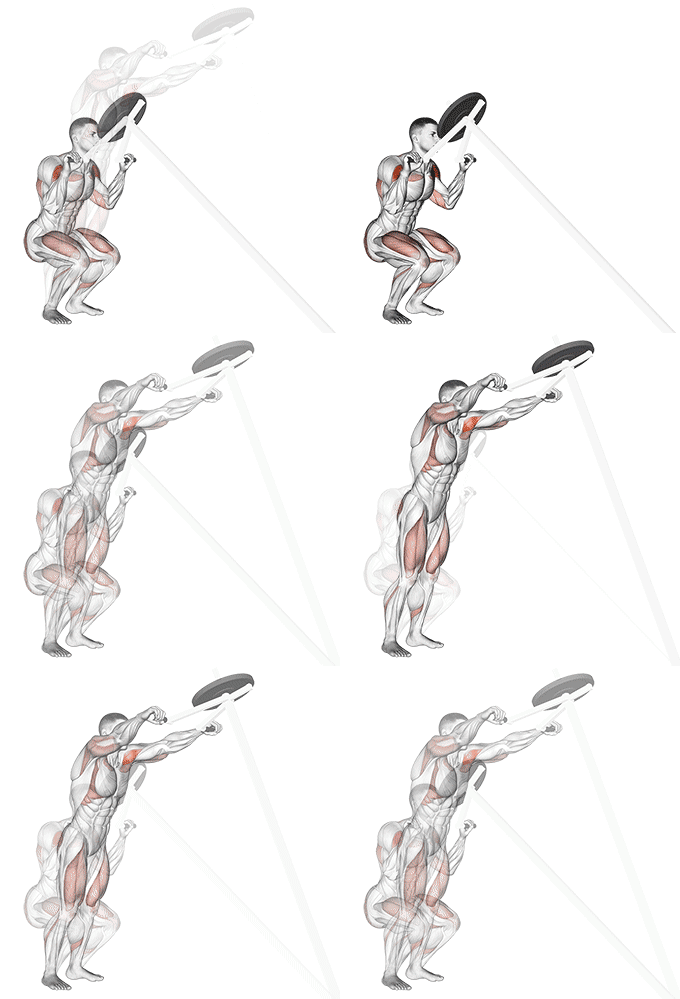
Target Muscle Group:
Deltoids, Quardiceps
Equipment Required
Landmine Station
Experience Level:
Beginner
Secondary Muscles
Calves, Hamstrings, Erector Spinae
Ideal sets & reps:
3 sets of 8 reps
Benefits
- 1. It can boost performance in sports that require explosive lower body strength and agility.
- 2. Due to the intense full-body engagement, it aids in calorie burn and can be beneficial for weight management.
- 3. By strengthening the entire kinetic chain, it helps stabilize joints and improve posture, reducing the risk of injuries during physical activities.
- 4. This compound exercise targets multiple muscle groups, including the legs, core, shoulders, and upper back, promoting overall strength and coordination.
- 5. Mimicking natural movement patterns, it enhances functional strength for activities like lifting, carrying, and daily tasks, improving daily life performance.
Instructions
- 1. Begin by securing one end of a barbell in a landmine attachment or, if not available, securely place it in a corner. Load the opposite end with the desired weight.
- 2. Stand facing the end of the barbell with your feet shoulder-width apart. Ensure the loaded end of the barbell is at chest height.
- 3. Grasp the barbell with both hands, keeping your elbows close to your body. The bar should be at shoulder level.
- 4. Lower your body into a squat by pushing your hips back and bending your knees. Keep your chest up and maintain a neutral spine throughout the movement.
- 5. As you ascend from the squat, press the barbell upward by extending your arms. Fully extend your arms at the top of the movement.
- 6. Lower the barbell back to the chest level and descend into another squat. Perform the desired number of repetitions.
Points to remember
- 1. When transitioning from the squat to the press, avoid jerky or abrupt movements. Keep the motion fluid and controlled.
- 2. Maintain a neutral spine throughout the exercise. Keep your chest up and gaze forward to avoid straining your lower back.
- 3. Stand with your feet shoulder-width apart and toes slightly turned out. This stance provides stability and proper squat mechanics.
- 4. Squat down to at least parallel or lower, depending on your flexibility and strength. Achieving proper depth ensures effective engagement of your leg muscles.
- 5. Choose an appropriate weight that challenges you but allows you to perform the exercise with proper form. Form should never be compromised for heavier weights.
Popular Questions
- Q1. What are the best landmine squat press alternative's ?
- A1. Effective alternatives to the Landmine Squat Press encompass Barbell Front Squats, which emphasize quads and core, Goblet Squats, enhancing balance and core strength, and Thrusters, uniting front squats with overhead presses to deliver a full-body workout.
- Q2. What are the muscles worked by landmine squat press ?
- A2. he Landmine Squat Press activates key muscle groups, such as quadriceps and glutes for leg power, and anterior deltoids for shoulder strength. Secondary muscles engaged are hamstrings, calves, erector spinae (lower back), and core, enhancing overall stability and strength. This exercise offers a full-body workout.
- Q3. What are the benefits of doing landmine squat press ?
- A3. The Landmine Squat Press offers a multitude of benefits. It enhances leg strength, focusing on quads and glutes, while also improving overall core stability. The movement pattern incorporates functional strength and can be used to build power and muscle endurance, making it an excellent addition to full-body workout routines.