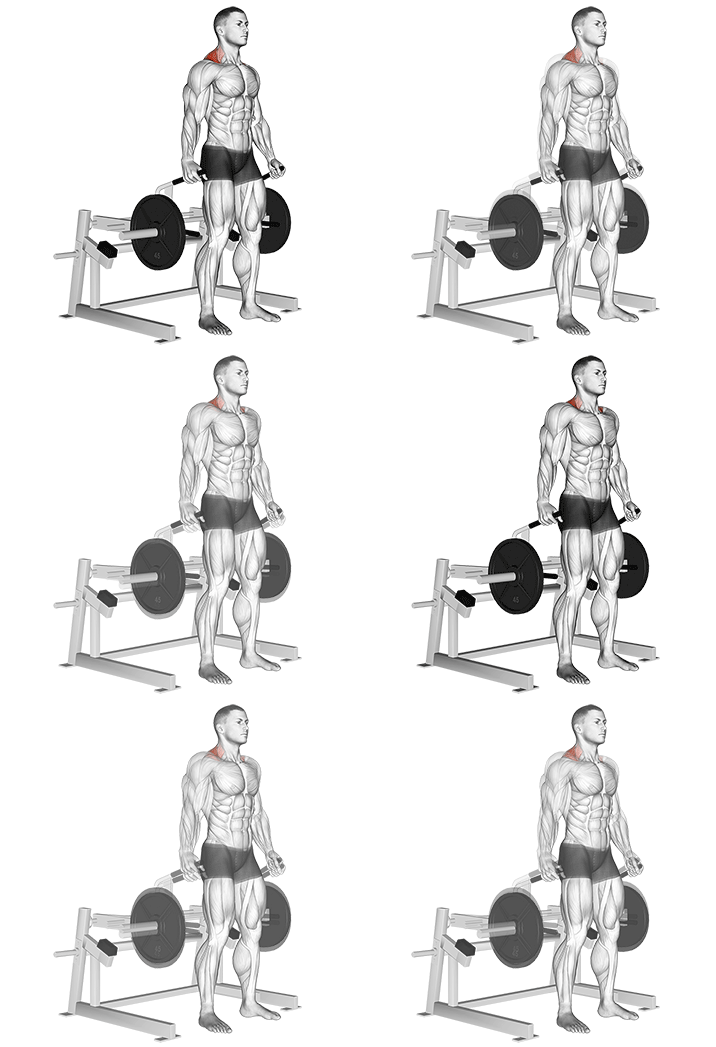
Target Muscle Group:
Upper and Middle Traps
Equipment Required
Lever Shrug Machine
Experience Level:
Beginner
Secondary Muscles
shoulders, Rhomboids
Ideal sets & reps:
3 sets of 10 reps
Benefits
- 1. By working on the upper back, it helps in creating a more balanced and symmetrical physique.
- 2. Building strength in the upper back and trapezius muscles enhances overall upper body stability and control.
- 3. Lever Shrugs require a strong grip to lift the weight, making it an effective exercise for enhancing grip strength.
- 4. Lever Shrugs primarily target the trapezius muscles, contributing to their development and a more muscular upper back.
- 5. This exercise strengthens the upper back and promotes scapular retraction, which can correct posture issues and reduce the risk of related injuries.
Instructions
- 1. Begin by setting up a lever machine, also known as a landmine attachment, in a squat rack or by using a dedicated landmine station. Ensure the lever bar is securely anchored.
- 2. Load the desired weight onto the lever bar, ensuring it's secure. Start with a manageable weight, especially if you're new to the exercise.
- 3. Stand facing the loaded lever bar with your feet about shoulder-width apart. Position the bar at about hip level, ensuring it's securely in the landmine attachment.
- 4. Bend at your hips and knees slightly to grasp the bar with both hands, maintaining an overhand grip (palms facing your body) and placing your hands about shoulder-width apart.
- 5. With a straight back and arms extended, lift the bar by shrugging your shoulders toward your ears. Focus on squeezing your trapezius muscles at the top of the movement.
- 6. Hold the contracted position for a moment. Gently lower the bar back down by reversing the shrug motion, returning to the starting position with your arms fully extended.
- 7. Perform the desired number of repetitions, keeping proper form throughout. Typically, 3-4 sets of 10-12 reps are a good starting point.
Points to remember
- 1. Lift and lower the lever bar in a slow and controlled manner. Avoid using momentum or jerking motions, as this can lead to injury.
- 2. Use an overhand grip with your hands about shoulder-width apart on the lever bar. Make sure your grip is secure to prevent accidents.
- 3. If you're new to lever shrugs, begin with a light weight to master the movement and ensure your form is correct before increasing the load.
- 4. Focus on the full range of motion. Elevate your shoulders as high as possible when shrugging, and then lower the bar back down to hip level.
- 5. Focus on the shrug motion when lifting the lever bar. Elevate your shoulders as high as you can while squeezing your trapezius muscles. Avoid bending your elbows or using excessive arm strength.
Popular Questions
- Q1. What are the muscles worked by lever shrug ?
- A1. Lever shrugs primarily target the upper and middle trapezius, which elevate the shoulders and promote scapular stability. They also engage secondary muscles like the rhomboids, levator scapulae, deltoids, and erector spinae for shoulder support and spine stability.
- Q2. What are the benefits of doing lever shrug ?
- A2. Lever shrugs offer benefits such as enhanced upper trapezius development, aiding in shoulder stability and scapular function. They also engage secondary muscles like the rhomboids, deltoids, levator scapulae, and erector spinae, contributing to overall upper body strength and posture improvement.
- Q3. What are the best lever shrug alternative's ?
- A3. You can replace lever shrugs with other exercises like barbell shrugs, which let you handle heavier weights for intense trapezius targeting. Dumbbell shrugs offer versatility in hand placement, engaging each trapezius muscle separately. Face pulls work well for comprehensive shoulder development and rear deltoid engagement. These alternatives provide diverse options while working similar muscle groups.