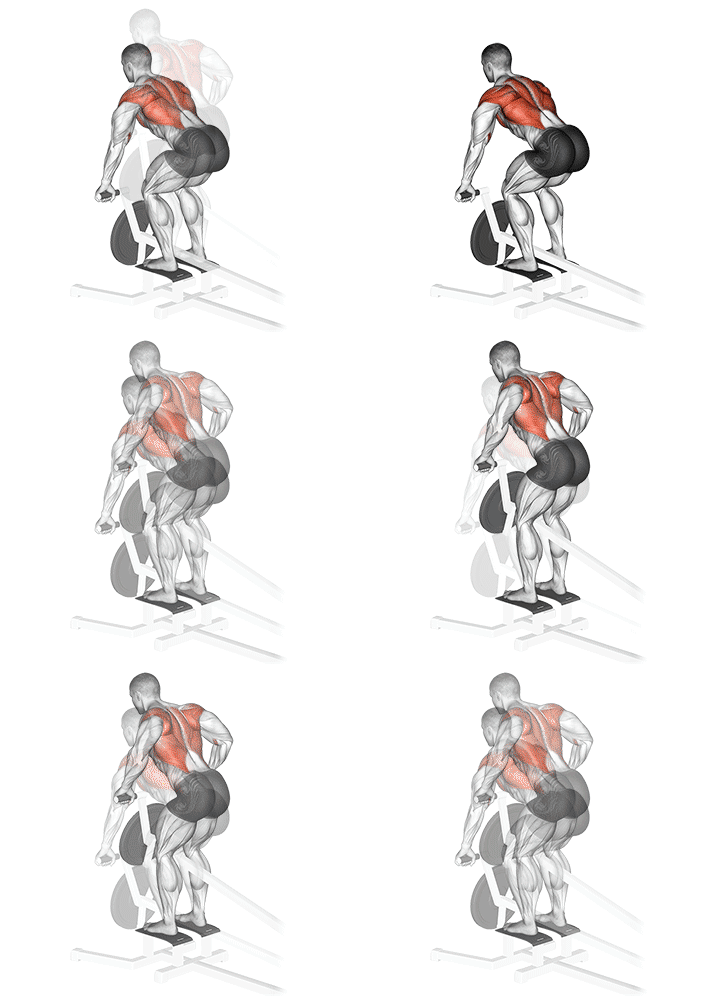
Target Muscle Group:
latissimus dorsi (lats)
Equipment Required
Lever T-Bar Machine
Experience Level:
Beginner
Secondary Muscles
Rhomboids, upper trapezius
Ideal sets & reps:
3 sets of 8 reps
Benefits
- 1. Maintaining stability during Lever T-Bar Rows necessitates engaging the core muscles. This strengthens the abdominal and lower back muscles, leading to better core stability and overall strength.
- 2. Maintaining stability during Lever T-Bar Rows necessitates engaging the core muscles. This strengthens the abdominal and lower back muscles, leading to better core stability and overall strength.
- 3. This exercise primarily targets the upper back muscles, including the trapezius and rhomboids. Regularly performing Lever T-Bar Rows can result in increased muscle size and improved definition in these areas.
- 4. This exercise mimics the motion of lifting objects from the ground, making it highly practical for daily activities and sports performance. Improved strength in these movements can enhance your overall functional fitness.
- 5. Lever T-Bar Rows can be adapted to suit various fitness goals. By adjusting the weight and rep ranges, you can use this exercise for muscle hypertrophy, strength, or endurance training.
Instructions
- 1. Adjust the lever arm machine with an appropriate weight. Choose your handle or grip attachment and secure it in place.
- 2. Stand with feet shoulder-width apart, knees slightly bent for stability. Face the lever arm with a balanced stance.
- 3. Grab the handle with an overhand grip, keeping your hands slightly wider than shoulder-width apart and positioned higher than your knees.
- 4. Maintain a straight back, a slight hip bend, and an engaged core. Keep your chest up, shoulders relaxed, and focus on proper posture.
- 5. Initiate the movement by retracting your shoulder blades, pulling the handle towards your torso. Keep your elbows close to your sides throughout.
- 6. At the top, your shoulder blades should be fully retracted, and the handle should be close to your chest. Hold for a brief pause to emphasize the contraction.
- 7. Then, lower the handle under control, maintaining tension in your upper back. Perform the desired number of repetitions and sets, typically 3-4 sets of 8-12 reps for muscle hypertrophy.
Points to remember
- 1. Ensure the lever arm machine is adjusted to the appropriate height and weight. Choose a handle or grip attachment that is comfortable for your hand placement.
- 2. Aim for a full range of motion by retracting your shoulder blades completely at the peak of the movement. This ensures that you engage the target muscles effectively.
- 3. Focus on controlled movements throughout the exercise. Avoid using momentum to lift the weight, and concentrate on engaging the muscles in your upper back and arms.
- 4. Coordinate your breathing with the movement. Exhale as you pull the handle towards your chest and inhale as you release it. Proper breathing helps stabilize your core and enhances your overall performance.
- 5. Gradually increase the weight as your strength improves, but always prioritize maintaining proper form and technique. It's better to use lighter weights with correct form than to lift too heavy and compromise your posture.
Popular Questions
- Q1. What are the benefits of doing lever t-bar row ?
- A1. The Lever T-Bar Row is advantageous for upper back development, specifically targeting the latissimus dorsi and trapezius muscles. It also contributes to improved posture by strengthening the upper back and promoting scapular retraction.
- Q2. What are the best lever t-bar row alternative's ?
- A2. Effective alternatives to the Lever T-Bar Row include Barbell Rows for heavy lifting and overall back development, Seated Cable Rows for controlled resistance, and Dumbbell Rows for addressing muscle imbalances and targeting the upper back.
- Q3. What are the muscles worked by lever t-bar row ?
- A3. t's important to note that the Lever T-Bar Row primarily targets the upper back, making it an effective exercise for developing strength and muscle mass in this area. The secondary muscles, including the biceps and forearms, provide additional support during the movement.