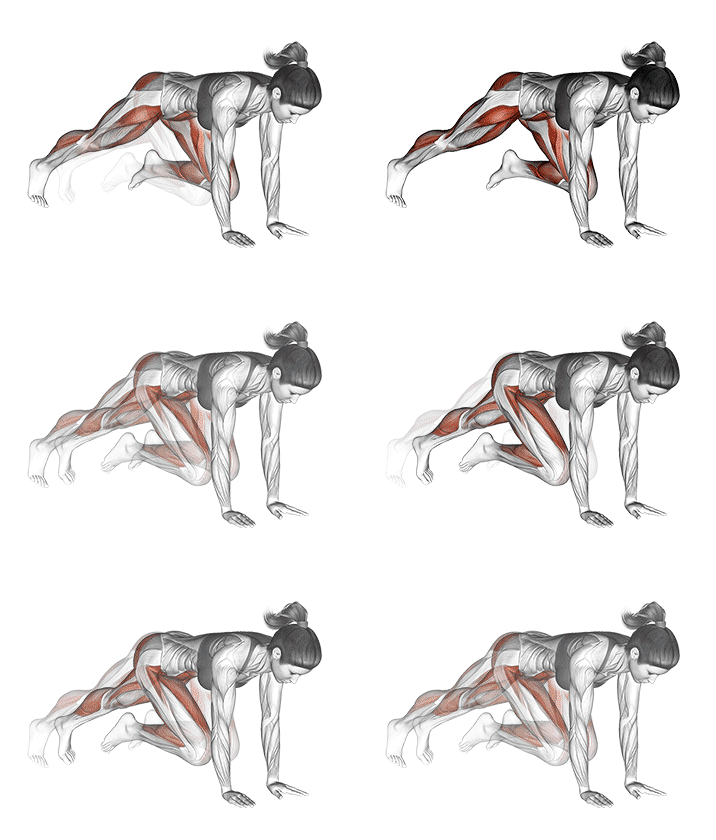
Target Muscle Group:
Abdomen, Obliques
Equipment Required
None
Experience Level:
Beginner
Secondary Muscles
Calves, Glutes, Hamstrings
Ideal sets & reps:
3 sets Of 15 reps
Benefits
- 1. By incorporating mountain climbers into your routine, you can strengthen and tone multiple muscle groups at once.
- 2. Mountain climbers are a high-intensity exercise that gets your heart rate up quickly. Engaging in this exercise helps improve cardiovascular endurance and stamina.
- 3. Regularly performing mountain climbers can enhance your agility, body awareness, and coordination, which can be beneficial in various sports and physical activities.
- 4. Since mountain climbers are a high-intensity exercise that engages multiple muscle groups, they can help you burn calories efficiently. Incorporating them into your workouts can contribute to weight loss.
- 5. Mountain climbers require a strong and stable core to maintain proper form and execute the exercise effectively. Regular practice can help strengthen your core muscles, leading to improved posture, balance, and overall stability.
Instructions
- 1. Begin in a push-up position with hands directly under shoulders, body forming a straight line from head to toe, and feet hip-width apart.
- 2. Tighten your abdominal muscles to stabilize your body and maintain proper form throughout the exercise, ensuring a strong and stable midsection.
- 3. Raise your right foot off the floor and bring your right knee towards your chest, aligning it with your right hand on the ground.
- 4. Swiftly switch legs by extending your right leg back to the starting position while simultaneously bringing your left knee towards your chest, aligning it with your left hand.
- 5. Keep alternating the leg movements in a rapid, running-like motion, while maintaining a steady pace, engaging your core, and staying focused.
- 6. Keep your hips level without sagging or lifting too high, ensure your shoulders are directly above your hands, and focus your gaze slightly ahead on the floor. Repeat for desired number of reps.
Points to remember
- 1. Ensure your body is in a straight line from head to toe, and your hands are directly under your shoulders.
- 2. Keep your abdominal muscles engaged throughout the exercise to stabilize your body and protect your lower back.
- 3. Keep your hips level with the rest of your body, avoiding any excessive sagging or lifting that could compromise your form.
- 4. Concentrate on performing the exercise with correct form and engaging the targeted muscles rather than focusing solely on speed.
- 5. Distribute your weight evenly through your hands to minimize strain on your wrists. You can also use push-up handles or perform the exercise on your fists if needed.
Popular Questions
- Q1. Do mountain climbers work obliques ?
- A1. Mountain climbers engage and work the oblique muscles, which are located on the sides of your abdomen. The twisting motion involved in the exercise helps strengthen and tone the obliques, making it an effective workout for this muscle group.
- Q2. Are mountain climbers plyometrics ?
- A2. Mountain climbing can incorporate plyometric movements, but it is not typically categorized solely as a plyometric exercise. Plyometrics, also known as jump training, involves explosive movements that aim to improve muscular power, agility, and speed.
- Q3. Does mountain climbers burn thigh fat ?
- A3. Mountain climbers can contribute to overall fat burning, which may help in reducing thigh fat. However, spot reduction is not possible, and a balanced approach of regular exercise, healthy diet, and consistency is necessary for overall fat loss and improving body composition.
- Q4. Can mountain climbers cause back pain ?
- A4. When performed with proper form, mountain climbers should not cause back pain. However, if done incorrectly or if you have pre-existing back issues, it is possible to experience discomfort. Maintaining a neutral spine and seeking guidance from a professional can help prevent any potential back pain.
- Q5. Are mountain climbers aerobic or anaerobic ?
- A5. Mountain climbers are primarily an aerobic exercise, as they involve sustained rhythmic movements and elevate the heart rate for improved cardiovascular fitness. However, they also offer some anaerobic benefits by engaging muscles in short bursts of intense effort, contributing to strength and power development.