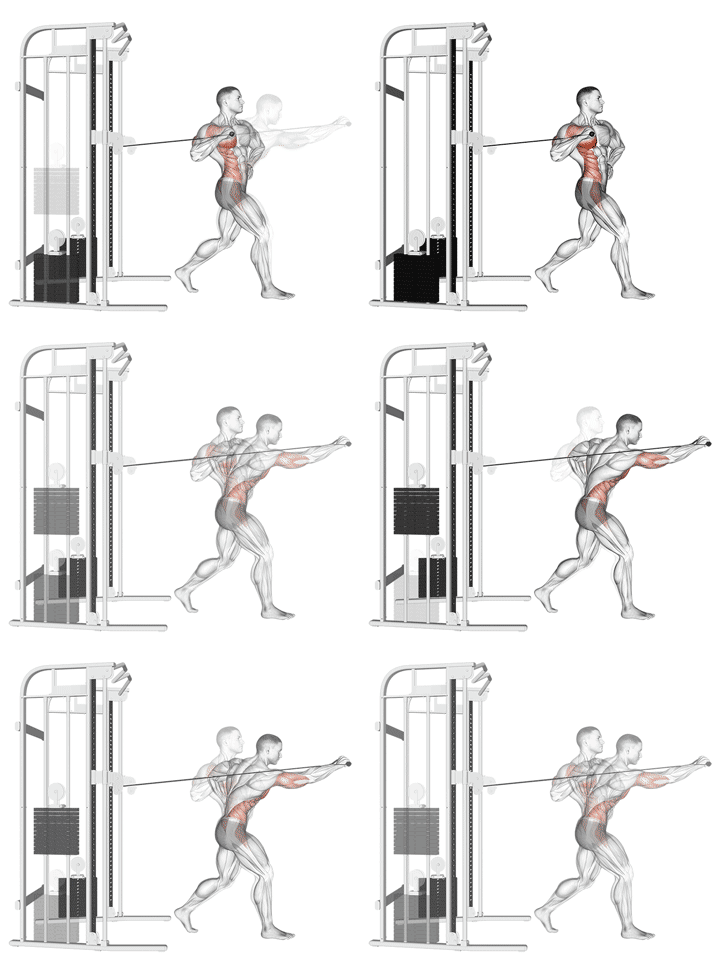
Target Muscle Group:
Chest
Equipment Required
Cable machine
Experience Level:
Beginner
Secondary Muscles
Triceps, Obliques
Ideal sets & reps:
3 sets of 8 reps
Benefits
- 1. The one arm cable chest press targets the chest muscles specifically, allowing for focused development of strength and size.
- 2. Focusing on each side independently improves the mind-muscle connection, leading to better muscle engagement and performance.
- 3. Working one arm at a time helps address any muscle imbalances between the left and right sides, promoting better overall muscle balance and symmetry.
- 4. Performing the exercise with one arm requires greater stability and core engagement, strengthening stabilizer muscles and improving overall stability and functional strength.
Instructions
- 1. Stand beside a cable machine with the handle attachment at chest height. Adjust the weight and position yourself with your side facing the machine.
- 2. Grab the handle with one hand, palm facing downward. Take a staggered stance with one foot slightly in front of the other for balance.
- 3. Begin with your arm bent at a 90-degree angle, elbow at shoulder height, and hand in line with your chest. Engage your core, keep your chest up, and shoulders back and down, inhale and push the cable handle forward.
- 4. Extending your arm fully in front of you while maintaining control. Pause briefly at the end of the movement, feeling the contraction in your chest muscles. Exhale and slowly bring your arm back to the starting position
- 5. Allowing your arm to bend at the elbow while maintaining control. Repeat the exercise for the desired number of repetitions on one side before switching to the other arm. Maintain proper form and control throughout the exercise
Points to remember
- 1. Concentrate on engaging your chest muscles during the pressing phase. Squeeze your chest at the end of the movement to maximize the contraction.
- 2. Inhale before initiating the pressing movement and exhale as you exert force and return to the starting position. Breathe rhythmically throughout the exercise.
- 3. Ensure correct alignment by keeping your chest up, shoulders back and down, and core engaged throughout the exercise. Avoid excessive leaning or twisting.
- 4. Pay attention to any muscle imbalances or discrepancies between the left and right sides of your body. Work both sides equally to promote balance and symmetry.
- 5. Experiment with different handle positions (e.g., higher or lower grip) to target different areas of the chest and find the position that feels most comfortable and effective for you.