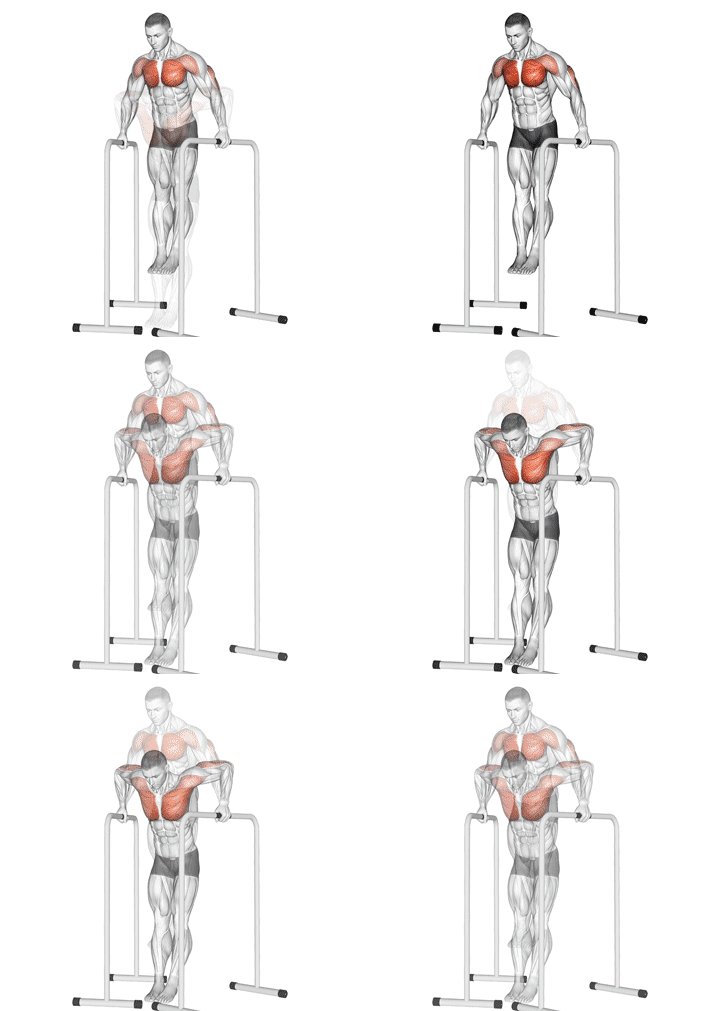
Target Muscle Group:
Chest
Equipment Required
Parallel Dip Bar
Experience Level:
Beginner
Secondary Muscles
Triceps, Shoulders
Ideal sets & reps:
3 sets of 8 reps
Benefits
- 1. Parallel dips engage the core muscles to stabilize the body throughout the movement.
- 2. Parallel dips are an effective exercise for building upper body strength by engaging multiple muscle groups simultaneously.
- 3. Parallel dips are a compound movement that targets multiple muscle groups, making them an excellent exercise for muscle development.
- 4. Parallel dips engage the muscles in the upper back, which can help improve posture by strengthening the muscles that support the spine.
- 5. Parallel dips require stability and control throughout the movement, which can help improve joint stability, particularly in the shoulders and elbows.
Instructions
- 1. Stand between parallel bars, ensuring they are sturdy and at a height that allows your arms to fully extend without touching the ground. Hold onto each bar with an overhand grip, palms facing down.
- 2. Keep your torso upright, shoulders back, and chest lifted. Lower your body by bending your elbows and slightly leaning forward. Maintain control as you descend, ensuring that your elbows track along the sides of your body.
- 3. Continue lowering until your shoulders are slightly below your elbows or until you feel a stretch in your chest muscles. Briefly pause at the bottom of the movement to maintain stability and control.
- 4. Push yourself back up by straightening your arms, focusing on using your chest and triceps to initiate the upward movement. Exhale as you push back up, while keeping your torso upright.
- 5. Start with a comfortable range of motion and gradually increase your depth as you build strength and flexibility. Avoid excessive swinging or momentum by using controlled and deliberate movements.
- 6. Repeat the exercise for the desired number of repetitions, maintaining proper form and control throughout the entire set.
Points to remember
- 1. Maintain proper form throughout the exercise. Keep your torso upright, shoulders back, and chest lifted. Avoid excessive leaning or swinging.
- 2. Engage your core muscles throughout the exercise to maintain stability and control. A strong core helps you maintain proper posture and form during the movement.
- 3. Start with a range of motion that feels comfortable for your current strength and flexibility. Gradually increase the depth of your dips as you progress and feel more comfortable.
- 4. Keep your elbows tracking along the sides of your body as you lower and raise yourself. Avoid letting your elbows flare out to the sides, as this can put unnecessary stress on the shoulder joints.
- 5. Remember to breathe throughout the exercise. Inhale as you lower your body, and exhale as you push back up to the starting position. Maintaining a consistent breathing pattern helps provide oxygen to your muscles.
Popular Questions
- Q1. What muscles do parallel dips work ?
- A1. Parallel dips primarily work the chest (pectoralis major), triceps brachii, and anterior deltoids. They also engage the muscles of the upper back, such as the rhomboids and trapezius, for stabilization. Additionally, parallel dips activate the serratus anterior and core muscles to support proper form and posture.
- Q2. Are parallel dips bad for shoulder's ?
- A2. Parallel dips can potentially stress the shoulders if performed incorrectly or with pre-existing shoulder issues. However, when executed with proper form and shoulder mobility, parallel dips can be safe and beneficial. If you have concerns or shoulder problems, consult a professional for guidance on form and modifications.
- Q3. How to properly do parallel dips at home ?
- A3. To perform parallel dips at home, locate two sturdy surfaces like dip bars or chairs. Hold onto each surface with palms facing down. Lower your body by bending your elbows until your shoulders are slightly below your elbows. Push back up to the starting position, ensuring proper form and control throughout the exercise.
- Q4. Which are better parallel dips or tricep dips ?
- A4. Parallel dips target the chest, triceps, and shoulders for overall upper body strength. Tricep dips isolate and strengthen the triceps specifically. Choose parallel dips for a comprehensive workout and tricep dips for focused tricep development. Incorporating both exercises ensures a well-rounded upper body routine.
- Q5. What are the best alternatives of parallel dips ?
- A5. Alternatives to parallel dips include tricep dips, bench press, push-ups, and close-grip push-ups. These exercises target the chest and triceps and can be modified to suit different fitness levels. Additionally, weighted chest dips can be performed to increase the intensity. Varying your workout routine with these alternatives helps promote overall upper body strength and development.