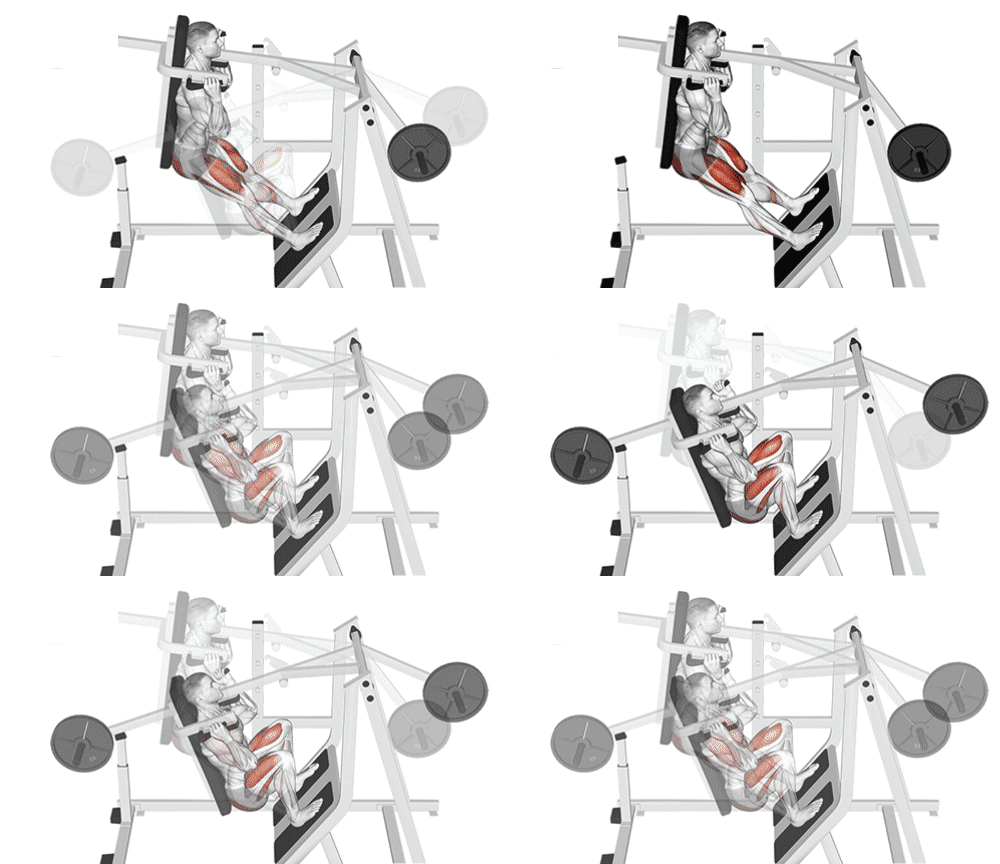
Target Muscle Group:
Quardiceps, Hamstrings
Equipment Required
Pendulum Squat Machine
Experience Level:
Beginner
Secondary Muscles
Glutes, Calves, Abductors
Ideal sets & reps:
3 sets of 8 reps
Benefits
- 1. The movement mimics natural leg motions, enhancing everyday functionality and athletic performance.
- 2. Engaging multiple muscles improves joint stability, reducing the risk of injury during various movements.
- 3. Pendulum Squats target quadriceps, hamstrings, glutes, and calves for a comprehensive lower body workout.
- 4. Pendulum Squats require less spinal loading compared to traditional squats, providing an alternative for those with lower back concerns
- 5. Incorporating Pendulum Squats into your routine can lead to well-rounded lower body strength, enhanced joint health, and improved overall athletic performance.
Instructions
- 1. Stand with feet shoulder-width apart or slightly wider. Keep hands on hips or hold a dumbbell in front of your chest.
- 2. Shift your weight onto one leg and raise the opposite leg slightly off the ground. Lower into a squat by bending the knee of the supporting leg.
- 3. As you squat, let the raised leg swing back behind you, counterbalancing your body's movement for stability.
- 4. Lower into a squat while maintaining proper posture. Engage core muscles to enhance balance and control.
- 5. Push through the heel of the supporting leg to return to the starting position. Alternate sides and perform the desired reps for a balanced workout.
Points to remember
- 1. Ensure you alternate sides evenly to work both legs and maintain muscle balance.
- 2. Begin with a controlled pace and gradually increase speed and intensity as your balance improves.
- 3. Lower into the squat with control and maintain an upright posture, avoiding excessive forward lean.
- 4. Lower into the squat with control and maintain an upright posture, avoiding excessive forward lean.
- 5. Push through the heel of the supporting leg to return to the starting position, engaging glutes and hamstrings.
Popular Questions
- Q1. What are the benefits of doing pendulum squat ?
- A1. Engaging in Pendulum Squats offers a unique lower body workout that improves leg strength, stability, and balance. This exercise targets multiple muscles simultaneously, enhancing functional strength for daily activities and sports, while also promoting joint health and mobility.
- Q2. What are the muscles worked by pendulum squat ?
- A2. Pendulum Squats primarily target the quadriceps, which are the muscles on the front of your thighs responsible for knee extension. Secondary engagement includes the glutes and hamstrings, assisting in hip and knee movements, while the core muscles play a role in stabilizing the body during the dynamic balancing motion.
- Q3. What are the best pendulum squat alternative ?
- A3. Effective alternatives to Pendulum Squats include Bulgarian Split Squats, which target each leg individually while enhancing lower body strength and stability. Step-Ups provide a functional movement that engages multiple muscles and challenges balance. Both alternatives offer variety and can be tailored to different fitness levels and goals.