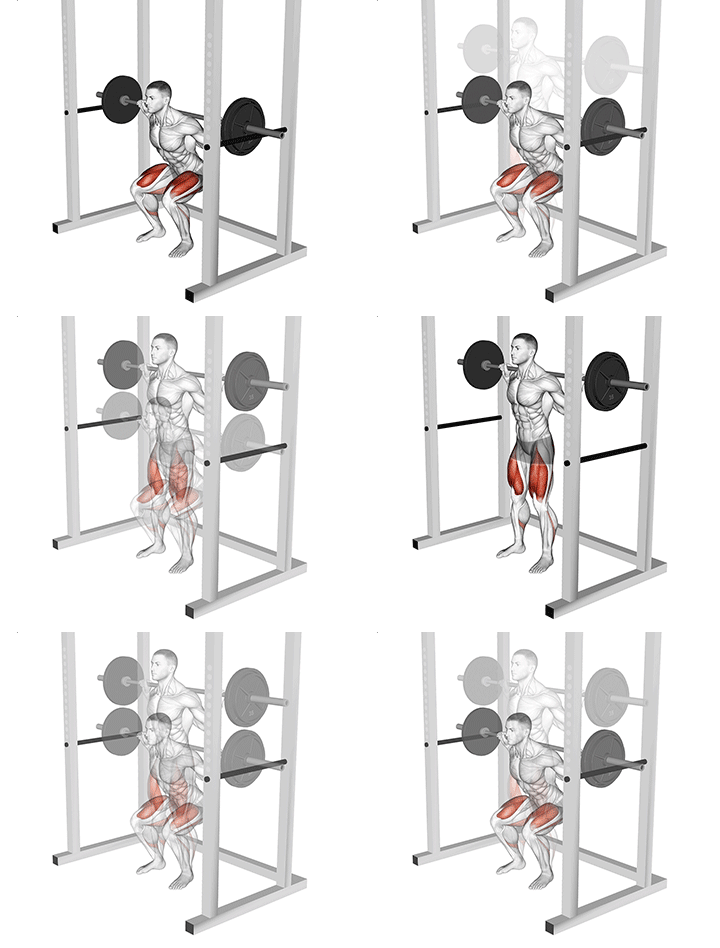
Target Muscle Group:
Quardiceps, Glutes
Equipment Required
Squat Rack, Barbell
Experience Level:
Beginner
Secondary Muscles
Hamstrings, Erector Spinae
Ideal sets & reps:
3 sets of 8 reps
Benefits
- 1. Builds leg and glute muscles, promoting balanced lower body development.
- 2. Enhances squatting technique, ensuring proper alignment and reducing the risk of injury.
- 3. By using pins to limit depth, you reduce stress on knee and hip joints while still challenging muscles.
- 4. Effective for breaking through strength plateaus by isolating and strengthening weaker portions of the lift.
- 5. Pin Squats help you focus on specific ranges of motion, aiding in strengthening sticking points during a traditional squat.
Instructions
- 1. Adjust safety pins in the power rack to position the barbell at the middle of your squat motion. Load the barbell with an appropriate weight to challenge yourself.
- 2. Stand beneath the bar, placing your feet shoulder-width apart and pointing slightly outward. Lift the bar off the rack, resting it on your upper traps.
- 3. Begin the squat by simultaneously pushing your hips back and bending your knees. Keep your chest up and maintain a straight back to ensure proper alignment.
- 4. As you lower yourself, allow the barbell to lightly touch the safety pins. This pause eliminates momentum and maintains tension in your muscles.
- 5. Generate power by forcefully pushing through your heels. Extend both your hips and knees simultaneously, engaging your core for stability and maintaining an upright posture.
- 6. After the ascent, lower the barbell back down and repeat the process. Aim for 3-4 sets of 6-8 reps in the begining. As your form improves, gradually increase the weight to continue challenging yourself safely.
Points to remember
- 1. Use a controlled and deliberate tempo. Avoid any jerking or bouncing movements.
- 2. Start with lighter weights until you're comfortable with the movement pattern, then gradually increase the weight.
- 3. Ensure the safety pins are set at an appropriate height to challenge your sticking point without compromising safety.
- 4. Maintain proper form throughout the movement. Keep your knees in line with your toes, and avoid letting them collapse inward.
- 5. If you're new to this exercise, consider working with a certified trainer to ensure your form is correct and to prevent any risk of injury.
Popular Questions
- Q1. What are the muscles worked by pin squat ?
- A1. During pin squats, the quadriceps and glutes take the lead in propelling the movement upward. Hamstrings, erector spinae, and core muscles offer support by stabilizing the knees, spine, and maintaining posture.
- Q2. Are pin squats harder than regular squats ?
- A2. Yes, pin squats are generally harder than regular squats due to the pause and lack of momentum, requiring more force and isometric engagement. They specifically address weak points and challenge stability, contributing to improved strength and form.
- Q3. What are the benefits of doing pin squat ?
- A3. Pin squats offer benefits such as targeting specific sticking points in your squat range, building strength in those areas, improving explosive power from a static position, enhancing isometric muscle engagement, and promoting better stability and form through controlled pauses.
- Q4. What are the best pin squat alternative ?
- A4. Best alternatives to Pin Squat are: paused squats involve holding the bottom position to boost strength and control. front squats shift the barbell forward to target quads and core while promoting upright posture. box squats involve briefly sitting on a box, enhancing hip engagement and overcoming sticking points. These variations offer specific benefits, catering to different goals and preferences.