Target Muscle Group:
Rear Deltoids (Shoulders)
Equipment Required
Resistance Band
Experience Level:
Beginner
Secondary Muscles
Rhomboid, Middle Trapezius
Ideal sets & reps:
3 sets of 10 reps
Benefits
- 1. The movement involved in pull aparts encourages scapular mobility and proper movement mechanics. This enhances shoulder joint health and function, preventing shoulder impingement and discomfort.
- 2. By targeting the muscles in the upper back, resistance band pull aparts contribute to overall upper body strength and muscle balance, complementing pushing exercises like bench press and overhead presses.
- 3. Regularly incorporating pull aparts in your training can help prevent injuries caused by muscle imbalances and poor posture. By strengthening the upper back and shoulders, you create a solid foundation for other upper body movements.
- 4. Resistance band pull aparts are versatile and can be done anywhere with a resistance band. They're suitable for all fitness levels, from beginners to advanced athletes, and can be easily modified by adjusting the band tension or position..
- 5. Resistance band pull aparts engage the rear deltoids, rhomboids, and lower traps, which are vital muscles responsible for pulling the shoulders back and down. Strengthening these muscles can help correct rounded shoulders and improve overall posture.
Instructions
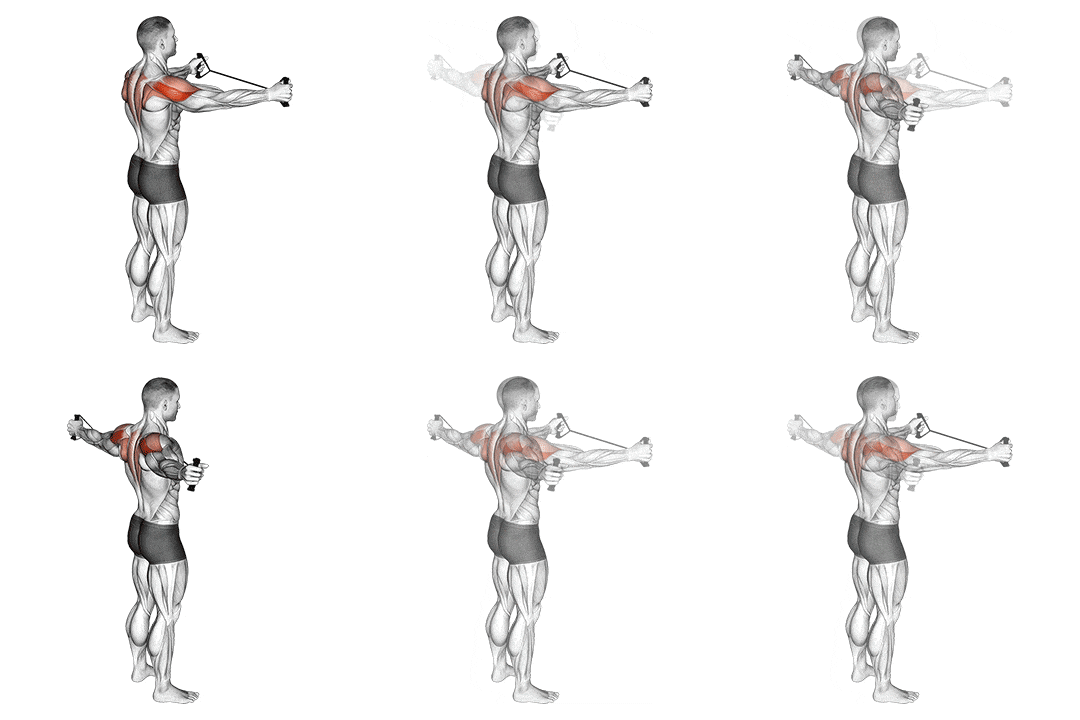
- 1. Begin by standing with your feet shoulder-width apart and holding a resistance band in both hands. Ensure the band is taut but not overly stretched.
- 2. Hold the band with an overhand grip, palms facing downward, and your hands positioned slightly wider than shoulder-width apart. Keep a slight bend in your elbows throughout the exercise.
- 3. Extend your arms forward at shoulder level, keeping them parallel to the ground. Initiate the movement by squeezing your shoulder blades together and pulling the band apart horizontally.
- 4. Imagine trying to stretch the band across your chest. As you pull the band, focus on engaging the muscles in your upper back, specifically the rear deltoids, rhomboids, and lower traps. maximize the activation of these muscles.
- 5. Hold the peak position for a brief moment, squeezing your shoulder blades together to intensify the contraction in your upper back. Slowly and with control, release the tension in the band and bring your arms back to the starting position.
- 6. Aim for 10-15 repetitions for 2-4 sets, depending on your fitness level and goals. Start with a lighter resistance band if you are a beginner and gradually increase the band's tension as you become more comfortable with the exercise.
Points to remember
- 1. Concentrate on contracting the muscles in your upper back, including the rear deltoids, rhomboids, and lower traps, during each repetition.
- 2. Choose a resistance band with an appropriate level of tension that challenges your upper back muscles without causing strain or discomfort.
- 3. Perform the pull aparts with controlled and deliberate movements. Avoid using momentum to ensure the targeted muscles engage effectively.
- 4. Breathe naturally and coordinate your breathing with the pulling motion. Inhale as you return to the starting position and exhale during the pulling phase.
- 5. Maintain proper posture throughout the exercise, with shoulders down, chest open, and a slight bend in the elbows. Avoid arching your back or rounding your shoulders.
Popular Questions
- Q1. Can you do band pull aparts everyday ?
- A1. Performing band pull aparts every day is not recommended. Allow your muscles to rest and recover by incorporating them into your upper body workouts 2-3 times per week to prevent overtraining and reduce the risk of injury.
- Q2. What are band pull aparts good for ?
- A2. Band pull aparts are good for strengthening the upper back, improving shoulder stability, and enhancing posture. They target key muscles like the rear deltoids and rhomboids, promoting scapular mobility and injury prevention. Versatile and suitable for all fitness levels, band pull aparts are a valuable addition to any workout routine for upper body strength.
- Q3. Are resistance band pull aparts effective ?
- A3. Yes, band pull aparts are effective for strengthening the upper back and shoulders, improving posture, and enhancing shoulder stability. They target key muscles, such as the rear deltoids and rhomboids, while promoting scapular mobility and injury prevention. Incorporating band pull aparts into your routine can contribute to overall upper body strength and shoulder health.
- Q4. Do resistance band pull aparts work chest ?
- A4. Band pull aparts primarily target the muscles in the upper back, including the rear deltoids, rhomboids, and lower traps. They are not intended to work the chest muscles directly. To target the chest muscles, you would need to perform exercises specifically designed for chest development, such as bench press variations, push-ups, or chest flyes. Shorten it
- Q5. What are band pull apart alternatives without band ?
- A5. Band pull apart alternatives without a band include face pulls, dumbbell rear delt flyes, cable rope face pulls, prone Y-T-W raises, bent-over rows, and supermans. These exercises effectively target the upper back, rear deltoids, and shoulder stabilizers for improved strength and stability. Focus on proper form and controlled movements for maximum benefit.