Target Muscle Group:
Quadriceps, Hamstrings
Equipment Required
Rowing Ergometer
Experience Level:
Beginner
Secondary Muscles
Lats, Calves, rhomboids
Ideal sets & reps:
25 strokes per min
Also Known as
Rowing machine
Benefits
- 1. Rowing is easy on the joints, minimizing the risk of injuries commonly associated with high-impact exercises like running.
- 2. It boosts your heart rate, improving your cardiovascular endurance and promoting efficient oxygen transport throughout your body.
- 3. Rowing, like many forms of exercise, triggers the release of endorphins, helping reduce stress, alleviate anxiety, and boost your mood.
- 4.Rowing engages your legs for the initial push, your back and shoulders during the pull, and your core for stability, providing a comprehensive workout.
- 5. For athletes, rowing ergometers are valuable tools for honing rowing skills, and for the general fitness enthusiast, they provide a challenging and effective cross-training option.
Instructions
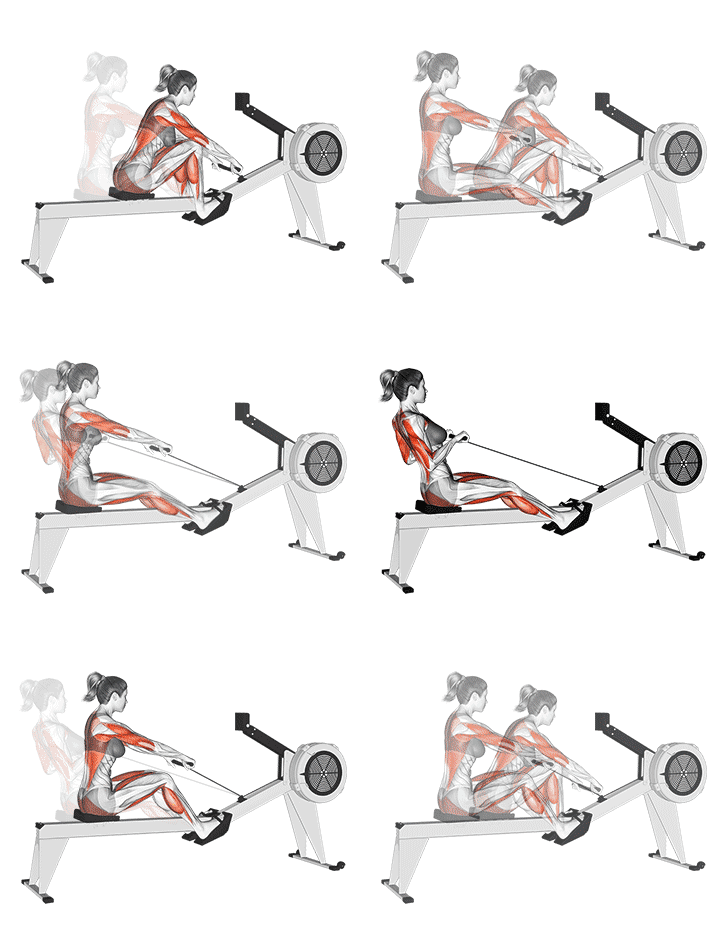
- 1. Begin by adjusting the foot straps and ensuring proper seat positioning. Sit upright with a straight back, and grip the handle with both hands.
- 2. Start the stroke by pushing off with your legs while keeping your arms extended. Maintain a slight forward lean at the hips.
- 3. Fully extend your legs, engage your core, and lean back slightly as you pull the handle toward your lower chest. This simulates the "drive" phase of rowing.
- 4. At the end of the pull, your legs should be straight, and the handle should be close to your body. Sit up straight and lean your upper body back slightly.
- 5. Reverse the motion by extending your arms, bending your knees, and leaning forward from your hips to return to the starting position. This is the "recovery" phase.
- 6. Maintain a smooth and controlled rhythm, coordinating your breathing with your strokes. Generally, exhale during the exertion in the drive phase and inhale during the recovery phase.
Points to remember
- 1. Focus on maintaining good rowing form. This includes a straight back, relaxed grip on the handle, and a controlled rhythm.
- 2. Finish your workout with a cool-down period to gradually lower your heart rate and prevent dizziness. Continue rowing at a slow pace for a few minutes.
- 3. Coordinate your breathing with your strokes. Exhale during the exertion phase (drive) and inhale during the recovery phase. This helps optimize oxygen intake.
- 4. Adjust the resistance level (damper setting) according to your fitness and training goals. A higher setting will mimic the feel of rowing on water and provide more resistance.
- 5. Ensure that you complete the entire range of motion during each stroke, from fully extending your legs to pulling the handle to your lower chest. This engages all major muscle groups.
Popular Questions
- Q1. What are the muscles worked by rowing ergometer ?
- A1. A rowing ergometer primarily engages muscles throughout the entire body. The rowing motion activates major muscle groups, including the legs (quadriceps, hamstrings, calves), core (abdominals), and upper body (lats, rhomboids and upper traps). It provides a comprehensive workout, promoting strength, endurance, and cardiovascular fitness.
- Q2. What are the best rowing ergometer alternative's ?
- A2. Rowing ergometer alternatives include outdoor rowing, which offers a natural environment and fresh air but requires access to water. Elliptical trainers provide a low-impact, full-body workout, simulating rowing movements. Additionally, stationary cycling, swimming or the zercher carry can be effective alternatives to the rowing ergometer, depending on individual preferences and fitness goals.
- Q3. What are the benefits of doing rowing ergometer ?
- A3. Rowing ergometer workouts offer numerous benefits, enhancing cardiovascular health, strength, and endurance. They provide a low-impact, full-body exercise, improving muscle tone and promoting weight loss. The rhythmic motion engages both aerobic and anaerobic systems, enhancing overall fitness, and reducing stress. Rowing ergometers are versatile and suitable for individuals of all fitness levels.