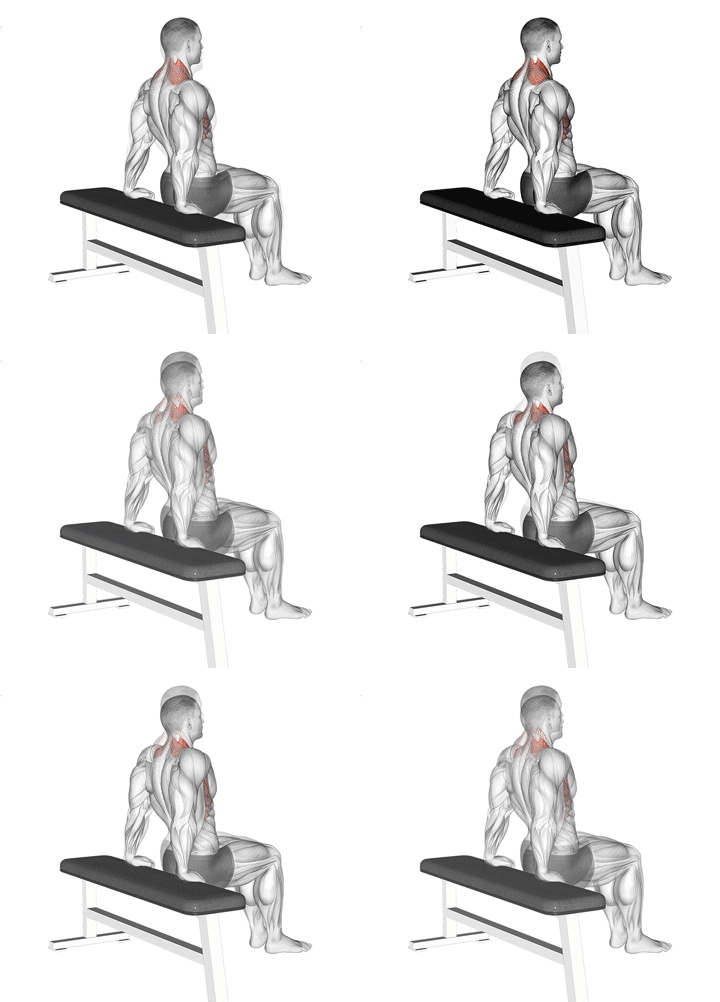
Target Muscle Group:
Upper Traps (Trapezius)
Equipment Required
A bench
Experience Level:
Beginner
Secondary Muscles
Triceps, Deltoids
Ideal sets & reps:
3 sets of 8 reps
Benefits
- 1. This exercise engages the trapezius, rhomboids, and other upper body muscles, promoting upper body strength and muscle development.
- 2. Strengthening the scapular muscles aids in injury prevention by stabilizing the shoulder joint during various upper body exercises and movements.
- 3. Scapula dips can improve shoulder mobility and range of motion, making them valuable for athletes and those seeking better shoulder flexibility.
- 4. Scapula dips are excellent for strengthening the muscles around the shoulder blades, enhancing stability, and reducing the risk of shoulder injuries.
- 5. By targeting the muscles responsible for scapular retraction and depression, scapula dips can help correct rounded shoulders and contribute to better overall posture.
Instructions
- 1. Locate a stable surface like parallel bars, dip bars, or a sturdy bench. Ensure it can support your body weight. Stand or sit on the bars or bench, keeping your hands shoulder-width apart.
- 2. Grip the bench with your palms facing downward (overhand grip). Your palms should be gripping the bars or the edge of the bench. Start with a slight bend in your elbows.
- 3. You have the option to keep your feet on the floor for assistance or lift them off the ground for a more challenging variation. Begin the motion by lowering your body.
- 4. Focus on bending your arms and letting your shoulder blades move backward. This movement is the scapular dip. As you lower your body, emphasize squeezing your shoulder blades together.
- 5. Imagine trying to pinch a pencil between them. Push your body back up by straightening your arms. Allow your shoulder blades to protract, moving apart as you ascend.
- 6. Perform the exercise for your desired number of repetitions. Typically, 8-12 reps for 2-3 sets is a good starting point.
Points to remember
- 1. Refrain from using momentum or jerking motions. Smooth and controlled movements are essential for scapular dips.
- 2. Maintain strict form throughout the exercise. Focus on scapular retraction and depression to engage the target muscles effectively.
- 3. Begin with a controlled range of motion. Avoid going too deep into the dip initially to prevent overstretching or straining your shoulders
- 4. Grip the bars or bench with your palms facing down (overhand grip) and hands shoulder-width apart. Ensure a secure and comfortable grip.
- 5. Keep your elbows close to your body while rowing the kettlebells. This engages the back muscles effectively and reduces strain on the shoulders.
Popular Questions
- Q1. What are the benefits of doing scapula dips ?
- A1. Scapula Dips offer benefits such as improved shoulder stability, enhanced posture by strengthening the upper back and shoulder muscles, and reduced risk of shoulder injuries. This exercise also aids in developing upper body strength and mobility.
- Q2. What are the best scapula dips alternative ?
- A2. A great alternative to Scapula Dips is the Seated Cable Row, which also targets the upper back and shoulder muscles. Another effective choice is the Face Pull exercise, which focuses on the rear deltoids and upper trapezius while improving shoulder health.
- Q3. What are the muscles worked by scapula dips ?
- A3. In Scapula Dips, the primary muscle engaged is the Trapezius, specifically the upper and middle portions. Secondary muscles include the Rhomboids, Posterior Deltoids, Latissimus Dorsi, Triceps Brachii, and Pectoralis Minor, all contributing to improved shoulder stability and strength.