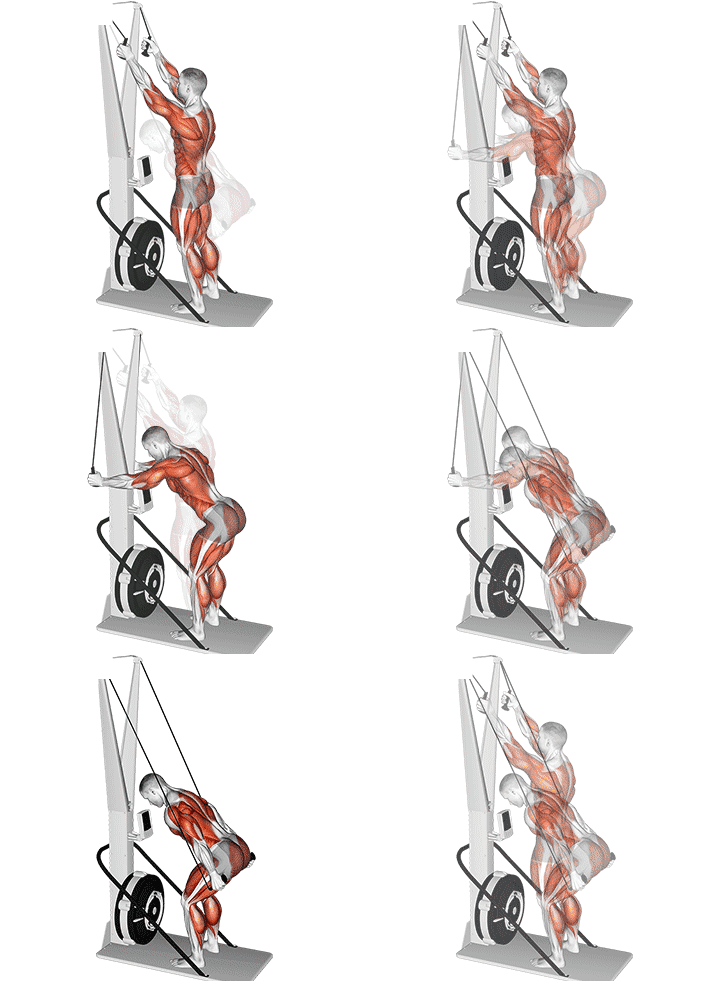
Target Muscle Group:
Quadriceps, Hamstrings, Glutes
Equipment Required
Ski Erg Machine
Experience Level:
Beginner
Secondary Muscles
Triceps, Shoulders, Back muscles
Ideal sets & reps:
4 sets of 10 reps
Benefits
- 1. The rhythmic motion simulates cross-country skiing, elevating heart rate and enhancing cardiovascular fitness.
- 2. Ski Erg is gentle on joints, making it an excellent choice for those seeking a low-impact yet effective cardio workout.
- 3. The combined muscle engagement and cardiovascular intensity contribute to efficient calorie burning and weight management.
- 4. Ski Erg engages multiple major muscle groups, including legs, core, back, and arms, offering a comprehensive full-body workout.
- 5. The exercise promotes functional strength and coordination, translating to improved performance in various sports and daily activities.
Instructions
- 1. Position yourself facing the Ski Ergometer, ensure your feet are securely placed in the foot straps, and stand with a comfortable distance between you and the machine.
- 2. Grasp the handles with your palms facing down, maintain a slight forward lean at your hips, and engage your core muscles to support your posture.
- 3. Initiate the movement by pushing down through your legs while simultaneously pulling the handles toward your torso, engaging your quads, hamstrings, and back muscles.
- 4. As you complete the pull, allow your arms to extend forward while pushing your body back up using your leg muscles, focusing on a controlled and coordinated motion.
- 5. Keep a consistent pace by synchronizing your leg and arm movements; inhale as you extend and exhale during the pull phase, maintaining smooth and steady breaths throughout the exercise.
Points to remember
- 1. Hold the handles with a firm overhand grip, ensuring your wrists are aligned and your grip is comfortable.
- 2. Strive for a continuous and fluid motion that mimics cross-country skiing, avoiding jerky or sudden movements.
- 3. Maintain a slight forward lean at the hips, keeping your back straight and your core engaged throughout the exercise.
- 4. Breathe naturally throughout the exercise, coordinating your breath with your movements to maintain a steady rhythm.
- 5. Focus on involving both your upper and lower body by coordinating the arm and leg movements in a synchronized manner.
Popular Questions
- Q1. What are the muscles worked by ski ergometer ?
- A1. The Ski Ergometer exercise engages a range of primary muscles including quadriceps, hamstrings, glutes, and latissimus dorsi, as they simulate the skiing motion. Additionally, core muscles play a crucial stabilizing role, while erector spinae and shoulder stabilizers contribute to maintaining proper form. This comprehensive engagement of major muscle groups makes the Ski Ergometer an effective choice for full-body strengthening and cardiovascular conditioning.
- Q2. What are the best ski ergometer alternative ?
- A2. If you're seeking alternatives to the Ski Ergometer, consider rowing machines that engage the full body in a rhythmic motion, or opt for battle ropes to challenge the upper body and core while boosting cardio. Cross-country skiing, whether outdoors or on a stationary trainer, provides a functional mimicry of skiing motions for a comprehensive workout.
- Q3. What are the benefits of doing ski ergometer ?
- A3. Engaging in the Ski Ergometer exercise offers comprehensive benefits, including a full-body workout that targets major muscle groups such as quads, hamstrings, glutes, and lats. It enhances cardiovascular fitness through rhythmic motions, promotes low-impact conditioning, and improves coordination and functional strength, making it a valuable addition to your fitness routine.