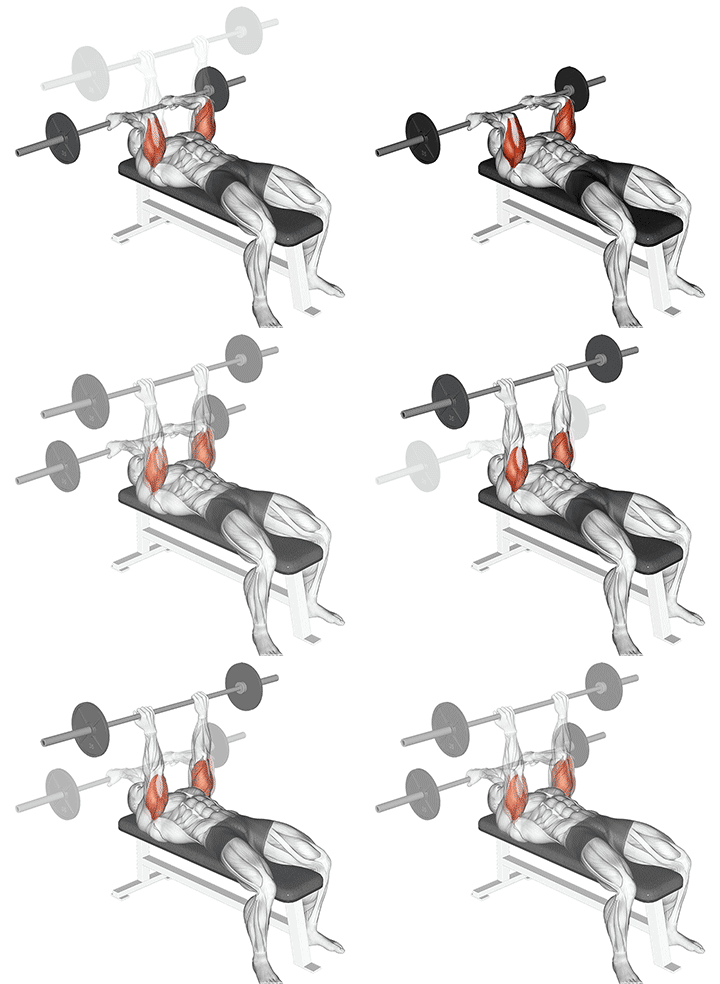
Target Muscle Group:
Triceps
Equipment Required
Barbell & a bench
Experience Level:
Beginner
Secondary Muscles
Forearm, Back Muscles
Ideal sets & reps:
3 sets of 8 reps
Benefits
- 1. Skull crushers effectively target and strengthen the triceps, leading to improved muscle size and strength in the back of your upper arms.
- 2. Building well-developed triceps through skull crushers contributes to a more balanced and visually appealing physique, enhancing the appearance of your arms.
- 3. Strong triceps developed from skull crushers can help you lift heavier weights and perform better in pushing exercises like bench press, shoulder press, and push-ups.
- 4. Strengthening the triceps through skull crushers can enhance overall arm strength, which translates to improved performance in pushing exercises and daily activities.
- 5. Skull crushers require stabilizing the shoulder and elbow joints, improving joint stability and strengthening the surrounding connective tissues, reducing the risk of injury.
Instructions
- 1. Lie flat on a bench or the floor with your feet firmly planted on the ground.
- 2. Hold a barbell, dumbbells, or an EZ bar with an overhand grip, with your hands slightly closer than shoulder-width apart.
- 3. Extend your arms straight up toward the ceiling, perpendicular to the floor. Keeping your upper arms stationary, slowly lower the weight by bending your elbows.
- 4. Your forearms should move only at the elbow joints, bringing the weight towards your forehead or just above it. Pause briefly at the bottom of the movement.
- 5. Now reverse the motion by extending your arms and returning the weight to the starting position. Repeat the exercise for the desired number of repetitions.
Points to remember
- 1. Start with lighter weights and progress gradually to challenge your muscles and promote strength and growth over time.
- 2. Avoid using momentum or swinging the weight to ensure the triceps muscles are properly engaged throughout the exercise.
- 3. Select equipment that allows for a comfortable grip and proper wrist alignment to ensure stability and minimize discomfort or strain.
- 4. Prevent fully straightening the arms at the top of the movement to maintain tension on the triceps and minimize stress on the elbow joint.
- 5. Maintain a stable and controlled movement, keeping elbows close to the head and avoiding excessive back arching to effectively target the triceps and minimize the risk of injury.