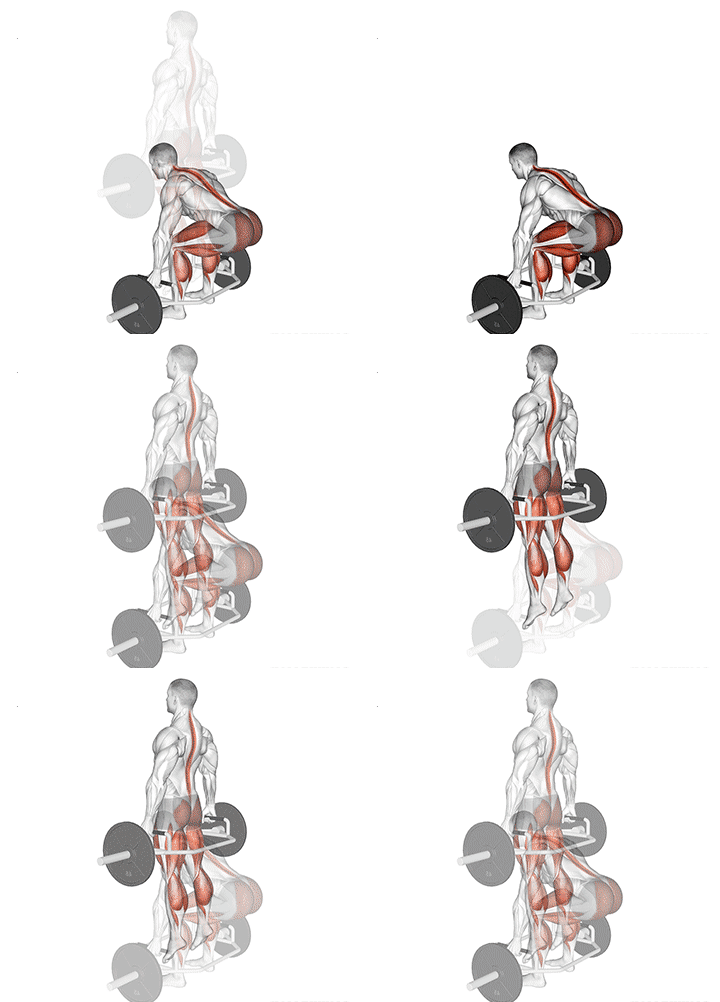
Target Muscle Group:
Quadriceps, Gluteus Maximus
Equipment Required
Trap Bar
Experience Level:
Beginner
Secondary Muscles
Calves, Hamstrings, Lower Back
Ideal sets & reps:
3 sets of 5 reps
Benefits
- 1. This exercise engages not only the lower body but also the core and upper body muscles. It promotes a well-rounded, functional strength development.
- 2. Incorporating Trap Bar Jump Squats into your routine can lead to enhanced athletic performance in various sports, including basketball, football, and track and field.
- 3. The Trap Bar Jump Squat can be customized to suit different fitness levels by adjusting the weight and height of the jump. It's suitable for beginners to advanced athletes.
- 4. The high-intensity nature of jump squats elevates the heart rate, making it an effective calorie-burning exercise. It supports weight management and cardiovascular health.
- 5. TThe Trap Bar Jump Squat is a plyometric exercise that enhances explosive leg strength. It's particularly effective for athletes looking to improve their vertical jump and sprinting abilities.
Instructions
- 1. Begin by setting up a trap bar on the ground. Stand inside the trap bar with your feet shoulder-width apart. Ensure the bar is centered with your body.
- 2. Bend at your hips and knees to lower your body into a squat position. Grip the trap bar handles firmly with your palms facing each other. Your back should be flat, and your chest up.
- 3. Explosively push through your heels, extending your hips, knees, and ankles simultaneously to jump vertically. Keep your chest up and maintain a neutral spine.
- 4. While in the air, tuck your knees toward your chest slightly to facilitate the jump. Land softly by bending your hips and knees, absorbing the impact with a slight bend in your legs to protect your joints.
- 5. Immediately upon landing, go into another squat and explosively jump again for the desired number of repetitions depending on your fitness level and goals.
Points to remember
- 1. To minimize impact, land softly on the balls of your feet rather than flat-footed.
- 2. If you're new to this exercise, begin with a light or no weight to practice the technique.
- 3. Increase the weight and intensity gradually as your strength and explosiveness improve.
- 4. When landing, focus on landing softly with bent hips and knees to reduce impact on your joints.
- 5. If you have any knee or joint issues, consult a fitness professional or physical therapist before attempting this exercise.
Popular Questions
- Q1. What are the muscles worked by trap bar jump squat ?
- A1. The Trap Bar Jump Squat primarily targets the quadriceps, hamstrings, and glutes as the main muscle groups engaged during the squat and jump. Secondary muscles involved include the calves, lower back, and core, which play a vital role in stabilizing the body during the explosive movement
- Q2. What are the benefits of doing trap bar jump squat ?
- A2. Performing the Trap Bar Jump Squat offers several key benefits. This explosive exercise enhances lower body power, making it valuable for athletes aiming to improve their vertical jump and sprinting abilities. It engages multiple muscle groups, including the quadriceps, hamstrings, and glutes, leading to improved strength and agility.
- Q3. What are the best trap bar jump squat alternatives ?
- A3. Effective alternatives to the Trap Bar Jump Squat include the Barbell Jump Squat, which uses a traditional barbell to achieve a similar explosive leg workout. Additionally, the Box Jump and Vertical Jump exercises provide excellent alternatives, focusing on vertical power and agility. These alternatives can be incorporated into your routine to add variety while targeting similar muscle groups and enhancing lower body explosiveness.