Target Muscle Group:
Erector Spinae (Back)
Equipment Required
Hyperextension Bench
Experience Level:
Beginner
Secondary Muscles
Obliques, Hamstrings
Ideal sets & reps:
4 sets of 10 reps
Benefits
- 2. By promoting proper spinal alignment, these hyperextensions contribute to better posture, decreasing the risk of discomfort or strain.
- 3. The exercise mirrors twisting movements encountered in everyday tasks, translating into enhanced real-world strength and flexibility.
- 1. Strengthening the spinal muscles can act as a safeguard against lower back injuries, providing a stable foundation for physical endeavors.
- 4. The rotational aspect of the exercise engages obliques, enhancing core stability and aiding in twisting motions essential for daily activities.
- 5. Twisting hyperextensions target the erector spinae muscles along the spine, fortifying your lower back for improved support and reduced vulnerability to strains.
Instructions
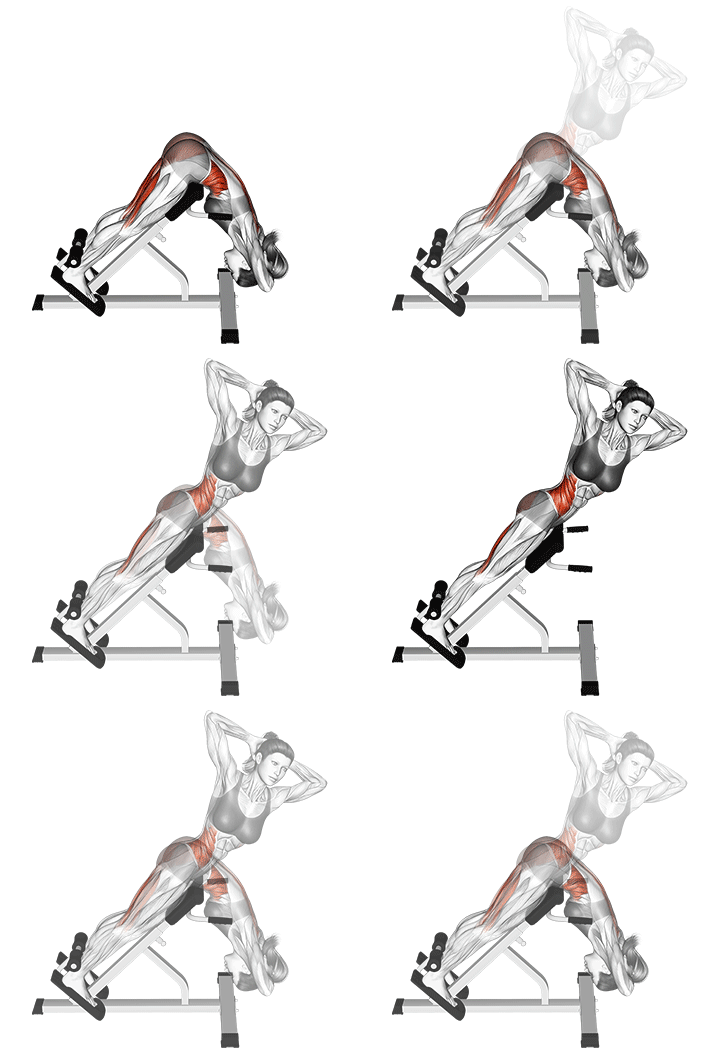
- 1. Lie face down on a hyperextension bench, positioning your hips at the edge and securing your feet under the footpads. Cross your arms over your chest or place your hands behind your head.
- 2. Engage your core muscles and keep your spine in a neutral alignment. Your body should form a straight line from head to heels.
- 3.Begin the movement by lifting your upper body while simultaneously rotating to one side. As you lift, engage your lower back muscles and obliques.
- 4. Continue the lift until your upper body is in line with your legs or slightly above. Feel the contraction in your lower back and oblique muscles.
- 5. Slowly lower your upper body back down to the starting position, maintaining control and keeping your core engaged.
- 6. Repeat the movement, this time twisting to the opposite side. Alternate sides for each repetition.
Points to remember
- 1. Focus on engaging your core muscles to stabilize your spine and support your lower back.
- 2. Initiate the twist from your waist, allowing your upper body to rotate while keeping your hips stable.
- 3. Lift your upper body only as far as you can control without compromising form or causing discomfort.
- 4. Maintain a neutral spine throughout the movement, avoiding excessive arching or rounding of the back.
- 5. Perform the exercise in a slow and controlled manner, emphasizing the contraction of the lower back and oblique muscles.
Popular Questions
- Q1. What are the muscles worked by twisting hyperextension ?
- A1. Twisting hyperextensions primarily target the erector spinae muscles of the lower back. Additionally, they engage the obliques, contributing to core stability and rotational strength.
- Q2. What are the best twisting hyperextension alternative ?
- A2. Russian Twists, seated side twists, and side plank rotations are effective alternatives to twisting hyperextensions, engaging obliques and promoting core strength through rotational movements.
- Q3. What are the benefits of doing twisting hyperextension ?
- A3. Twisting hyperextensions offer benefits such as strengthening the lower back, enhancing oblique muscle development for core stability, and promoting improved posture. This exercise also aids in functional movement patterns and contributes to a more resilient spine.