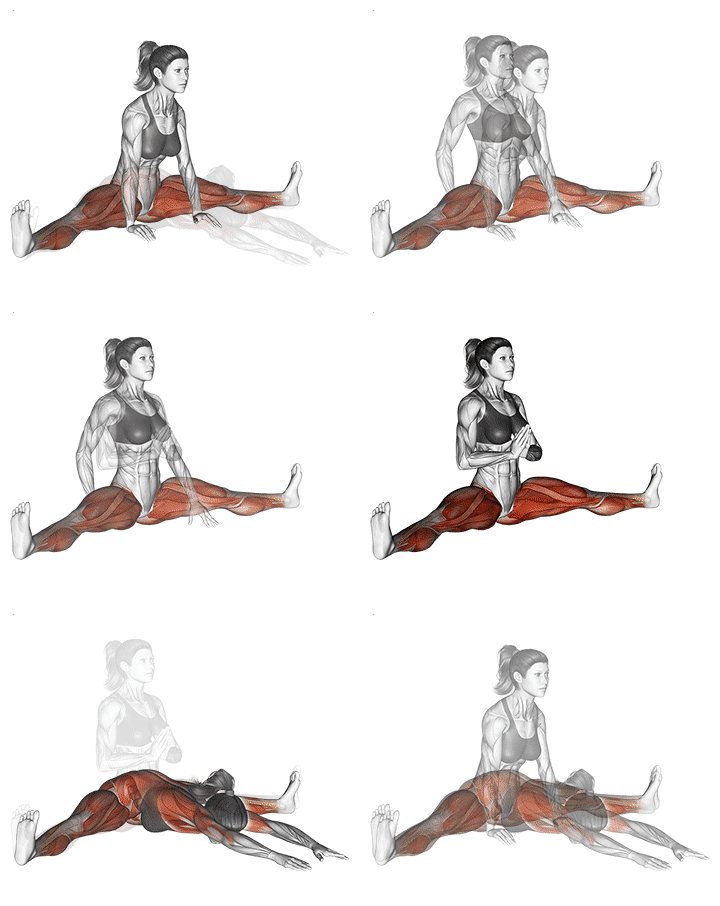
Target Muscle Group:
Quardiceps, Hamstrings
Equipment Required
None
Experience Level:
Beginner
Secondary Muscles
Glutes, Calves, back
Ideal sets & reps:
10 reps of 20 seconds
Benefits
- 1. Regular practice of Upavistha Konasana can help strengthen your core, which is essential for overall stability and body control.
- 2. Yoga practices, including Upavistha Konasana, emphasize mindful breathing and relaxation. This can help reduce stress and anxiety, promoting mental calmness and clarity.
- 3. By stretching and elongating the spine, Upavistha Konasana can alleviate tension in the lower back, making it a valuable pose for those experiencing lower back discomfort.
- 4. As you sit with your legs wide apart and elongate your spine, this asana encourages proper alignment and posture. It can be especially helpful for people who spend long hours sitting at a desk
- 5. Upavistha Konasana is an excellent stretch for the hamstrings and groin muscles. This can help improve flexibility in these areas, making it beneficial for athletes and individuals seeking to enhance their lower body mobility.
Instructions
- 1.Begin by sitting on your yoga mat with your legs fully extended in front of you. Ensure your back is straight, and your pelvis is in a neutral position. Proper posture sets the foundation for the pose.
- 2. Slowly and steadily, spread your legs as wide as your current flexibility allows. This should be a controlled and gentle motion to avoid straining your muscles. Your toes should point upward, and your knees should face the ceiling.
- 3. Inhale deeply, and as you exhale, initiate the forward bend by hinging at the hips. Keep your back as straight as possible as you fold forward. This helps isolate the stretch in your hamstrings and groins.
- 4. As you reach your edge in the stretch, maintain the position for about 30 seconds to a minute or longer if comfortable. Focus on taking slow, deep breaths, which can assist in relaxing into the stretch.
- 5. To conclude the pose, inhale, lift your torso back up to an upright seated position, and gently bring your legs together. Take a moment to relax before transitioning to other yoga poses or completing your practice.
Points to remember
- 1. Focus on deep, controlled breathing. Inhale and exhale slowly and consciously to aid in relaxation and enhance the stretch.
- 2. Pay close attention to your body and its limits. Don't force yourself into an extreme stretch. Progress gradually, respecting your current level of flexibility.
- 3. If you're struggling to reach your feet or maintain a straight back, consider using yoga props like blocks or a strap to assist in the pose and ensure proper alignment.
- 4. Be patient and consistent with your practice. Your flexibility will improve over time. Avoid the temptation to push yourself too hard too soon, which can lead to injury.
- 5. The integrity of Upavistha Konasana relies on a straight spine. Avoid rounding your back as you fold forward, as this can lead to strain or injury. Hinge at the hips while keeping your chest open.
Popular Questions
- Q1. What are the muscles worked by upavistha konasana ?
- A1. Upavistha Konasana primarily targets the quardiceps, hamstrings and additionaly the adductors (groin muscles), and the entire back. The stretching and engagement of these muscle groups help enhance flexibility in the legs, improve hip mobility, and strengthen the core, ultimately leading to better posture and lower body strength.
- Q2. What are the benefits of doing upavistha konasana ?
- A2. Upavistha Konasana offers several benefits, including improved hamstring and groin flexibility, enhanced hip mobility, strengthened core muscles, and reduced lower back tension. This yoga pose promotes better posture, relieves lower back discomfort, and contributes to an overall sense of physical and mental well-being through its stretching and mindfulness aspects.
- Q3. What are the best upavistha konasana alternative's ?
- A3. Two effective alternatives to Upavistha Konasana are Baddha Konasana (Butterfly Pose) and Prasarita Padottanasana (Wide-Legged Forward Bend). Baddha Konasana involves seated groin and hip opening, similar to Upavistha Konasana, while Prasarita Padottanasana is a standing forward bend that targets the same muscle groups but in a different body position, providing variety in your yoga practice.