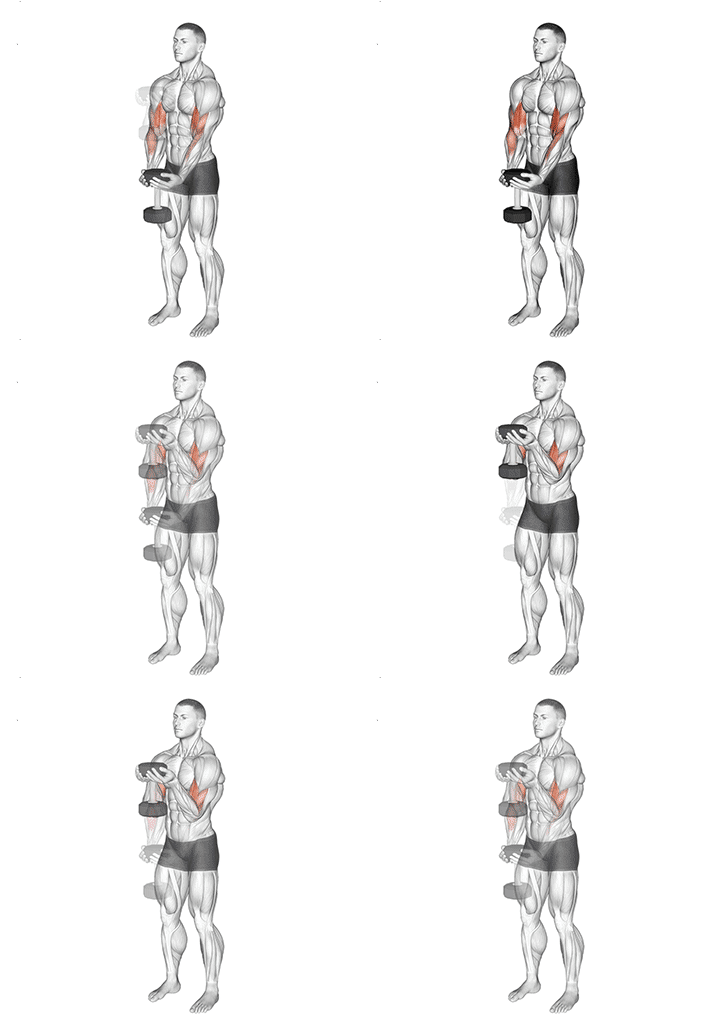
Target Muscle Group:
Biceps
Equipment Required
A Dumbbell
Experience Level:
Beginner
Secondary Muscles
Forearms
Ideal sets & reps:
3 sets of 10 reps
Benefits
- 1. Waiter curls are performed one arm at a time, addressing any muscle imbalances between your left and right sides.
- 2. As you lift and control the weight, you're improving your ability to perform daily tasks that involve lifting or carrying objects, contributing to overall functional strength.
- 3. The exercise engages the stabilizing muscles in the shoulders and upper back, promoting better posture. Strengthening these muscles contributes to an upright stance.
- 4. Whether you're a beginner or an advanced lifter, this exercise offers versatility to tailor your workout regimen and progressively challenge your muscles for continuous growth.
- 5. Waiter curls specifically target the biceps, allowing for focused muscle engagement and optimal development. This isolation is crucial for sculpting well-defined and strong biceps.
Instructions
- 1. Stand with feet shoulder-width apart, ensuring a straight and upright posture. Hold a dumbbell in one hand with an underhand grip, arm fully extended, palm facing up, and elbow close to your torso.
- 2. Initiate the movement by bending your elbow, lifting the dumbbell toward your shoulder in a smooth and controlled manner. Keep your upper arm close to your body throughout the curl.
- 3. As you lift, make sure your elbow stays stationary. Avoid swinging the weight or using momentum. This ensures that your biceps are doing the work, maximizing the effectiveness of the exercise.
- 4. At the top of the movement, squeeze your biceps for a brief moment to achieve peak contraction. This helps activate more muscle fibers and enhances the overall effectiveness of the exercise.
- 5. Lower the dumbbell back to the starting position in a controlled manner. Resist the temptation to let the weight drop quickly, as this eccentric phase of the movement is crucial for muscle growth and strength development.
- 6. If you're performing unilateral waiter curls, repeat the movement on the other arm. If doing bilateral curls, ensure both arms are working in sync. Perform the desired number of reps typically 8-12 reps, for 3-4 sets for muscle growth.
Points to remember
- 1. Lift and lower the dumbbell with deliberate control, avoiding rapid or jerky motions to fully engage the targeted muscles.
- 2. Squeeze the biceps at the top of the movement for a brief moment, enhancing muscle activation and overall effectiveness.
- 3. Inhale during the descent and exhale as you lift, maintaining a steady breathing rhythm to stabilize your core and enhance focus.
- 4. Keep the elbow close to the torso throughout the movement to maximize bicep isolation and minimize strain on the shoulder joint.
- 5. Start with a manageable weight, focusing on proper form. Gradually increase the intensity as strength and proficiency improve to ensure safe and effective progression.
Popular Questions
- Q1. What are the muscles worked by waiter curl ?
- A1. Waiter curls primarily target the biceps brachii, emphasizing the short head of the muscle. Additionally, the exercise engages the brachialis, contributing to overall arm development. The stabilizing muscles in the shoulders and upper back are also activated, promoting improved posture and enhancing upper body strength.
- Q2. What are the benefits of doing waiter curl ?
- A2. Waiter curls offer focused development of the biceps and brachialis, sculpting strong and defined arms. Simultaneously engaging stabilizing muscles enhances posture and shoulder strength, contributing to a well-rounded upper body. The exercise's unilateral nature also addresses muscle imbalances for balanced and functional arm strength.
- Q3. What are the best waiter curl alternative's ?
- A3. Alternatives to waiter curl include the zottman curl, with its combination of bicep and forearm engagement, is a superb alternative. Hammer curls, targeting the brachialis and brachioradialis, offer a well-rounded arm workout. Prone incline barbell curls, emphasizing the long head of the biceps, provide an effective alternative that also challenges the stabilizing muscles.