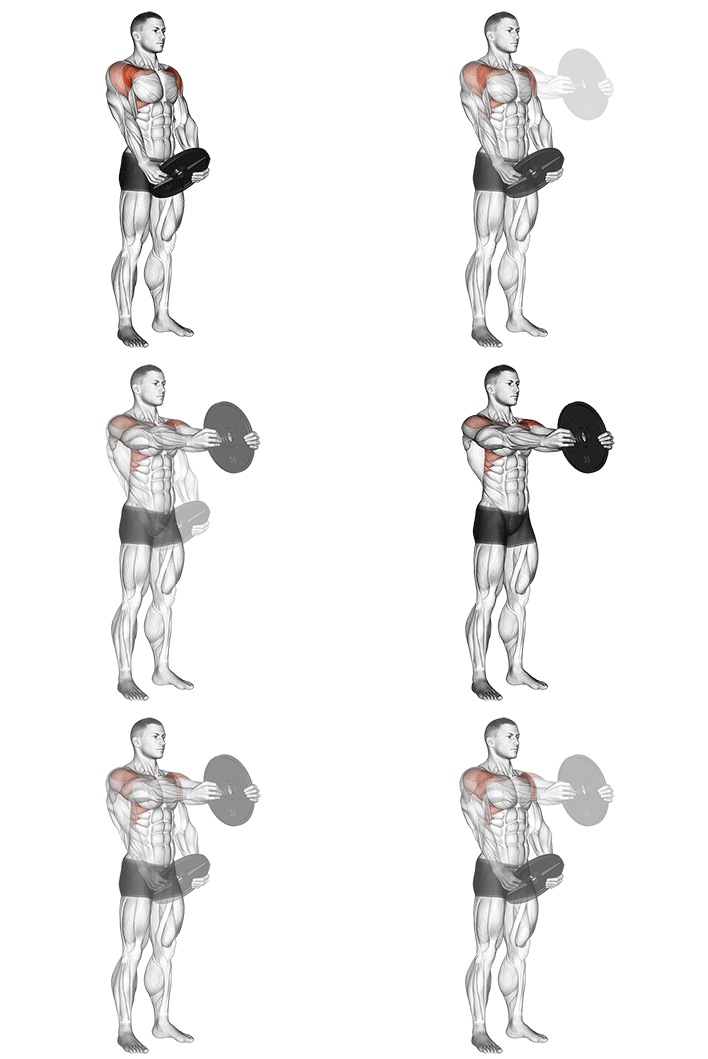
Target Muscle Group:
Front Deltoids
Equipment Required
Weight Plate
Experience Level:
Beginner
Secondary Muscles
Upper Trapezius, Lateral Deltoids
Ideal sets & reps:
3 sets of 10 reps
Benefits
- 1. Weight Plate Front Raises isolate and target the front deltoids, promoting balanced shoulder muscle growth.
- 2. The exercise strengthens the shoulders and arms, supporting everyday tasks and overall upper body functionality.
- 3. Engaging upper back and core muscles during the raises helps maintain proper alignment and reduce postural issues.
- 4. Enhanced shoulder stability and mobility from this exercise aid in performing various daily activities and sports movements.
- 5. Adding Weight Plate Front Raises diversifies your shoulder workout, preventing workout plateaus and supporting ongoing progress.
Instructions
- 1. Stand up straight, holding a weight plate (such as a bumper plate or a standard weight plate with a hole) with both hands. Hold the plate vertically, gripping it firmly on the sides.
- 2. Begin with the weight plate at your thighs, arms fully extended, and palms facing down. Stand with your feet shoulder-width apart.
- 3. While maintaining a slight bend in your elbows, lift the weight plate directly in front of you. Keep your arms straight as you raise the plate to shoulder level or slightly above. Exhale during this phase.
- 4. Slowly lower the weight plate back to the starting position in a controlled manner. Inhale as you do this.
- 5. Perform the desired number of repetitions, focusing on maintaining proper form and controlled movements throughout.
Points to remember
- 1. Keep a slight bend in your elbows to reduce stress on the joints and maintain muscle engagement.
- 2. Lift the weight plate using controlled strength from your shoulders, avoiding jerky or swinging motions.
- 3. Keep your back straight and core engaged to support a stable spine, preventing overextension or rounding.
- 4. Raise the weight plate to shoulder height or slightly higher, achieving a complete contraction without hyperextension.
- 5. Breathe out as you lift the weight plate and inhale as you lower it, maintaining a steady rhythm for efficient oxygenation.
Popular Questions
- Q1. What are the benefits of doing weight plate front raises ?
- A1. Weight Plate Front Raises isolate and strengthen the front deltoids, enhancing shoulder aesthetics and functional strength. This exercise also promotes shoulder stability, postural support, and is adaptable for different fitness levels.
- Q2. What are the best weight plate front raise alternative ?
- A2. Consider alternatives like Dumbbell Front Raises, Barbell Front Raises, Cable Front Raises, Resistance Band Front Raises, Seated Front Raises, and Machine Front Raises to vary your shoulder workout and effectively target the front deltoids from different angles and equipment options.
- Q3. What are the muscles worked by weight plate front raise ?
- A3. Weight Plate Front Raises primarily target the front deltoids, aiding in shoulder flexion. The lateral deltoids, triceps, upper trapezius, and serratus anterior also engage to stabilize and assist in the lifting motion. This exercise helps enhance shoulder strength, stability, and muscle balance in the upper body.
- Q4. Why do bumper plates feel heavier as compared to standard one's ?
- A4. Bumper plates may feel heavier due to their larger diameter, which changes the leverage and mechanics of the lift. Additionally, bumper plates are often used for dynamic exercises like Olympic lifts, requiring more effort to control their momentum and stabilize the movement, contributing to a perceived increase in weight.