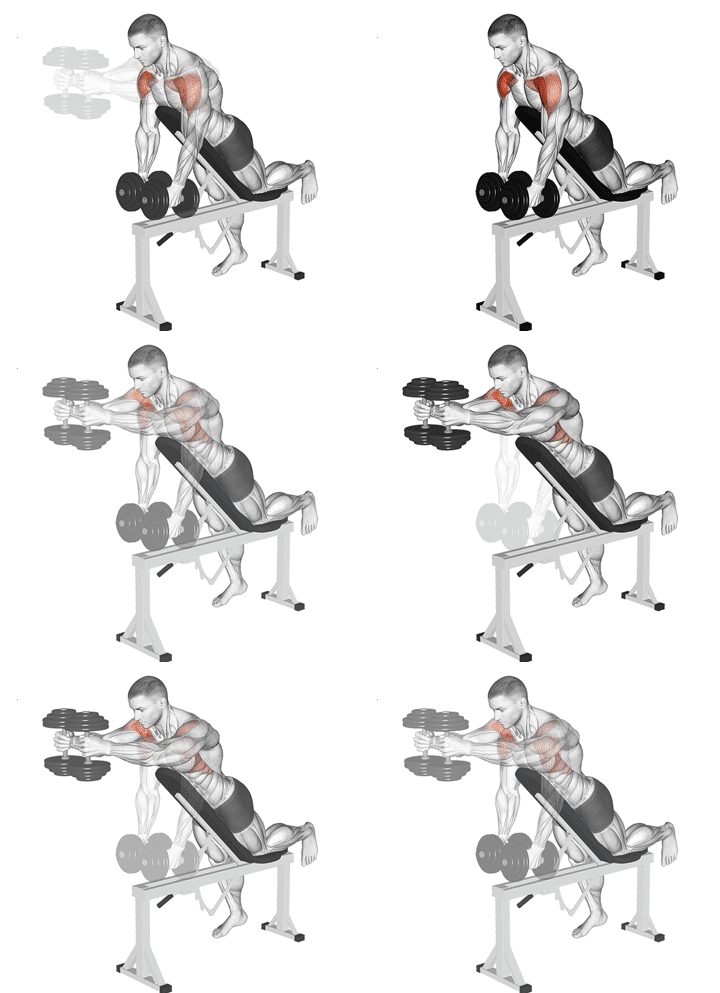
Target Muscle Group:
anterior deltoids (Shoulders)
Equipment Required
Dumbbell & a bench
Experience Level:
Beginner
Secondary Muscles
Upper Chest & upper trapezius
Ideal sets & reps:
3 sets of 8 reps
Benefits
- 1. Chest Supported Dumbbell Front Raises can be tailored to your fitness level by selecting appropriate dumbbell weights.
- 2. The chest-supported position on a bench reduces the risk of lower back strain that can occur during standing front raises.
- 3. Chest Supported Dumbbell Front Raises specifically target the front deltoid muscles. This isolation helps correct muscle imbalances.
- 4. Using a bench for support encourages a controlled and limited range of motion, allowing you to maintain proper form throughout the exercise.
- 5. Regularly performing this exercise can help counteract the negative effects of rounded shoulders, which often result from desk work and other daily activities.
Instructions
- 1. Begin by adjusting a bench to a 45-degree incline. Ensure it's stable and secure. Grab a pair of dumbbells that you can comfortably lift with proper form.
- 2. Lie facedown on the incline bench. Your chest and upper body should be firmly pressed against the bench, and your feet should be flat on the floor for stability. Hold a dumbbell in each hand, letting your arms hang straight down toward the floor.
- 3. While maintaining a slight bend in your elbows, lift the dumbbells forward and upward in a controlled motion. Keep your palms facing down and your wrists straight. Lift until your arms are parallel to the floor or just slightly higher.
- 4. At the top of the movement, pause for a moment and focus on squeezing your front deltoid muscles. This maximizes the engagement of these muscles.
- 5. Slowly lower the dumbbells back to the starting position, avoiding any jerky or swinging motions. Maintain control throughout the entire range of motion.
- 6. Complete the desired number of repetitions. Aim for a weight that allows you to perform the exercise with proper form for your fitness level.
Points to remember
- 1. Keep your back and neck in a neutral position to avoid straining the spine. Avoid over-arching or rounding your back during the exercise.
- 2. Maintain your wrists straight and your palms facing down throughout the movement. This hand position targets the front deltoids while minimizing wrist strain.
- 3. Lift the dumbbells until your arms are parallel to the floor or just slightly higher. Avoid lifting too high, as this can place unnecessary stress on the shoulder joints.
- 4. Lift the dumbbells in a controlled manner, avoiding any jerking or swinging movements. Smooth, controlled repetitions are essential for targeting the front deltoids effectively.
- 5. Choose an appropriate weight that allows you to complete your desired number of repetitions with good form. Avoid lifting too heavy, especially if it compromises your technique.
Popular Questions
- Q1. What are the benefits of doing chest supported dumbbell front raise ?
- A1. Chest Supported Dumbbell Front Raises offer several benefits. They isolate and strengthen the anterior deltoids, enhancing shoulder aesthetics and strength. The chest support minimizes back strain and promotes proper form. This exercise can help prevent shoulder injuries and imbalances, contributing to overall upper body development.
- Q2. What are the muscles worked by chest supported dumbbell front raise ?
- A2. Chest Supported Dumbbell Front Raises primarily target the anterior deltoids, which are the front muscles of the shoulders. This exercise also engages the clavicular portion of the pectoralis major and the upper trapezius to a lesser extent. It's an effective isolation movement for building shoulder strength and enhancing shoulder aesthetics.
- Q3. What are the best chest supported dumbbell front raise alternative's ?
- A3. Alternatives to Chest Supported Dumbbell Front Raises include seated front raises, cable front raises, and weight plate front raise plate front raises. These exercises effectively target the anterior deltoids while providing variations in equipment and angles for a comprehensive shoulder workout. Each alternative allows you to challenge and develop your front shoulder muscles.