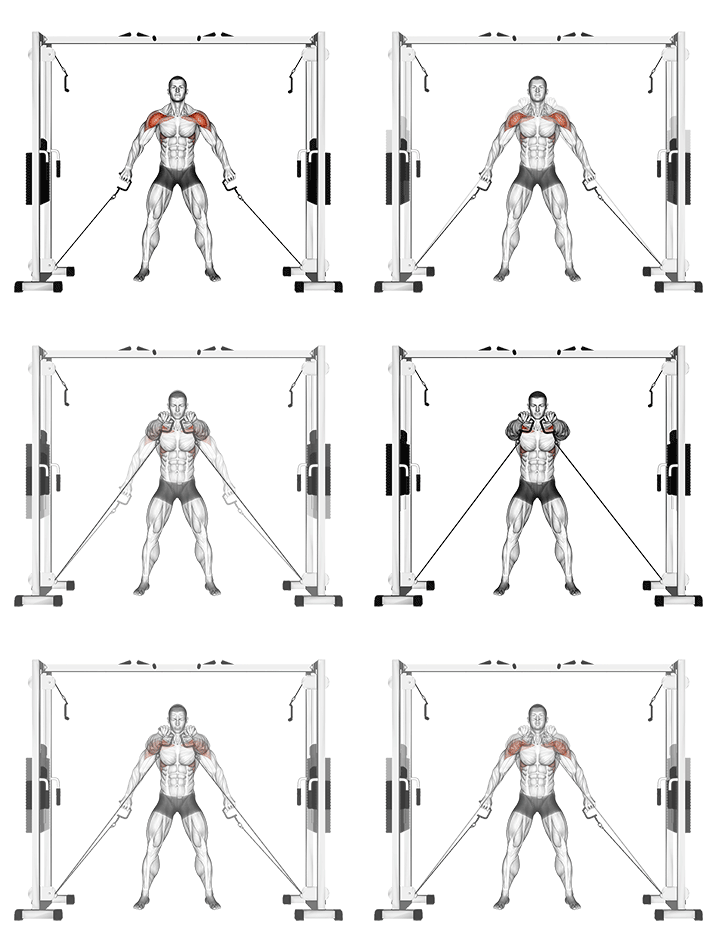
Target Muscle Group:
Anterior Deltoids (Front Delts)
Equipment Required
Cable Machine
Experience Level:
Beginner
Secondary Muscles
Traps, Lateral Deltoids (Side Delts)
Ideal sets & reps:
3 sets of 8 reps
Benefits
- 1. To stabilize the movement, the core muscles are activated, contributing to overall core strength.
- 2. As a unilateral exercise, it helps address any muscle imbalances between the left and right shoulders.
- 3. This exercise targets the anterior deltoids, helping to build well-rounded and sculpted shoulder muscles.
- 4. By strengthening the shoulders and upper back, it aids in better posture, reducing the risk of rounded shoulders.
- 5. It encourages a broader range of motion in the shoulder joint, which can be beneficial for various daily activities.
Instructions
- 1. Begin by attaching D-handle attachments to both sides of a cable machine. Adjust the pulleys to the lowest position.
- 2. Select an appropriate weight that challenges your shoulder muscles without compromising form.
- 3. Stand in the center of the cable machine, feet shoulder-width apart. Ensure your core is engaged for stability.
- 4. Grasp one D-handle in each hand with a pronated (palms facing down) grip. Your arms should be fully extended, and your hands positioned at your thighs.
- 5. With a slight bend in your elbows, simultaneously raise both handles in front of you. Keep your arms straight but not locked. Lift until your arms are parallel to the floor.
- 6. Or slightly below shoulder height, now slowly lower the handles back to the starting position, maintaining control throughout the movement.
- 7. Complete the desired number of repetitions, typically 10-15 for muscle endurance or 6-8 for muscle strength. Exhale as you lift the handles, and inhale as you lower them.
Points to remember
- 1. Avoid arching your lower back excessively. Maintain a natural arch or a slight posterior pelvic tilt to protect your lower back.
- 2. Lift the handles until your arms are parallel to the floor or slightly below shoulder height. Overextending can strain the shoulder joints.
- 3. Ensure a controlled and deliberate range of motion. Avoid using momentum or swinging the weights, as this can strain your shoulder joints.
- 4. Keep a slight bend in your elbows throughout the exercise. This helps reduce stress on the elbow joints and emphasizes the shoulder muscles.
- 5. Pay close attention to your form and technique. If you experience any pain or discomfort, stop the exercise and reassess your form or consult a fitness professional.
Popular Questions
- Q1. What are the muscles worked by double cable front raise ?
- A1. The double cable front raise primarily targets the anterior deltoids (front delts), enhancing shoulder strength and definition. It also engages secondary muscles such as the lateral deltoids, traps, serratus anterior, rotator cuff muscles, and triceps, promoting balanced shoulder development and overall upper body stability.
- Q2. What are the best double cable front raise alternative's ?
- A2. Alternative exercises to the double cable front raise include the front plate raise, which isolates the front deltoids with a weight plate, and the front dumbbell raise, which allows unilateral training for muscle balance. Additionally, the barbell front raise can provide an effective variation to enhance shoulder strength and definition in your workouts.
- Q3. What are the benefits of doing double cable front raise ?
- A3. The double cable front raise is a valuable exercise for shoulder development. It places significant emphasis on the anterior deltoids, promoting improved strength and definition in the front of the shoulders. This exercise also engages secondary muscles like the lateral deltoids, traps, and triceps, contributing to balanced shoulder development and overall upper body stability.