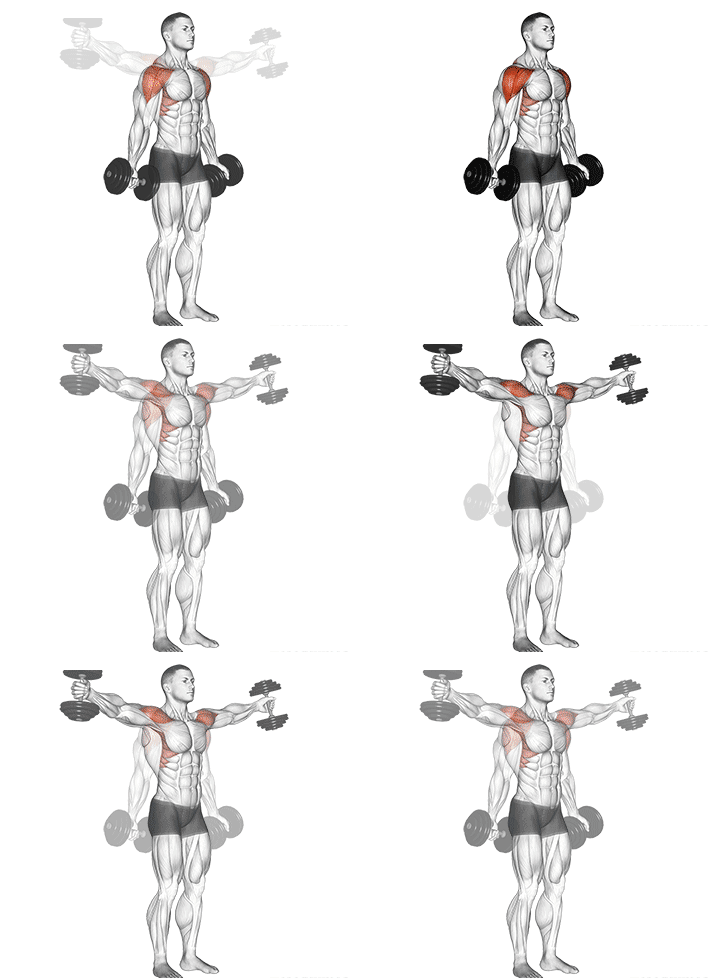
Target Muscle Group:
Front & Lateral Deltoids
Equipment Required
A Pair of dumbbells
Experience Level:
Beginner
Secondary Muscles
Serratus Anterior, Rotator Cuff Muscles
Ideal sets & reps:
3 sets of 10 reps
Benefits
- 1. It targets the rotator cuff and the muscles responsible for stabilizing the shoulder joint, promoting overall shoulder strength.
- 2. The Dumbbell Scaption Raise helps balance muscle development in the shoulders, reducing the risk of muscle imbalances and injury.
- 3. Strengthening the rotator cuff muscles aids in injury prevention, particularly for those engaged in activities involving repetitive shoulder movements.
- 4. By strengthening the upper back and shoulder muscles, it helps correct posture issues, reducing the risk of shoulder injuries and enhancing overall posture.
- 5. This exercise improves the range of motion in the shoulders, which can be particularly beneficial for athletes and individuals with shoulder mobility limitations.
Instructions
- 1. Stand with your feet shoulder-width apart, holding a dumbbell in each hand. Start with a light weight to ensure proper form.
- 2. Maintain a straight posture with your chest up and shoulders back. Begin with your arms by your sides, palms facing your body, and elbows slightly bent.
- 3. Slowly raise your arms forward and upward at a 30 to 45-degree angle from your body, like you're forming a "Y" shape. Keep a slight bend in your elbows as you lift the dumbbells.
- 4. At the top of the movement, when your arms are in line with your shoulders, pause and squeeze your shoulder blades together. This engages your upper traps and rear deltoids.
- 5. Lower the dumbbells back down with control to the starting position, maintaining the same angle. Don't let the weights swing or use momentum.
- 6. Perform 3-4 sets of 10-12 repetitions. Gradually increase the weight as you become more comfortable with the movement.
Points to remember
- 1. Maintain a slight bend in your elbows throughout the movement. This reduces stress on the joints and keeps the emphasis on your shoulder muscles.
- 2. Start with light to moderate weights to ensure proper form and control. As you become more comfortable with the exercise, gradually increase the weight.
- 3. Lift and lower the dumbbells in a slow and controlled manner. Avoid using momentum to swing the weights, which can reduce the effectiveness of the exercise and increase the risk of injury.
- 4. At the top of the movement, when your arms are in line with your shoulders, consciously squeeze your shoulder blades together. This maximizes the engagement of the upper traps and rear deltoids.
- 5. Focus on lifting your arms at a 30 to 45-degree angle from your body. This angle targets the upper traps and rear deltoids effectively. Avoid lifting your arms too high, which can engage other muscle groups.
Popular Questions
- Q1. What are the muscles worked by dumbbell scaption raise ?
- A1. The Dumbbell Scaption Raise primarily targets the front deltoids (anterior deltoids) responsible for lifting your arms forward and upward. It also engages the supraspinatus, serratus anterior, medial deltoids, upper trapezius, and rotator cuff muscles, all contributing to shoulder stability and strength.
- Q2. What are the best dumbbell scaption raise alternative's ?
- A2. A solid alternative to the Dumbbell Scaption Raise is the front plate raise, focusing on the anterior deltoids while also engaging the upper chest. Additionally, the Standing Resistance Band Front Raise provides a similar motion using resistance bands, which can be a great option for home workouts or when dumbbells aren't available.
- Q3. What are the benefits of doing dumbbell scaption raise ?
- A3. The Dumbbell Scaption Raise strengthens the anterior deltoids, enhancing shoulder stability and posture. It also targets supporting muscles like the supraspinatus and serratus anterior, improving overall shoulder function. This exercise aids in preventing imbalances and potential shoulder injuries while promoting better upper body mobility.