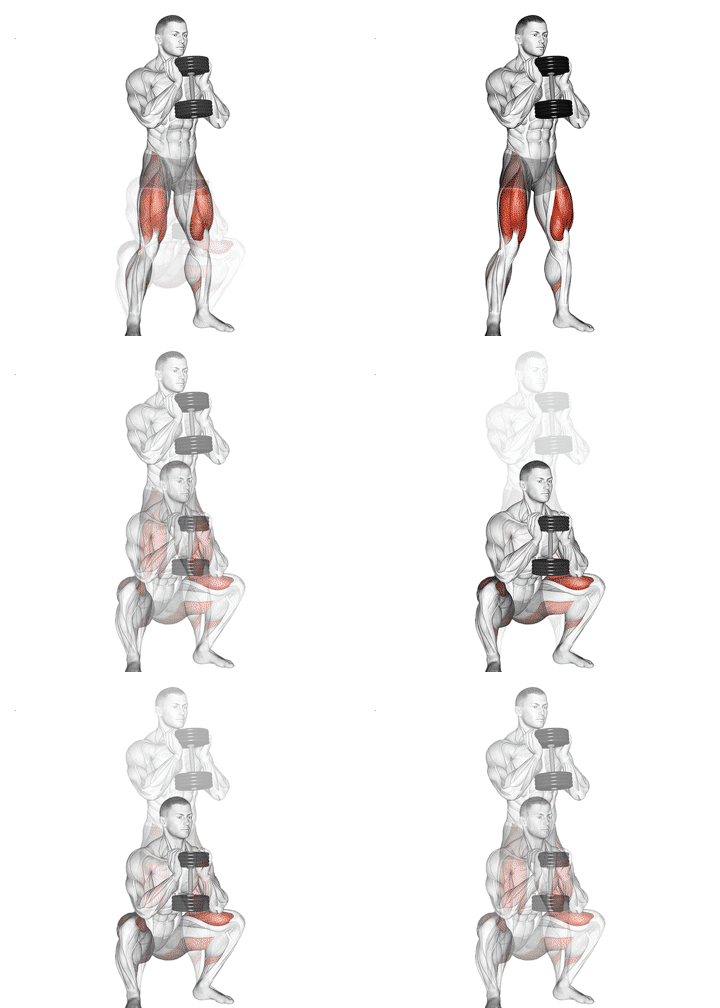
Target Muscle Group:
Quardiceps, Hamstrings
Equipment Required
Dumbbell
Experience Level:
Beginner
Secondary Muscles
Glutes, Calves
Ideal sets & reps:
3 sets of 5 reps
Benefits
- 1. Performing Dumbbell Goblet Squats can help enhance your posture. The focus on maintaining an upright position forces you to work on your spinal alignment and balance.
- 2. Stronger leg muscles and a stable core reduce the risk of injury, especially in the lower back and knees. This exercise can be instrumental in preventing strains and injuries associated with these areas.
- 3. Performing squats can elevate your heart rate and promote cardiovascular fitness. When done with higher reps or as part of a circuit, they can also contribute to burning calories and aiding in weight management.
- 4. The squatting motion mimics many real-life activities like lifting, bending, and even sitting down and getting up. By mastering the Dumbbell Goblet Squat, you'll develop functional strength that can make everyday tasks easier.
- 5. Many individuals have a tendency to overdevelop their anterior muscles (front of the body) compared to their posterior muscles. This exercise can help counterbalance by working the posterior chain (hamstrings, glutes, and lower back).
Instructions
- 1. Start by selecting an appropriate dumbbell. The weight should be challenging but manageable, depending on your fitness level. Hold the dumbbell with both hands close to your chest, gripping it vertically.
- 2. Your feet should be shoulder-width apart or slightly wider for stability.Stand tall with your chest up, shoulders back, and your core engaged. This is your starting position.
- 3. Begin the movement by pushing your hips back and bending your knees. Imagine you're sitting back into a chair. Keep your chest up, and your back straight throughout the motion.
- 4. This ensures that your spine remains in a neutral position. Lower your body down, making sure your thighs are at least parallel to the ground, or ideally, go deeper if you can while maintaining good form.
- 5. Keep your elbows inside your knees, and your dumbbell close to your chest. Push through your heels and straighten your legs to return to the starting position. Exhale as you stand up, keeping the dumbbell close to your chest.
- 6. Perform the desired number of repetitions, typically in the range of 3-4 sets of 5-8 repetitions for muscle hypertrophy (muscle growth), or adjust based on your particular fitness goals.
Points to remember
- 1. Hold the dumbbell close to your chest, gripping it vertically with both hands. Keep your elbows inside your knees throughout the squat.
- 2. Lower your body in a controlled manner, focusing on both the downward and upward phases of the squat. Avoid sudden or jerky movements.
- 3. Position your feet shoulder-width apart or slightly wider for stability. Point your toes slightly outward, which can help with balance and knee alignment.
- 4. Strive to reach at least parallel with the ground or go deeper if you can while maintaining good form. Going deeper engages more muscles, but prioritize form over depth.
- 5. Maintain an upright posture with your chest up, shoulders back, and a straight back throughout the entire movement. This minimizes the risk of injury and maximizes muscle engagement.
Popular Questions
- Q1. What are the muscles worked by dumbbell goblet squat ?
- A1. Dumbbell goblet squats primarily target the quadriceps, while also engaging the hamstrings, glutes, and back muscles, to stabilize the movement making it an effective compound exercise for lower body and core development, promoting overall strength and posture improvement.
- Q2. What are the benefits of doing dumbbell goblet squat ?
- A2. Dumbbell goblet squats offer a range of benefits, including enhancing leg strength by primarily targeting the quadriceps, hamstrings, and glutes. They also strengthen the core, promoting better stability and posture. Additionally, these squats help prevent muscle imbalances by engaging the posterior chain, which includes the hamstrings, glutes, and lower back.
- Q3. What are the best dumbbell goblet squat alternative's ?
- A3. In place of dumbbell goblet squats, consider the trap bar jump squat, which introduces an explosive element to leg training, enhancing power. For hamstring isolation, seated leg curls are effective, providing targeted strength development. Additionally, barbell lateral lunges are excellent for lateral leg strength and improved hip mobility, adding variety to your lower body workout routine.