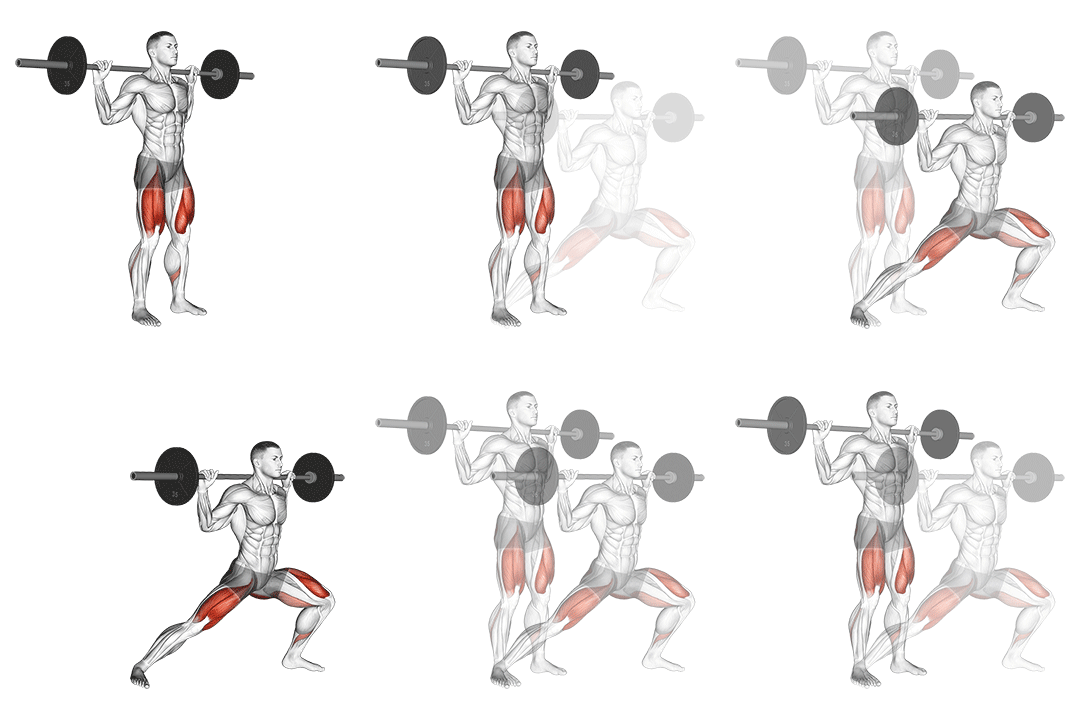
Target Muscle Group:
Quadriceps
Equipment Required
A Barbell
Experience Level:
Beginner
Secondary Muscles
Glutes, Hamstrings
Ideal sets & reps:
3 sets of 10 reps
Benefits
- 1. Increased hip mobility can improve your overall range of motion and contribute to better posture and reduced lower back discomfort.
- 2. This functional aspect makes it a valuable addition to your workout routine, as it helps improve your ability to perform daily tasks and sports-specific activities more efficiently.
- 3. By performing this exercise, you can significantly increase the strength of your lower body, helping you perform everyday activities with ease and excel in other compound movements.
- 4. By focusing on each leg individually, the lateral lunge helps address muscle imbalances that might exist between your left and right legs, ultimately contributing to a more symmetric physique.
- 5. This exercise forces you to work one leg at a time, enhancing your coordination and balance. This can be particularly beneficial for athletes or individuals seeking to reduce the risk of injury during physical activities.
Instructions
- 1. Begin by adding an appropriate amount of weight plates to the bar. As a beginner, it's best to start with a lighter weight to master the form and technique.
- 2.Stand with your feet shoulder-width apart, ensuring a solid grip on the barbell. Employ proper deadlift mechanics to lift it off the ground, maintaining a straight back and a chest-up posture.
- 3. Take a wide step to your right side, simultaneously bending your right knee. Keep your left leg fully extended and off the ground. The key is to engage your hip and leg muscles.
- 4. Push through your right heel to stand back up, bringing your feet together under the barbell. Maintain good posture with a straight back.
- 5. Replicate the same lateral lunge movement by stepping to your left, bending your left knee this time, while your right leg remains straight and off the ground.
- 6. Aim for a manageable number of repetitions based on your strength level, typically 4-8 reps, for 2-3 sets for muscle hypertrophy (muscle gain).
Points to remember
- 1. Keep a secure grip on the barbell, and control its movement. Avoid any abrupt jerks or uncontrolled motions.
- 2. Start with lighter weights, and as your form and strength improve, gradually increase the load to prevent overexertion or injury.
- 3. Ensure your feet are in the right position. Step wide enough to create a stable base, but not so wide that it compromises balance.
- 4. Work within your comfortable range of motion. If you have limited flexibility, don't push your range too far to avoid straining your muscles or joints.
- 5. Concentrate on your balance and stability, as this exercise can challenge your coordination. If you're new to it, start with bodyweight or lighter weights to build confidence.
Popular Questions
- Q1. What are the muscles worked by barbell lateral lunge ?
- A1. The barbell lateral lunge primarily targets the quadricep. Additionally, it engages the hamstrings, glutes and adductor muscles in the inner thighs. This exercise strengthens the lower body and enhances hip flexibility, promoting overall leg development and functional fitness.
- Q2. What are the benefits of doing barbell lateral lunge ?
- A2. The Barbell Lateral Lunge offers several benefits, primarily strengthening the quadriceps, hamstrings, and adductor muscles. This exercise also enhances hip flexibility and stability while promoting balance and functional leg strength. It's a valuable addition to leg workouts, contributing to improved muscle symmetry and injury prevention.
- Q3. What are the best barbell lateral lunge alternative's ?
- A3. Alternative exercises to the barbell lateral lunge are the trap bar jump squat, lever deadlift, and pendulum squat. The Trap Bar Jump Squat enhances lower body power and athleticism. Lever Deadlift works the hamstrings, quadriceps, and lower back while reducing spinal strain. The Pendulum Squat targets the quadriceps and glutes, promoting comprehensive leg development.