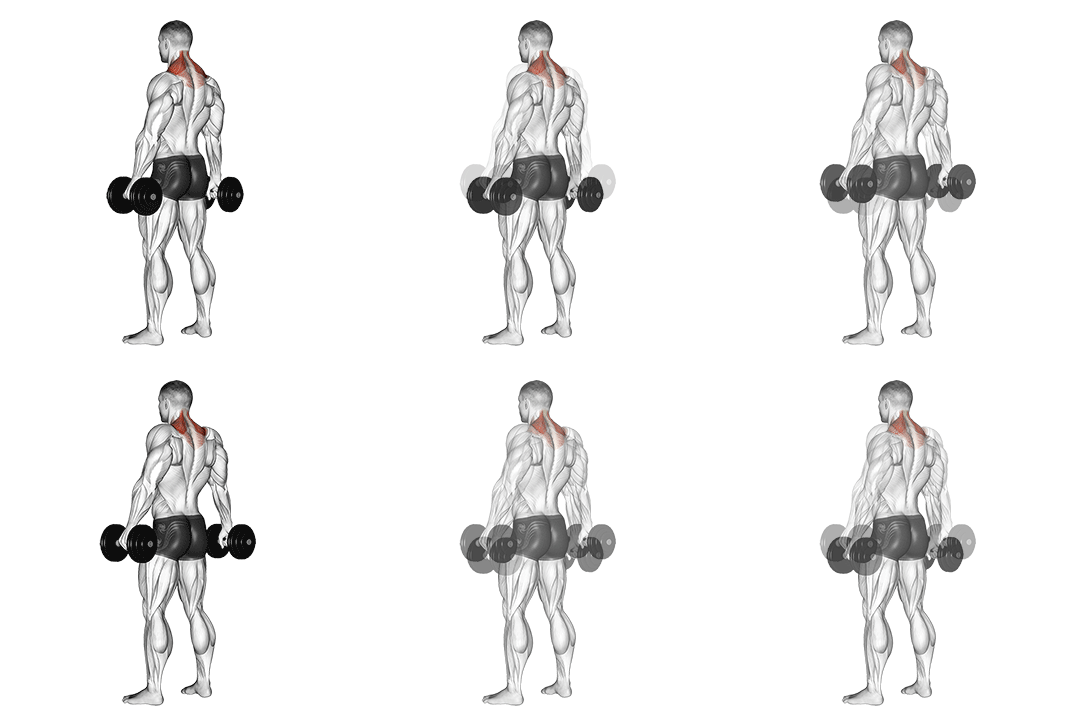
Target Muscle Group:
Upper traps (Trapezius)
Equipment Required
A pair of dumbbells
Experience Level:
Beginners
Secondary Muscles
Shoulders, Middle Traps
Ideal sets & reps:
3 sets of 10 reps
Benefits
- 1. This is particularly beneficial for individuals involved in sports or activities that require a strong and stable shoulder girdle.
- 2. Strengthening them through Dumbbell Shrugs can alleviate tension and reduce the risk of discomfort or strain in these areas.
- 3. Dumbbell Shrugs engage the trapezius muscles in a functional manner, mimicking movements often encountered in daily activities.
- 4.Regularly incorporating Dumbbell Shrugs into your workout routine helps counteract the effects of slouching or rounded shoulders, promoting an upright and confident posture.
- 5. Dumbbell Shrugs primarily target the upper trapezius, contributing to well-defined and robust traps. This not only enhances the visual appeal of the upper back but also adds symmetry to your physique.
Instructions
- 1. Stand with feet shoulder-width apart to maintain stability. A solid foundation ensures that the focus remains on isolating the trapezius muscles during the exercise.
- 2. Hold a dumbbell in each hand with a neutral grip (palms facing your body). This grip minimizes strain on the wrists and allows for a natural range of motion.
- 3. Elevate your shoulders in a controlled manner, focusing on the upward movement. Avoid sudden jerks and prioritize a smooth ascent to engage the trapezius muscles effectively.
- 4. At the peak of the shrug, squeeze your shoulder blades together for a brief pause. This maximizes muscle contraction and enhances the benefits of the exercise.
- 5. Lower the dumbbells slowly and with control. The descent phase engages the muscles eccentrically, promoting strength development and reducing the risk of injury.
- 6. Complete the desired number of repetitions typically 3-4 sets of 8-12 reps for muscle hypertrophy (muscle growth), ensuring you maintain good form and control during each repetition.
Points to remember
- 1. After completing your sets, incorporate gentle stretches for the trapezius muscles to enhance flexibility and alleviate any potential tightness.
- 2. Maintain a neutral spine throughout the exercise, and avoid tilting your head excessively. This safeguards your neck and spine from unnecessary strain.
- 3. Focus on a full and controlled range of motion, lifting your shoulders as high as comfortably possible. Avoid overextending or compromising form for heavier weights.
- 4. Concentrate on establishing a strong mind-muscle connection with your trapezius muscles. Visualize them contracting and releasing with each repetition to optimize muscle engagement.
- 5. Start with a weight that allows you to maintain proper form. As you progress, gradually increase the resistance to continue challenging your trapezius muscles without sacrificing technique.
Popular Questions
- 1. What are the benefits of doing dumbbell shrugs ?
- A1. Dumbbell Shrugs offer a lot of benefits, primarily sculpting robust trapezius muscles for improved shoulder stability and posture. This exercise enhances the aesthetic appeal of the upper back, providing functional strength and reducing the risk of shoulder and neck injuries.
- Q2. What are the muscles worked by dumbbell shrugs ?
- A2. Dumbbell Shrugs primarily target the trapezius muscles, specifically the upper portion. This exercise engages the muscles responsible for shoulder elevation, emphasizing the development of the trapezius for enhanced shoulder stability, improved posture, and a well-defined upper back.
- Q3. What are the best dumbbell shrugs alternative's ?
- A3. In addition to dumbbell shrugs, cable shrugs, barbell behind the back shrug and scapula dips can be an excellent alternative. This bodyweight exercise targets the scapular muscles, providing a unique dynamic for overall shoulder and upper back development. Incorporating these variations diversifies your workout routine for comprehensive trapezius engagement.