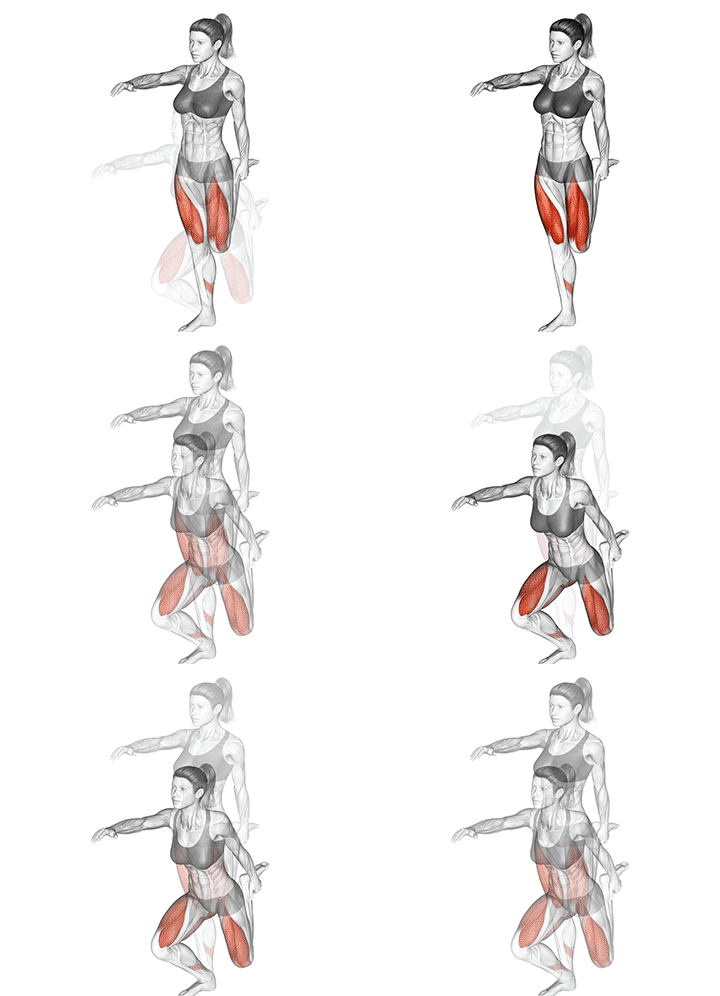
Target Muscle Group:
Quadriceps
Equipment Required
none
Experience Level:
Advanced
Secondary Muscles
Calves, Glutes, Hamstrings
Ideal sets & reps:
3 sets of 8 reps
Benefits
- 1. Engaging quadriceps, hamstrings, and glutes, shrimp squats promote toned, well-defined leg muscles.
- 2. Shrimp squats require a broad range of motion, enhancing lower body flexibility and ease of movement.
- 3. Shrimp squats offer adaptable options, allowing for ongoing challenge and growth in your fitness routine.
- 4. The exercise demands core stabilization, fostering a stronger core for better posture and reduced back pain.
- 5. Shrimp squats isolate and strengthen each leg individually, correcting muscle imbalances and reducing injury risk.
Instructions
- 1. Stand with your feet shoulder-width apart. The working leg, or the one you'll be squatting on, should be positioned slightly in front of you, while the other leg stays extended behind you.
- 2. Maintain an upright posture, engage your core, and keep your chest up. This is essential for balance during the exercise. Begin by bending your working knee and lowering your body toward the ground.
- 3. The non-working leg should extend behind you as a counterbalance. Go as low as your flexibility allows without any strain, ideally until your knee nearly touches the ground.
- 4. Push through your working leg's heel to return to the starting position. Keep your core engaged for stability. Make sure to control the movement throughout.
- 5. Complete the desired number of reps typically 3-5 sets of 8-10 repetitions on one leg before switching to the other. It's crucial to maintain proper form and balance during each repetition.
Points to remember
- 1. Execute the exercise with control. Avoid sudden or jerky movements. This helps reduce the risk of injury.
- 2. Always begin with a thorough warm-up to increase blood flow and prepare your muscles and joints for the exercise.
- 3. Maintain an upright posture throughout the movement. Keep your chest up, engage your core, and focus on your balance.
- 4. Lower yourself as far as your flexibility allows without discomfort. Aim to have your working knee almost touch the ground, if possible.
- 5. Position your working leg slightly in front of you and the non-working leg extended behind for balance. Ensure your feet are at the right distance apart.
Popular Questions
- Q1. What are the muscles worked by shrimp squat ?
- A1. The shrimp squat primarily targets the quadriceps and hamstrings making it an effective lower body exercise. Additionally, it engages the core muscles and glutes for stability and balance. This unilateral movement helps correct muscle imbalances and enhances functional strength in the legs.
- Q2. What are the benefits of doing shrimp squat ?
- A2. The shrimp squat and box pistol squat are both single-leg exercises, but they differ in support and balance. Shrimp squats involve no support and challenge balance by extending the non-working leg behind. In contrast, box pistol squats utilize a box for stability, making them more accessible for beginners while still targeting leg strength and balance.
- Q3. What are the benefits of doing shrimp squat ?
- A3. Shrimp squats offer numerous benefits, enhancing lower body strength, balance, and flexibility. They specifically target the quadriceps, hamstrings, and glutes while engaging the core for stability. By addressing muscle imbalances and promoting functional strength, shrimp squats contribute to improved overall fitness and athletic performance.
- Q4. What are the best shrimp squat alternative's ?
- A4. Alternatives to shrimp squat include box pistol squats provide single-leg challenge with box support, enhancing lower body strength and balance. Smith machine leg press is a machine alternative targeting quads, hamstrings, and glutes. Dumbbell goblet squats engage quads, hamstrings, and glutes while activating the core, adaptable for varying fitness levels.